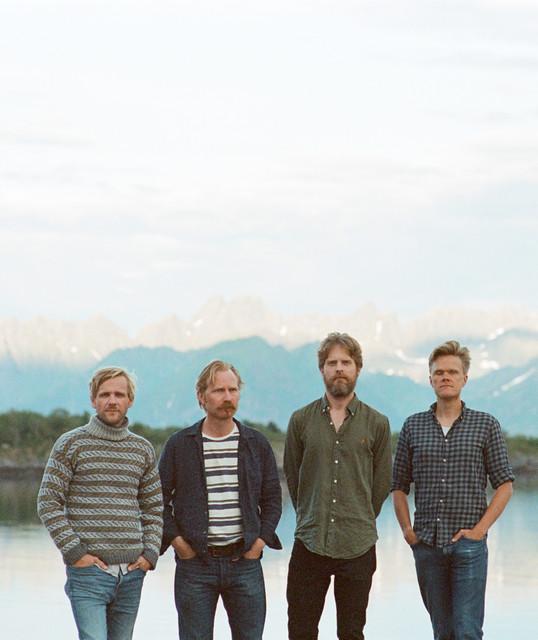
Brooklyn Rider

Classical
Chamber Music
 Viberate Rank: 244660
 Viberate Rank: 244660
 Monthly ListenersFollowers
 Subscribers
 Followers
 Followers
 FansTop Spotify Songs
| Track | 7-Day Streams | |
|---|---|---|
1 | 700 | |
2 | 318 | |
3 | 274 | |
4 | 272 | |
5 | 261 |
Top YouTube VideosMonthly ListenersFeatured in Playlists| Playlist | Followers | |
|---|---|---|
1 |  NPR All Songs Considered - The Bob Boilen years (unofficial) Fri Tsch | 30.02K |
2 |  NPR Classical NPR Music | 14.43K |
3 |  NPR Music Best Songs Of 2018 NPR Music | 10.46K |
4 |  Neo Classicals Alen Golpashin | 7.79K |
5 |  NPR Tiny Desk Concert Music - Complete Edition saiteek | 7.48K |
Audience| City | Monthly Listeners | |
|---|---|---|
1 |  | 219 |
2 |  | 196 |
3 |  | 151 |
4 | | 134 |
5 |  | 131 |
See full performance history, audience data, playlist activity, rankings, comparisons, and more in Viberate music analytics. Start with a free trial, then continue with a paid plan.
Brooklyn Rider’s Spotify BioFounded in 2005, New York string quartet Brooklyn Rider are known for their accessible but genre- and boundary-challenging repertoire. In addition to recording works by the likes of Beethoven and Philip Glass, they draw focus on emerging composers and contribute their own original compositions. The ensemble's many collaborations include recordings by artists spanning Béla Fleck, Suzanne Vega, Kojiro Umezaki, and Gabriel Kahane.
Co-founded by brothers Colin Jacobsen (violin) and Eric Jacobsen (cello), who were also among the founding members of chamber orchestra the Knights, Brooklyn Rider's original lineup also included violinist Johnny Gandelsman and violist Nicholas Cords. The quartet soon founded the Stillwater Music Festival (2006-2015) with an eye to premiering new works. Brooklyn Rider made their recording debut via Gandelsman's In a Circle label with 2008's Passport, which included a set of Armenian folk songs by Komitas. Later that year, they issued The Silent City with Iranian… composer and kamancheh player Kayhan Kalhor. They could be heard on Suzanne Vega's Close-Up Series beginning in 2010, the same year Claude Debussy, John Cage, and their own Colin Jacobsen were among the composers represented on Dominant Curve. The year 2011 saw the release of Brooklyn Rider Plays Philip Glass as well as the group's Carnegie Hall and Lincoln Center debuts.
Consisting of their own piece Seven Steps, a work by the Nighty Nite's Christopher Tignor, and Beethoven's String Quartet No. 14 in C sharp minor, Seven Steps arrived in 2012 on In a Circle. The following year, Mercury Classics released The Impostor, banjo compositions by Béla Fleck with the Nashville Symphony and Brooklyn Rider. Also from Mercury, 2013's A Walking Fire offered the music of Colin Jacobsen, Ljova Zhurbin, and Béla Bartók. In 2014, The Brooklyn Rider Almanac comprised commissioned string quartets from jazz, rock, and folk artists such as Bill Frisell, Aiofe O'Donovan, Deerhoof's Greg Saunier, and Wilco's Glenn Kotche. The quartet then collaborated with indie singer/songwriter/composer Gabriel Kahane on early 2016's The Fiction Issue, a set of art songs that also featured My Brightest Diamond and the poetry of Matthew Zapruder. By the time of its release, Eric Jacobsen had parted ways with Brooklyn Rider to focus on conducting, and was replaced by cellist Michael Nicolas.
Arriving later in 2016, So Many Things partnered Brooklyn Rider with opera star Anne Sofie von Otter on a live set of songs by songwriters including John Adams, Björk, and Rufus Wainwright. It was released by Naïve. Spontaneous Symbols followed on In a Circle in 2017 and concentrated on contemporaries Tyondai Braxton, Paula Matthusen, Kyle Sanna, and Evan Ziporyn.
Viberate is a music analytics platform built for A&Rs, artist managers, labels, booking agents, marketers, and artists.
It helps music professionals track artist growth, analyze audience data, monitor playlist activity, compare artists, follow song performance, and identify opportunities across the music market.
Public artist pages provide a free preview of selected artist data. Paid plans provide access to deeper analytics, historical data, charts, comparisons, playlist tools, exports, alerts, reports, and additional professional features.
Yes. Public Viberate artist pages provide selected artist analytics and music data for free.
Viberate also offers a 7-day free trial of the full platform. A credit card is required to start the trial. The trial includes access to the complete product so users can test deeper artist analytics, historical views, playlist insights, comparisons, charts, exports, alerts, and reporting features before choosing a paid plan.
Viberate provides artist analytics across streaming, playlists, social media, video, radio airplay, songs, and audience markets.
Users can analyze Spotify performance, Spotify and Apple Music playlists, YouTube activity, TikTok and Instagram growth, radio spins, song performance, audience locations, demographics, rankings, and overall artist momentum.
Artist profiles also connect to music charts, similar artists, and comparison tools, helping users benchmark performance and evaluate artists in context.
Viberate updates key artist and track data daily.
For followed artists and tracks, selected data is refreshed multiple times per day. This helps teams monitor playlist changes, streaming movement, audience growth, releases, and campaign performance with more current data.
Update frequency can vary depending on the metric and data source.
Yes. Viberate lets users compare up to five artists side by side across streaming, social media, audience, and engagement metrics.
Users can compare fanbase growth, audience demographics, locations, Spotify performance, social metrics, and other artist data over selected time periods.
Artist comparison can be used for A&R scouting, benchmarking, booking decisions, campaign planning, and evaluating artists with similar audiences or market positions.