Brix Smith

Punk
Punk Rock
Alternative Rock
 Viberate Rank: 283222
 Viberate Rank: 283222
 Monthly ListenersFollowers
 Subscribers
 Followers
 Followers
 FansTop Spotify Songs
| Track | 7-Day Streams | |
|---|---|---|
1 | 32 | |
2 | 25 | |
3 | 19 | |
4 | 15 | |
5 | 15 |
Top YouTube VideosMonthly ListenersFeatured in Playlists| Playlist | Followers | |
|---|---|---|
1 |  Acid House Forever Selador Recordings | 1.56K |
Audience| City | Monthly Listeners | |
|---|---|---|
1 | | 12 |
2 |  | 8 |
3 | | 7 |
4 |  | 5 |
5 | | 5 |
See full performance history, audience data, playlist activity, rankings, comparisons, and more in Viberate music analytics. Start with a free trial, then continue with a paid plan.
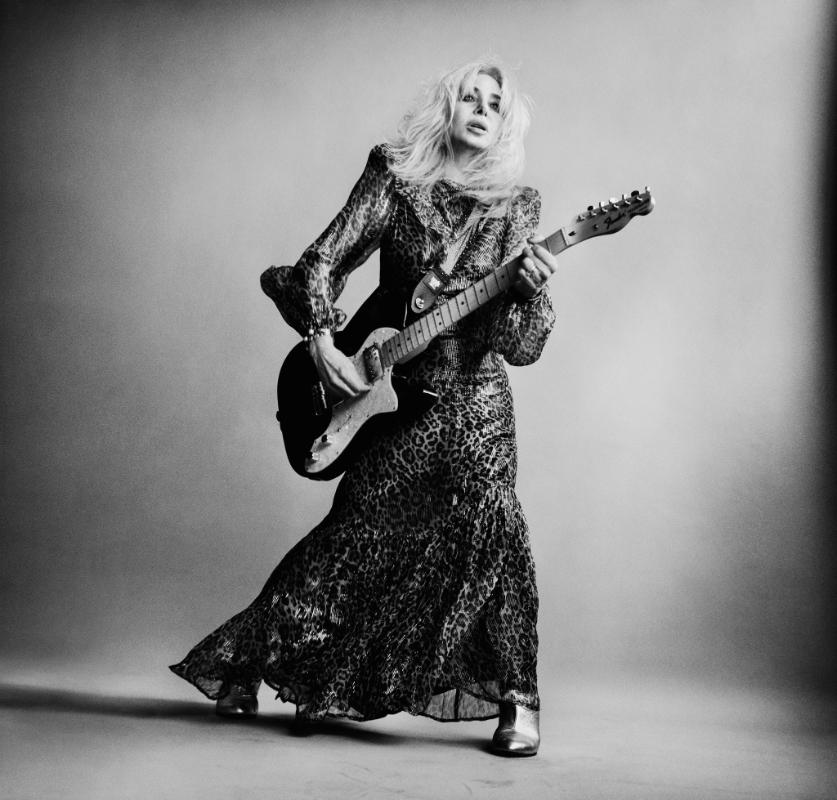
Brix Smith’s Spotify BioOne of the very few members of the Fall who had a distinct identity in the band other than uncontested leader Mark E. Smith, Brix Smith was part of one of the group's most commercially successful and critically celebrated eras, from 1983's Perverted by Language to 1988's I Am Kurious Oranj, giving them a melodic edge that buoyed Smith's confrontational lyrics. At the same time, Brix had a musical voice of her own as the leader of the Adult Net, a tuneful combo steeped in '60s-style psychedelic pop, whose playfulness (as heard on 1989's The Honey Tangle) was a sharp contrast to the rougher tone of the Fall. Outside of her two main groups, Brix also collaborated with the likes of classical violinist Nigel Kennedy (on a cover of Donovan's "Hurdy Gurdy Man") and Church guitarist Marty Willson-Piper (they made an album in the '90s, Lost Angeles, which wasn't released until 2021), and after pursuing other interests through the 2000s, she returned to action in 2014 with Brix & the Extricated,… a band dominated by a fellow Fall alumni who hit the studio in 2017 to record Part 2.
Brix Smith was born Laura Elisse Salenger in Los Angeles, California on November 12, 1962. Her father was a psychiatrist, and her mother was an executive at the CBS television network. Laura's parents divorced when she was two, and when she was ten, she and her mother moved to Chicago, Illinois, where her mother worked with the Illinois Film Office. As a teenager in Chicago, Laura became a follower of punk rock; her favorite song was "The Guns of Brixton" by the Clash, which she played so often that her friends started to call her Brixton, which was soon shortened to Brix. After completing high school, Brix attended Bennington College in Bennington, Vermont, a prestigious school where her classmates included future literary stars Bret Easton Ellis, Jill Eisenstadt, Jonathan Lethem, and Donna Tartt. In her spare time at Bennington, Brix learned to play the bass, started writing songs, and joined her first band, Banda Dratsing. She dropped out of school and returned to Chicago, where a friend turned her on to the music of the Fall. When the Fall played a show in the Windy City in April 1983, Brix was in attendance, and she happened to meet the group's singer and frontman Mark E. Smith. The two sensed an immediate connection; weeks later, Brix traveled to England for the first time to visit Smith in his native Manchester, and in July 1983, they were married.
Now known as Brix Smith, she was soon drafted into playing guitar and singing backup in the Fall, as well as contributing to the songwriting, making her debut on 1983's Perverted by Language. Brix brought a more melodic tone to the group that helped buffer Mark's often abrasive verbal attack, and it proved to be one of the most commercially successful periods of the band's history, spawning several well-reviewed albums (including 1985's This Nation's Saving Grace and 1988's The Frenz Experiment and I Am Kurious Oranj) and a pair of hit singles -- covers of R. Dean Taylor's "There's a Ghost in My House" and the Kinks' "Victoria." In 1985, Brix launched a side project, the Adult Net, with several members of the Fall (most notably Simon Rogers and sometimes Mark E. Smith) accompanying her on songs evoking the psychedelic pop of the '60s. They made their recording debut in 1985 with a single, covering the Strawberry Alarm Clock's "Incense and Peppermints," and an album, The Honey Tangle, appeared in 1989. By the time the album came out, Brix and Mark had split up, she'd left the Fall, and for a while, the Adult Net had a lineup that included three former members of the Smiths -- Craig Gannon, Mike Joyce, and Andy Rourke. (James Eller of The The and Clem Burke of Blondie also worked with the group.)
After The Honey Tangle failed to make an impression in the marketplace, Brix disbanded the Adult Net, and returned to the United States for a spell, playing bass in Susanna Hoffs' road band and auditioning to join Hole after the death of bassist Kristen Pfaff. (Brix has told reporters she was in the band for all of 24 hours before Melissa Auf der Maur landed the gig). Brix became romantically involved with noted classical violinist Nigel Kennedy, and they collaborated on a single, covering Donovan's 1968 hit "Hurdy Gurdy Man." In 1995, Brix was persuaded to rejoin the Fall, appearing on the albums Cerebral Caustic (1995) and The Light User Syndrome (1996) and touring with the band before tensions between her and her ex-husband led her to drop out. Brix also collaborated with Marty Willson-Piper of the Church on a 1997 EP, Happy Unbirthday; around the same time, the two recorded an album that initially went unreleased. The material received a digital release in 2007 under the title Neurotica, and a revised and resequenced edition came out in 2021, this time dubbed Lost Angeles.
In 1999, after Brix had returned to England, she married Philip Start, a fashion entrepreneur, and together they launched a chain of boutiques called Start. In addition to running their shops, Brix became a regular presence on British television, often appearing on programs devoted to fashion and lending her sharp wit to a variety of chat shows. After years away from music, she returned to performing in 2014 with Brix & the Extricated, a group featuring fellow Fall alumni Steve Hanley (bass) Steve Trafford (guitar), and Paul Hanley (drums), as well as guitarist Jason Brown. The group was initially formed to play a one-off gig celebrating the publication of Steve Hanley's memoirs The Big Midweek, which focused on his years in the Fall. The gig was well-received, and the band opted to continue, writing original material and releasing their debut album, Part 2, in 2017. A second LP, Breaking State, was released in 2018, and Super Blood Wolf Moon was issued in 2019. During her rare downtime from her various projects, Brix wrote an autobiography, The Rise, the Fall and the Rise, which was published in 2016. ~ Mark Deming, Rovi
Viberate is a music analytics platform built for A&Rs, artist managers, labels, booking agents, marketers, and artists.
It helps music professionals track artist growth, analyze audience data, monitor playlist activity, compare artists, follow song performance, and identify opportunities across the music market.
Public artist pages provide a free preview of selected artist data. Paid plans provide access to deeper analytics, historical data, charts, comparisons, playlist tools, exports, alerts, reports, and additional professional features.
Yes. Public Viberate artist pages provide selected artist analytics and music data for free.
Viberate also offers a 7-day free trial of the full platform. A credit card is required to start the trial. The trial includes access to the complete product so users can test deeper artist analytics, historical views, playlist insights, comparisons, charts, exports, alerts, and reporting features before choosing a paid plan.
Viberate provides artist analytics across streaming, playlists, social media, video, radio airplay, songs, and audience markets.
Users can analyze Spotify performance, Spotify and Apple Music playlists, YouTube activity, TikTok and Instagram growth, radio spins, song performance, audience locations, demographics, rankings, and overall artist momentum.
Artist profiles also connect to music charts, similar artists, and comparison tools, helping users benchmark performance and evaluate artists in context.
Viberate updates key artist and track data daily.
For followed artists and tracks, selected data is refreshed multiple times per day. This helps teams monitor playlist changes, streaming movement, audience growth, releases, and campaign performance with more current data.
Update frequency can vary depending on the metric and data source.
Yes. Viberate lets users compare up to five artists side by side across streaming, social media, audience, and engagement metrics.
Users can compare fanbase growth, audience demographics, locations, Spotify performance, social metrics, and other artist data over selected time periods.
Artist comparison can be used for A&R scouting, benchmarking, booking decisions, campaign planning, and evaluating artists with similar audiences or market positions.