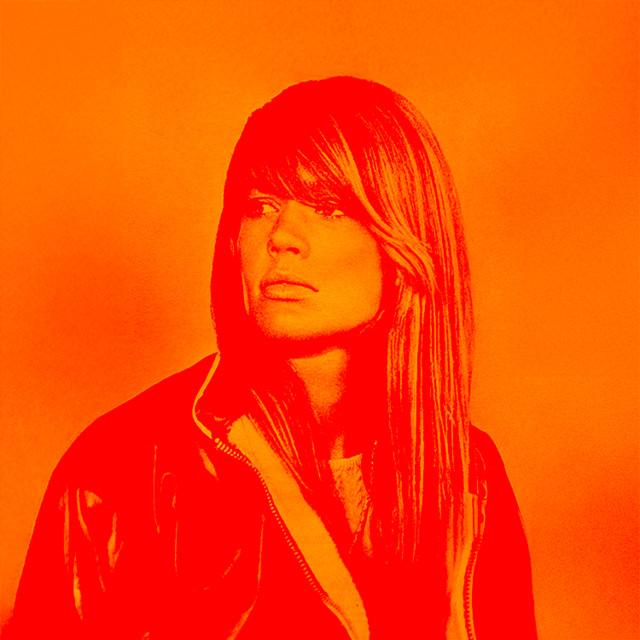
Brigitte Bardot

European
French Folk
Mainstream Pop
 Viberate Rank: 28688
 Viberate Rank: 28688
 Monthly ListenersFollowers
 Subscribers
 Followers
 Followers
 FansTop Spotify Songs
| Track | 7-Day Streams | |
|---|---|---|
1 | 135.35K | |
2 | 65.60K | |
3 | 62.51K | |
4 | 45.84K | |
5 | 40.59K |
Top YouTube VideosMonthly ListenersFeatured in Playlists| Playlist | Followers | |
|---|---|---|
1 |  French Jazz Café Spotify | 723.88K |
2 |  French Cafe Lounge Kam Diba | 469.36K |
3 |  66 GREENE _BY.ALEXANDER | 395.68K |
4 |  Alternative 60s Spotify | 360.55K |
5 |  Fidi & Bumsi Spotify | 353.23K |
Audience| City | Monthly Listeners | |
|---|---|---|
1 | | 19.45K |
2 |  | 11.21K |
3 |  | 9.20K |
4 |  | 8.08K |
5 |  | 7.56K |
See full performance history, audience data, playlist activity, rankings, comparisons, and more in Viberate music analytics. Start with a free trial, then continue with a paid plan.
Brigitte Bardot’s Spotify BioThe archetypal sex kitten, Brigitte Bardot was the first foreign-language star ever to attain a level of international success comparable to America's most popular homegrown talents. While the vast majority of her motion pictures failed to rank even remotely close to the best of her native France's prodigious New Wave-era output, they proved a major breakthrough in establishing a market for foreign films in English-speaking countries; indeed, for all of the acclaim deservedly heaped on the more gifted actors and directors of her day, perhaps no other factor was more crucial to the far-reaching success of world cinema than Bardot's sultry allure. Born September 28, 1934 in Paris, she was the daughter of a wealthy industrialist; while studying ballet, she was approached with the offer to begin modeling, and by 1950 her image had already graced the cover of Elle magazine. There she was spotted by director Marc Allegret, who had earlier discovered the young Simone Simon. Soon Allegret's… assistant, Roger Vadim, contacted Bardot for a role in the picture Les Lauriers Sont Coupes; while Allegret did not cast the young model in his film, Vadim became immediately smitten by her pouty sensuality, and in 1952 he became her husband. That same year, Bardot made her film debut in Jean Boyer's comedy Le Trou Normand; a series of bit roles followed before she appeared in Warner Bros.' 1955 production of Jean of Arc. The studio was sufficiently impressed to offer a seven-year contract, but she refused to accept her largest role to date opposite Jean Marais and Isabelle Pia in Futures Vedettes.
After traveling to Britain to appear in 1955's Doctor at Sea, Bardot returned to France to begin work on her first starring role in 1956's La Lumiere d'en Face; the film's producer, Christine Gouze-Renal, subsequently became her mentor and handled her career for a number of years. While still largely an unknown, Bardot soon enjoyed a string of hits, including Cette Sacree Gamine, Mi Figlio Nerone, and En Effeuillant la Marguerite, which positioned her as France's top sex symbol by 1957. As Bardot's popularity continued to soar, producer Raoul J. Levy offered Vadim the opportunity to direct his wife in Et Dieu Crea la Femme, an erotic melodrama co-starring Jean-Louis Trintignant. The film made Bardot an international star, earning over four million dollars in the U.S. alone; as rumors swirled about a possible affair between her and Trintignant, her marriage to Vadim began to crumble, although their respective careers remained intertwined for years to come.
Bardot's popularity with American audiences was unprecedented for a non-English speaking actress, and after Levy cut a reported $225,000 three-picture deal with Columbia for her services, she next starred in the sex romp Une Parisienne, followed by Vadim's Les Bijoutiers du Clair de Lune. After much deliberation, plans were finally announced for Bardot's English-language debut Paris by Night, to be helmed by Vadim and starring Frank Sinatra; the project fell through, however, and she next appeared in 1960's Babette s'en va-t-en Guerre opposite Jacques Charrier, who briefly became her second husband. While filming Henri-Georges Clouzot's La Verite later that year, Bardot attempted suicide on her 26th birthday; after production resumed, the completed film rose to become France's top moneymaker for the year, but it marked the end of her Columbia deal, and in light of her cooling popularity in the States and in Britain, no other deals were immediately forthcoming.
In 1960, Bardot released a pop music album, Behind Brigitte Bardot; several other LPs, including 1963's Brigitte Bardot Sings and 1968's Special Bardot, were to follow, and she scored a number of hit singles in tandem with the infamous singer/songwriter Serge Gainsbourg. After she fired the original director on the 1961 comedy La Bride Sur le Cou, Vadim stepped in to complete the picture; she next starred with Marcello Mastroianni in Louis Malle's La Vie Privée, delivering a clearly autobiographical turn as a young celebrity unable to cope with the pressures of stardom. The picture was intended as Bardot's swan song, but she was quickly coerced out of retirement to star in Jean-Luc Godard's brilliant Le Mépris; while today recognized as a classic, at the time of its release the movie was the subject of very mixed reviews, with considerable editing required for release outside of France. As a result, it was a commercial disaster, and Bardot's standing as Europe's most popular actress was usurped by Sophia Loren.
After finally making an American film, 1964's family comedy Dear Brigitte, Bardot began work on Mallle's comedy Viva Maria!, which paired her opposite Jeanne Moreau. When it failed to live up to international box-office expectations, few of Bardot's subsequent films were screened outside of France; even within her native land her star continued to dim, and she did not appear in another certified hit prior to 1970's L'Ours et la Poupee. However, when the Vadim-helmed Don Juan 1973 ou Si Don Juan Etait une Femme and 1974's L' Histoire Tres Bonne et Tres Joyeuse de Colinot Trousse Chemise failed, Bardot again announced plans for retirement; this time, apart from a handful of television appearances, she made good on her promise, and consistently refused all offers to return to the screen. In later years she became something of a recluse, but continued to make occasional headlines through her ardent support of animal rights causes. ~ Jason Ankeny, Rovi
Viberate is a music analytics platform built for A&Rs, artist managers, labels, booking agents, marketers, and artists.
It helps music professionals track artist growth, analyze audience data, monitor playlist activity, compare artists, follow song performance, and identify opportunities across the music market.
Public artist pages provide a free preview of selected artist data. Paid plans provide access to deeper analytics, historical data, charts, comparisons, playlist tools, exports, alerts, reports, and additional professional features.
Yes. Public Viberate artist pages provide selected artist analytics and music data for free.
Viberate also offers a 7-day free trial of the full platform. A credit card is required to start the trial. The trial includes access to the complete product so users can test deeper artist analytics, historical views, playlist insights, comparisons, charts, exports, alerts, and reporting features before choosing a paid plan.
Viberate provides artist analytics across streaming, playlists, social media, video, radio airplay, songs, and audience markets.
Users can analyze Spotify performance, Spotify and Apple Music playlists, YouTube activity, TikTok and Instagram growth, radio spins, song performance, audience locations, demographics, rankings, and overall artist momentum.
Artist profiles also connect to music charts, similar artists, and comparison tools, helping users benchmark performance and evaluate artists in context.
Viberate updates key artist and track data daily.
For followed artists and tracks, selected data is refreshed multiple times per day. This helps teams monitor playlist changes, streaming movement, audience growth, releases, and campaign performance with more current data.
Update frequency can vary depending on the metric and data source.
Yes. Viberate lets users compare up to five artists side by side across streaming, social media, audience, and engagement metrics.
Users can compare fanbase growth, audience demographics, locations, Spotify performance, social metrics, and other artist data over selected time periods.
Artist comparison can be used for A&R scouting, benchmarking, booking decisions, campaign planning, and evaluating artists with similar audiences or market positions.