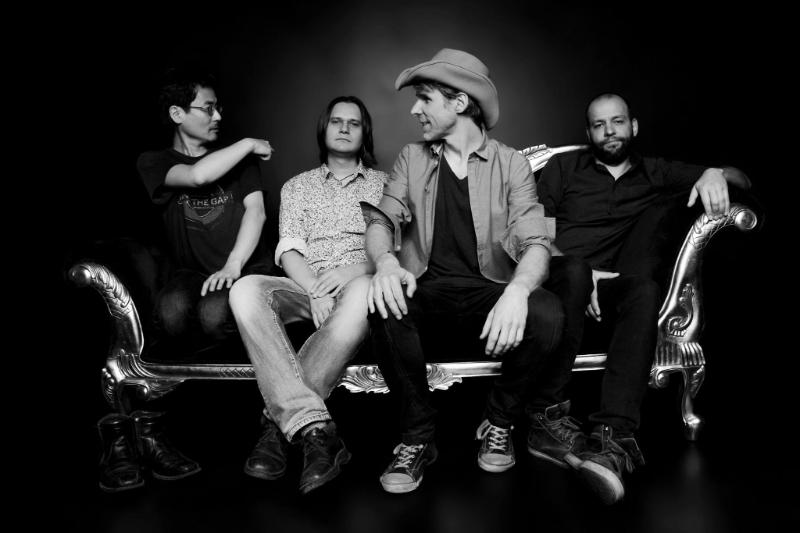
Bocephus King

Rock
Folk Rock
Americana/Alt Country
 Viberate Rank: 364751
 Viberate Rank: 364751
 Monthly ListenersFollowers
 Subscribers
 Followers
 Followers
 FansTop Spotify Songs
| Track | 7-Day Streams | |
|---|---|---|
1 | 54 | |
2 | 24 | |
3 | 18 | |
4 | 17 | |
5 | 17 |
Top YouTube VideosMonthly ListenersFeatured in PlaylistsAudience| City | Monthly Listeners | |
|---|---|---|
1 | | 12 |
2 |  | 12 |
3 | | 10 |
4 | | 9 |
5 | | 8 |
See full performance history, audience data, playlist activity, rankings, comparisons, and more in Viberate music analytics. Start with a free trial, then continue with a paid plan.
Bocephus King’s Spotify BioAn eccentric Americana troubadour who carved out a bit of a cult following in the first decades of the 21st century, Bocephus King dabbled in a great variety of sounds over the course of his career. He switched collaborators -- early in his career, he was supported by the Rigallatos, by 2018's Lula, he was recording with Flophouse Jr. -- as often as he switched styles, rooting himself in post-modern folk but flirting with rock and pop sounds, while showing a debt to both Tom Waits and Elvis Costello.
A native of Vancouver, British Columbia, Canada, James Perry adopted the name Bocephus King for his musical project. It got off the ground in the mid-'90s, when he gathered a bunch of pals to cut an album at his family's cabin in Point Roberts, Washington. The resulting Joco Music appeared on Tonic Records in 1996.
Joco Music earned the attention of New West Records, which signed Bocephus King and put out A Small Good Thing in 1998. For A Small Good Thing, Bocephus King was supported by the… Rigallatos, who backed him on the album's tour as well. They also appeared on his subsequent The Blue Sickness, which came out on Tonic in 2000. Bocephus King went it alone for All Children Believe in Heaven in 2004 and Willie Dixon God Damn! in 2010.
Bocephus King recorded 2015's The Illusion of Permanence with Orchestra Familia, a collective that also featured Ali Razmi, Owen B. Connell, and Hamin Honari. For 2018's Lula, he worked with Flophouse Jr. He once again was solo for 2020's The Infinite & The Autogrill, Vol. 1. ~ Stephen Thomas Erlewine, Rovi
Viberate is a music analytics platform built for A&Rs, artist managers, labels, booking agents, marketers, and artists.
It helps music professionals track artist growth, analyze audience data, monitor playlist activity, compare artists, follow song performance, and identify opportunities across the music market.
Public artist pages provide a free preview of selected artist data. Paid plans provide access to deeper analytics, historical data, charts, comparisons, playlist tools, exports, alerts, reports, and additional professional features.
Yes. Public Viberate artist pages provide selected artist analytics and music data for free.
Viberate also offers a 7-day free trial of the full platform. A credit card is required to start the trial. The trial includes access to the complete product so users can test deeper artist analytics, historical views, playlist insights, comparisons, charts, exports, alerts, and reporting features before choosing a paid plan.
Viberate provides artist analytics across streaming, playlists, social media, video, radio airplay, songs, and audience markets.
Users can analyze Spotify performance, Spotify and Apple Music playlists, YouTube activity, TikTok and Instagram growth, radio spins, song performance, audience locations, demographics, rankings, and overall artist momentum.
Artist profiles also connect to music charts, similar artists, and comparison tools, helping users benchmark performance and evaluate artists in context.
Viberate updates key artist and track data daily.
For followed artists and tracks, selected data is refreshed multiple times per day. This helps teams monitor playlist changes, streaming movement, audience growth, releases, and campaign performance with more current data.
Update frequency can vary depending on the metric and data source.
Yes. Viberate lets users compare up to five artists side by side across streaming, social media, audience, and engagement metrics.
Users can compare fanbase growth, audience demographics, locations, Spotify performance, social metrics, and other artist data over selected time periods.
Artist comparison can be used for A&R scouting, benchmarking, booking decisions, campaign planning, and evaluating artists with similar audiences or market positions.