Bobby Conn

Rock
Progressive Rock
Hard Rock
Pop Rock
 Viberate Rank: 355462
 Viberate Rank: 355462
 Monthly ListenersFollowers
 Subscribers
 Followers
 Followers
 FansTop Spotify Songs
| Track | 7-Day Streams | |
|---|---|---|
1 | 679 | |
2 | 69 | |
3 | 43 | |
4 | 32 | |
5 | 29 |
Top YouTube VideosMonthly ListenersFeatured in Playlists| Playlist | Followers | |
|---|---|---|
1 |  Objectively Class Tunes The Rubberbandits | 14.79K |
2 |  OUTSIDER MUSIC MILHAAUS | 7.75K |
3 | [adult swim] off the air Lindsay Pringle | 6.25K |
4 |  TRASH Record Box | Updated Regularly Erol Alkan | 4.86K |
5 |  [adult swim] DimirRogue1013 | 4.72K |
Audience| City | Monthly Listeners | |
|---|---|---|
1 | | 104 |
2 |  | 79 |
3 | | 48 |
4 | | 43 |
5 | | 41 |
See full performance history, audience data, playlist activity, rankings, comparisons, and more in Viberate music analytics. Start with a free trial, then continue with a paid plan.
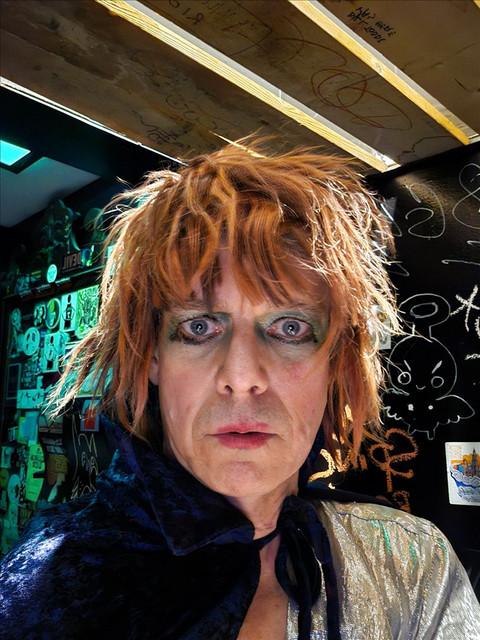
Bobby Conn’s Spotify BioWhen it comes creating his tongue-in-cheek pop that genre hops with decadent flair, Bobby Conn is in a league all his own. Since the beginning, Conn has used his talent for high concept and over-the-top absurdity to critique American society in ways that blur the boundaries between theatrics and genuine outrage; meanwhile, his music borrows from glam rock, Brazilian pop, and the lush sounds of Burt Bachrach to provide aptly flamboyant backdrops for his commentary. He began skewering America's paranoia, self-absorption, and obsession with wealth and celebrity on 1998's Rise Up!. In the years to come, he honed in on those targets, taking aim at the George W. Bush era with 2004's Homeland and superstars like Tom Cruise on 2007's King for a Day. In the 2010s, he sharpened the political edge of his music with 2012's Occupy movement-themed Macaroni and the satirical take on the self-help industry of 2020's Recovery, all while remaining true to his nimble wit and showmanship.
Born in New York… City, Conn and his family moved to Argentina and Brazil while he was a boy before eventually settling in the Midwestern U.S. During his high school years, he traveled to Chicago to see punk bands like Black Flag in concert, spurring him to form the hardcore trio the Broken Kockamamies. He began playing guitar with the experimental rock group Conducent in 1989; when they split in 1994, Conn went solo. For his backing band, he recruited former Conducent member and turntablist DJ LeDeuce and electric violinist Monica BouBou, who later became Conn's partner. His debut single "Who's the Paul?" came out in 1995, followed by 1996's "Never Get Ahead," which was issued by Truckstop Records. The label also released Conn's eponymous 1997 debut album. He moved to Thrill Jockey for 1998's Rise Up!, which extended his musical palette and got music fans outside of Chicago to take notice.
Conn remained prolific as the '90s came to a close and the new millennium began. On 1999's Lovesongs EP, he covered Badfinger and Caetano Veloso, foreshadowing the lush, eclectic sound of his 2001 full-length The Golden Age. Conn's backing band at the time was the Glass Gypsies, which featured BouBou on organ as well as guitarist Sledd, keyboardist Pearly Sweets, bassist Nick Macri, and drummer Colby Starck. Released in 2004, Homeland cast a satirical gaze at America and the war in Iraq, while 2007's King for a Day tackled fantasy, celebrity, and the media. Rise Up! was reissued just in time for Conn's 2011 tour playing the album in its entirety. For 2012's Macaroni, Conn formed backing band The Burglars from some of Chicago's leading players, including long time drummer Josh Johannpeter (also active in Lazer Crystal and Mahjongg) as well as keyboardist Jon Steinmeier and bassist Jim Cooper of The Detholz. Conn returned in 2020 with Recovery, a skewering of America's fascination with self-empowerment that took inspiration from influences ranging from J Dilla to Slade and featured BouBou, Johannpeter, Cooper, and DJ LeDeuce, among others. ~ Heather Phares & Rick Kutner, Rovi
Viberate is a music analytics platform built for A&Rs, artist managers, labels, booking agents, marketers, and artists.
It helps music professionals track artist growth, analyze audience data, monitor playlist activity, compare artists, follow song performance, and identify opportunities across the music market.
Public artist pages provide a free preview of selected artist data. Paid plans provide access to deeper analytics, historical data, charts, comparisons, playlist tools, exports, alerts, reports, and additional professional features.
Yes. Public Viberate artist pages provide selected artist analytics and music data for free.
Viberate also offers a 7-day free trial of the full platform. A credit card is required to start the trial. The trial includes access to the complete product so users can test deeper artist analytics, historical views, playlist insights, comparisons, charts, exports, alerts, and reporting features before choosing a paid plan.
Viberate provides artist analytics across streaming, playlists, social media, video, radio airplay, songs, and audience markets.
Users can analyze Spotify performance, Spotify and Apple Music playlists, YouTube activity, TikTok and Instagram growth, radio spins, song performance, audience locations, demographics, rankings, and overall artist momentum.
Artist profiles also connect to music charts, similar artists, and comparison tools, helping users benchmark performance and evaluate artists in context.
Viberate updates key artist and track data daily.
For followed artists and tracks, selected data is refreshed multiple times per day. This helps teams monitor playlist changes, streaming movement, audience growth, releases, and campaign performance with more current data.
Update frequency can vary depending on the metric and data source.
Yes. Viberate lets users compare up to five artists side by side across streaming, social media, audience, and engagement metrics.
Users can compare fanbase growth, audience demographics, locations, Spotify performance, social metrics, and other artist data over selected time periods.
Artist comparison can be used for A&R scouting, benchmarking, booking decisions, campaign planning, and evaluating artists with similar audiences or market positions.