Blue Scholars

Hip Hop
Contemporary Hip Hop
Underground Hip Hop
 Viberate Rank: 85024
 Viberate Rank: 85024
 Monthly ListenersFollowers
 Subscribers
 Followers
 Followers
 FansTop Spotify Songs
| Track | 7-Day Streams | |
|---|---|---|
1 | 12.30K | |
2 | 10.34K | |
3 | 5.79K | |
4 | 5.60K | |
5 | 5.29K |
Top YouTube VideosMonthly ListenersFeatured in Playlists| Playlist | Followers | |
|---|---|---|
1 | While You Work (@whileyouwork) Eli Feghali | 81.75K |
2 | Stoner songs hartnj | 37.39K |
3 | Rap Old School hugo_2k | 25.59K |
4 |  Jazzmatazz Volume 1 & 2 & 3 & 4 Mary | 23.56K |
5 |  The Hip Hop Rap Vault: Classic & new '90s to 2000s Lindomar Jon-Ming | 21.88K |
Audience| City | Monthly Listeners | |
|---|---|---|
1 | | 3.50K |
2 | | 2.44K |
3 | | 2.34K |
4 | | 2.01K |
5 | | 1.97K |
See full performance history, audience data, playlist activity, rankings, comparisons, and more in Viberate music analytics. Start with a free trial, then continue with a paid plan.
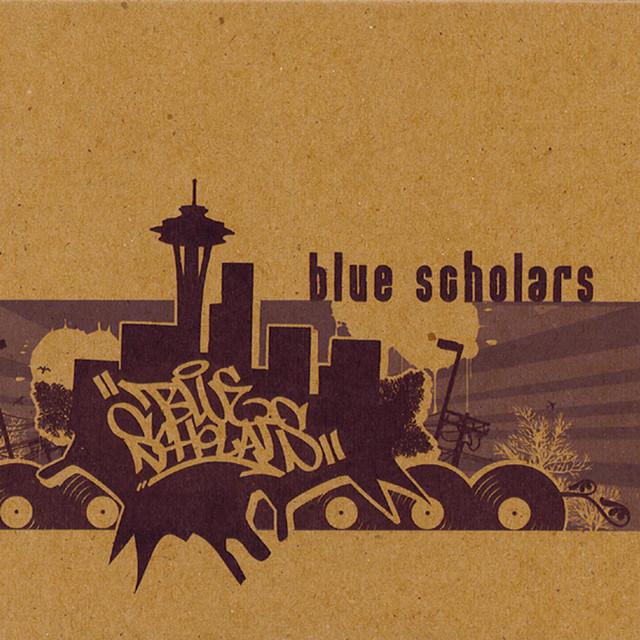
Blue Scholars’ Spotify BioSide by side with companion Seattle-based rap groups Common Market and Boom Bap Project, the Blue Scholars led the charge in proclaiming the Pacific Northwest as a breeding ground for "true school" hip-hop. Perceiving themselves as blue-collar intellectuals, DJ/producer Sabzi (born Alexei Saba Mohajerjasbi) and MC Geologic (born George Quibuyen) used their music as a vehicle to promote their socially conscious objectives and to build a hip-hop scene in Seattle, WA, and its surroundings. The two first met on the University of Washington campus as students in 1999, but formed the group in early 2002. They bonded more strongly as a formidable duo during the course of doing numerous live shows. Avoiding the bureaucratic red tape of record labels, they took the D.I.Y. approach and self-pressed their debut LP, Blue Scholars, in early 2004. Sabzi drew on his Persian/Iranian heritage, classical piano training, and affinity for jazz to compose light and breezy beats to complement Geologic's… enlightening rhymes. The album's widespread reception exponentially increased their demand for live shows and performances, something the progressive duo didn't anticipate. They also didn't expect the Seattle Weekly to name it Album of the Year, which helped push the album to be picked up for national and international distribution in 2005. Instead of recoiling from the spotlight and the local fame, Geologic and Sabzi were bent on cultivating a movement. Sabzi teamed up with another former student of UW, RA Scion, to form Common Market in 2005. In summer 2006, they established the independent imprint and multimedia company, Mass Line Media, with MC Gabriel Teodros (of Abyssinian Creole). ~ Cyril Cordor, Rovi
Viberate is a music analytics platform built for A&Rs, artist managers, labels, booking agents, marketers, and artists.
It helps music professionals track artist growth, analyze audience data, monitor playlist activity, compare artists, follow song performance, and identify opportunities across the music market.
Public artist pages provide a free preview of selected artist data. Paid plans provide access to deeper analytics, historical data, charts, comparisons, playlist tools, exports, alerts, reports, and additional professional features.
Yes. Public Viberate artist pages provide selected artist analytics and music data for free.
Viberate also offers a 7-day free trial of the full platform. A credit card is required to start the trial. The trial includes access to the complete product so users can test deeper artist analytics, historical views, playlist insights, comparisons, charts, exports, alerts, and reporting features before choosing a paid plan.
Viberate provides artist analytics across streaming, playlists, social media, video, radio airplay, songs, and audience markets.
Users can analyze Spotify performance, Spotify and Apple Music playlists, YouTube activity, TikTok and Instagram growth, radio spins, song performance, audience locations, demographics, rankings, and overall artist momentum.
Artist profiles also connect to music charts, similar artists, and comparison tools, helping users benchmark performance and evaluate artists in context.
Viberate updates key artist and track data daily.
For followed artists and tracks, selected data is refreshed multiple times per day. This helps teams monitor playlist changes, streaming movement, audience growth, releases, and campaign performance with more current data.
Update frequency can vary depending on the metric and data source.
Yes. Viberate lets users compare up to five artists side by side across streaming, social media, audience, and engagement metrics.
Users can compare fanbase growth, audience demographics, locations, Spotify performance, social metrics, and other artist data over selected time periods.
Artist comparison can be used for A&R scouting, benchmarking, booking decisions, campaign planning, and evaluating artists with similar audiences or market positions.