Blonde On Blonde

Rock
Progressive Rock
 Viberate Rank: 290990
 Viberate Rank: 290990
 Monthly ListenersFollowers
 Subscribers
 Followers
 Followers
 FansTop Spotify Songs
| Track | 7-Day Streams | |
|---|---|---|
1 | 171 | |
2 | 100 | |
3 | 58 | |
4 | 54 | |
5 | 53 |
Top YouTube VideosMonthly ListenersFeatured in Playlists| Playlist | Followers | |
|---|---|---|
1 | Best of Progressive Rock Niels N. | 51.44K |
2 |  Obscure 60s/70s Psychedelic Rock Jason LeValley | 15.25K |
3 |  Sitar Psychedelia Kieran McManus | 11.60K |
4 |  70s Proto-Metal, Heavy Psych & Obscure Hard Rock Jordan Edrei | 11.27K |
5 | 60s Psychedelic Trip andreas1965-71 | 8.21K |
Audience| City | Monthly Listeners | |
|---|---|---|
1 |  | 18 |
2 |  | 16 |
3 |  | 14 |
4 |  | 13 |
5 |  | 12 |
See full performance history, audience data, playlist activity, rankings, comparisons, and more in Viberate music analytics. Start with a free trial, then continue with a paid plan.
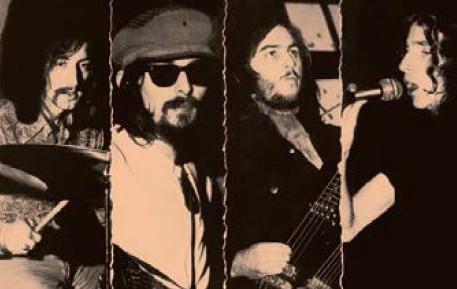
Blonde On Blonde’s Spotify BioBlonde on Blonde, taking their name from the then-new Bob Dylan album of that title, were spawned in 1967 out of a Welsh blues-rock band called the Cellar Set. Gareth Johnson played the guitar, sitar, and lute, while Richard Hopkins handled the bass, piano, harpsichord, cornet, celeste, and whistle, and Les Hicks played the drums. The addition of Ralph Denyer made them into a quartet with vocals; and Simon Lawrence, an alumnus of Roy Harper's and Al Stewart's early recordings, was with them briefly, as well, on 12-string guitar. The group took part in the Middle Earth Club's Magical Mystery Tour, which brought them an initial splash of press exposure. They were also fortunate enough to open for the Jefferson Airplane on the latter group's British tour. All of this activity led to an approach by Pye Records producer Barry Murray, who got them signed to the label, and through whom they released their debut single "All Day, All Night" b/w "Country Life." Though decidedly guitar-based in… their sound, the band's music also used psychedelic pop arrangements that gave it an almost orchestral majesty which, when coupled with Johnson's sitar and lute embellishments and Hopkins' harpsichord and other unusual keyboards -- with Hicks getting into the act on the tabla -- gave them an appealingly exotic sound. Their live performances were frequently divided, à la Crosby, Stills, Nash & Young, into acoustic and electric sets, in order to show off their full range.
The group issued their first album, Contrasts, in 1969, on the Janus label -- that record showed more of the early but burgeoning influence of progressive rock, while retaining their early psychedelic coloration. That same year, the band played to the largest single audience of its entire history when they appeared at the first Isle of Wight Festival. They also issued their second single "Castles in the Sky" b/w "Circles'" and the LP Rebirth, both on the Ember label, which featured a new lineup -- Denyer had exited the band to form Aquila, ceding his spot in Blonde on Blonde to singer-guitarist David Thomas. Richard Hopkins was replaced in mid-1971 by bassist-guitarist-banjo player Graham Davis, and it was this lineup that recorded their third LP, Reflections on a Life, at Rockfield Studios. It failed to sell any better than their prior releases, however, and the group broke up in 1972, shortly after that album's release. The group's albums are recognized as collector's items on vinyl, and their first album, in particular, is a beguiling mix of psychedelia and progressive rock. But their debut single, "All Day, All Night," is regarded in many quarters as their most significant release, a classic of late-'60s psychedelic pop/rock. ~ Bruce Eder, Rovi
Viberate is a music analytics platform built for A&Rs, artist managers, labels, booking agents, marketers, and artists.
It helps music professionals track artist growth, analyze audience data, monitor playlist activity, compare artists, follow song performance, and identify opportunities across the music market.
Public artist pages provide a free preview of selected artist data. Paid plans provide access to deeper analytics, historical data, charts, comparisons, playlist tools, exports, alerts, reports, and additional professional features.
Yes. Public Viberate artist pages provide selected artist analytics and music data for free.
Viberate also offers a 7-day free trial of the full platform. A credit card is required to start the trial. The trial includes access to the complete product so users can test deeper artist analytics, historical views, playlist insights, comparisons, charts, exports, alerts, and reporting features before choosing a paid plan.
Viberate provides artist analytics across streaming, playlists, social media, video, radio airplay, songs, and audience markets.
Users can analyze Spotify performance, Spotify and Apple Music playlists, YouTube activity, TikTok and Instagram growth, radio spins, song performance, audience locations, demographics, rankings, and overall artist momentum.
Artist profiles also connect to music charts, similar artists, and comparison tools, helping users benchmark performance and evaluate artists in context.
Viberate updates key artist and track data daily.
For followed artists and tracks, selected data is refreshed multiple times per day. This helps teams monitor playlist changes, streaming movement, audience growth, releases, and campaign performance with more current data.
Update frequency can vary depending on the metric and data source.
Yes. Viberate lets users compare up to five artists side by side across streaming, social media, audience, and engagement metrics.
Users can compare fanbase growth, audience demographics, locations, Spotify performance, social metrics, and other artist data over selected time periods.
Artist comparison can be used for A&R scouting, benchmarking, booking decisions, campaign planning, and evaluating artists with similar audiences or market positions.