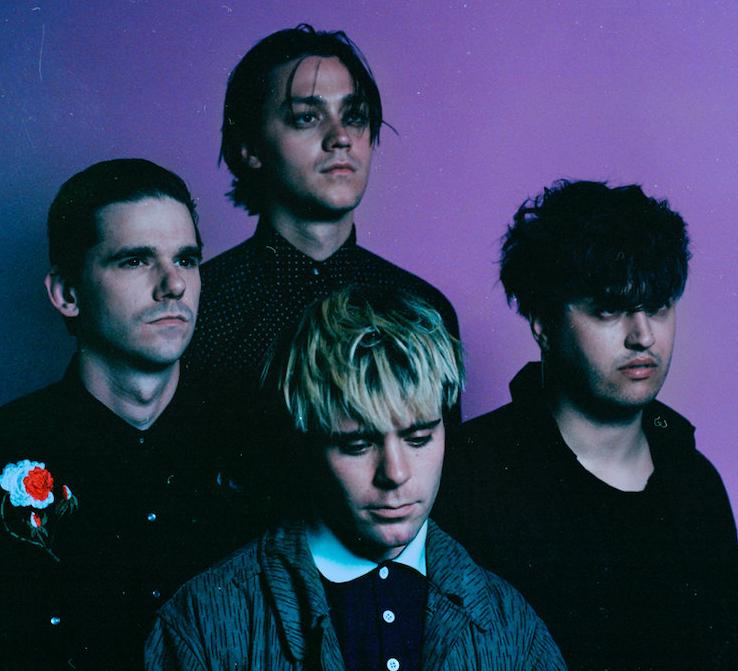
Black Marble

Pop
Indie Pop
Cold wave
 Viberate Rank: 44943
 Viberate Rank: 44943
 Monthly ListenersFollowers
 Subscribers
 Followers
 Followers
 FansTop Spotify Songs
| Track | 7-Day Streams | |
|---|---|---|
1 | 76.40K | |
2 | 15.60K | |
3 | 14.98K | |
4 | 11.99K | |
5 | 9.62K |
Top YouTube VideosMonthly ListenersFeatured in Playlists| Playlist | Followers | |
|---|---|---|
1 |  Drive Soundtrack - OST - Drive / Cliff Martinez KULTPOP! | 181.80K |
2 |  Drive Soundtrack Servaas Vehmeijer | 154.09K |
3 |  Domino Sound System Domino Recording Company | 60.47K |
4 |  Darkwave Void | 57.19K |
5 | new sounds= Laura Taylor | 50.28K |
Audience| City | Monthly Listeners | |
|---|---|---|
1 | | 7.97K |
2 | | 5.17K |
3 |  | 4.63K |
4 |  | 4.30K |
5 | | 4.24K |
See full performance history, audience data, playlist activity, rankings, comparisons, and more in Viberate music analytics. Start with a free trial, then continue with a paid plan.
Black Marble’s Spotify BioInfluenced by coldwave, early-'80s synth pop, and the mighty bass playing of New Order's Peter Hook, Black Marble is the project of singer/songwriter/multi-instrumentalist Chris Stewart. When Stewart debuted in 2012 with The Weight Against the Door EP, he remained true to the frosty gloom of his influences, burying his monotone baritone with layers of echo, reverb, and analog synths. As time went on, however, he let more light and warmth into his music, particularly on 2019's Bigger Than Life and 2021's Fast Idol, both of which reflected his move from Brooklyn to the sunnier climes of Los Angeles.
Black Marble's roots go back to the early 2010s, when Stewart began making music on his laptop. When he played his songs for his friends, they liked his songwriting but thought the instrumentation could sound better, so he looked to the scene around him in Brooklyn for inspiration. He found it in Wierd, a dance party that brought in synth-driven acts from around the world (and also spawned the… influential label Wierd Records). Stewart was particularly taken with the sound and analog gear of Martial Canterel's Sean McBride (also of Xeno & Oaklander), and started building his own arsenal of vintage synths, including a Juno and a Korg DW-8000. Not long after, he joined up with ex-Team Robespierre member Ty Kube. The duo made their debut in January 2012 with The Weight Against the Door, an EP released by the Seattle label Hardly Art that introduced Black Marble's faithful update of coldwave's stark-yet-murky, bleak-yet-beautiful sound. That September, their first full-length, A Different Arrangement, appeared on the label and presented a slightly warmer and more melodic version of their style.
Following the release of A Different Arrangement, Stewart began to tire of living in New York. He planned a move to Los Angeles, but wanted to finish Black Marble's second album before he left. During this time, Kube departed and Stewart was hospitalized with a serious case of pneumonia. These personal and physical changes were echoed on It's Immaterial, a lighter and clearer-sounding set of songs that Ghostly International released in October 2016. After settling in L.A., Stewart began work on his third album. Moved by the landscapes as well as the sense of community in his new home, he wrote more immediate songs that brought his voice front and center. In October 2019, Sacred Bones released Bigger Than Life. The following August, Black Marble issued I Must Be Living Twice, an EP of songs originally by Wire, Robert Palmer, and Grouper that were favorites at the band's shows. On October 2021's Fast Idol, Stewart incorporated the more impressionistic songwriting of his early albums with the brighter sound of Bigger Than Life. ~ Heather Phares, Rovi
Viberate is a music analytics platform built for A&Rs, artist managers, labels, booking agents, marketers, and artists.
It helps music professionals track artist growth, analyze audience data, monitor playlist activity, compare artists, follow song performance, and identify opportunities across the music market.
Public artist pages provide a free preview of selected artist data. Paid plans provide access to deeper analytics, historical data, charts, comparisons, playlist tools, exports, alerts, reports, and additional professional features.
Yes. Public Viberate artist pages provide selected artist analytics and music data for free.
Viberate also offers a 7-day free trial of the full platform. A credit card is required to start the trial. The trial includes access to the complete product so users can test deeper artist analytics, historical views, playlist insights, comparisons, charts, exports, alerts, and reporting features before choosing a paid plan.
Viberate provides artist analytics across streaming, playlists, social media, video, radio airplay, songs, and audience markets.
Users can analyze Spotify performance, Spotify and Apple Music playlists, YouTube activity, TikTok and Instagram growth, radio spins, song performance, audience locations, demographics, rankings, and overall artist momentum.
Artist profiles also connect to music charts, similar artists, and comparison tools, helping users benchmark performance and evaluate artists in context.
Viberate updates key artist and track data daily.
For followed artists and tracks, selected data is refreshed multiple times per day. This helps teams monitor playlist changes, streaming movement, audience growth, releases, and campaign performance with more current data.
Update frequency can vary depending on the metric and data source.
Yes. Viberate lets users compare up to five artists side by side across streaming, social media, audience, and engagement metrics.
Users can compare fanbase growth, audience demographics, locations, Spotify performance, social metrics, and other artist data over selected time periods.
Artist comparison can be used for A&R scouting, benchmarking, booking decisions, campaign planning, and evaluating artists with similar audiences or market positions.