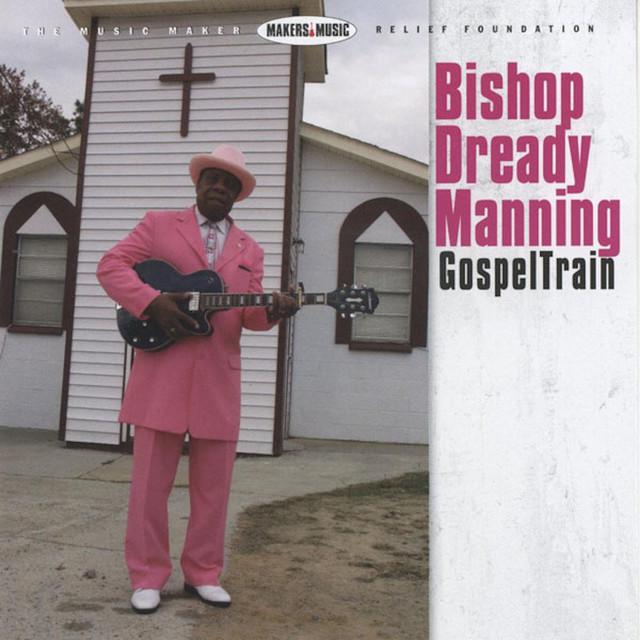
Bishop Dready Manning

Blues
Contemporary Blues
 Viberate Rank: 926802
 Viberate Rank: 926802
 Monthly ListenersFollowers
 Subscribers
 Followers
 Followers
 FansTop Spotify Songs
| Track | 7-Day Streams | |
|---|---|---|
1 | 24 | |
2 | 6 | |
3 | 6 | |
4 | 1 |
Top YouTube VideosMonthly ListenersFeatured in PlaylistsAudience| City | Monthly Listeners | |
|---|---|---|
1 | | 3 |
See full performance history, audience data, playlist activity, rankings, comparisons, and more in Viberate music analytics. Start with a free trial, then continue with a paid plan.
Bishop Dready Manning’s Spotify BioBishop Dready Manning was born on August 10, 1934. The young Dready Manning was “out of hand,” his wife Marie said — playing the blues and selling moonshine. But a hemorrhage at age 28 changed him. He spent the rest of his life playing a hard-driving, blues-sounding version of the gospel.
For the remaining 50 years of his life, he took his hard-driving style of blues playing and dedicated it to God, singing the gospel with Marie. He served as bishop of the St. Mark Holiness Church in Roanoke Rapids, North Carolina, and played gospel music there every Sunday with his family.
“The Lord gave me this way of playing,” he once told us in his velvety voice, “and He told me to use it in his service. So that’s just what I’m doing.”
Working with Music Maker, Bishop Manning recorded the album “Gospel Train,” which came out in 2007, and contributed tracks to three of our compilations: “Drink House to Church House, Vol. 1,” “Expessin’ the Blues” and “Come So Far.”
“Besides his tremendous musicianship… on the guitar and harmonica,” Music Maker's co-founder Tim Duffy says, “Dready was a powerful singer and songwriter. His recorded work won rave reviews throughout the world and earned the state of North Carolina great praise for being a home to such a wonderful musician.”
Manning died August 15, 2017.
Viberate is a music analytics platform built for A&Rs, artist managers, labels, booking agents, marketers, and artists.
It helps music professionals track artist growth, analyze audience data, monitor playlist activity, compare artists, follow song performance, and identify opportunities across the music market.
Public artist pages provide a free preview of selected artist data. Paid plans provide access to deeper analytics, historical data, charts, comparisons, playlist tools, exports, alerts, reports, and additional professional features.
Yes. Public Viberate artist pages provide selected artist analytics and music data for free.
Viberate also offers a 7-day free trial of the full platform. A credit card is required to start the trial. The trial includes access to the complete product so users can test deeper artist analytics, historical views, playlist insights, comparisons, charts, exports, alerts, and reporting features before choosing a paid plan.
Viberate provides artist analytics across streaming, playlists, social media, video, radio airplay, songs, and audience markets.
Users can analyze Spotify performance, Spotify and Apple Music playlists, YouTube activity, TikTok and Instagram growth, radio spins, song performance, audience locations, demographics, rankings, and overall artist momentum.
Artist profiles also connect to music charts, similar artists, and comparison tools, helping users benchmark performance and evaluate artists in context.
Viberate updates key artist and track data daily.
For followed artists and tracks, selected data is refreshed multiple times per day. This helps teams monitor playlist changes, streaming movement, audience growth, releases, and campaign performance with more current data.
Update frequency can vary depending on the metric and data source.
Yes. Viberate lets users compare up to five artists side by side across streaming, social media, audience, and engagement metrics.
Users can compare fanbase growth, audience demographics, locations, Spotify performance, social metrics, and other artist data over selected time periods.
Artist comparison can be used for A&R scouting, benchmarking, booking decisions, campaign planning, and evaluating artists with similar audiences or market positions.

