Bill Cunliffe

Jazz
Smooth Jazz
 Viberate Rank: 261849
 Viberate Rank: 261849
 Monthly ListenersFollowers
 Subscribers
 Followers
 Followers
 FansTop Spotify Songs
| Track | 7-Day Streams | |
|---|---|---|
1 | 5.89K | |
2 | 308 | |
3 | 148 | |
4 | 121 | |
5 | 116 |
Top YouTube Videos| Video | 7-Day Views | |
|---|---|---|
1 | 33 | |
2 | 18 | |
3 | 15 | |
4 | 12 | |
5 | 10 |
Monthly ListenersFeatured in Playlists| Playlist | Followers | |
|---|---|---|
1 |  Jazzy Romance Spotify | 1.30M |
2 |  Sweet Jazz Spotify | 301.63K |
3 |  BOSCH a fan made playlist with Harry Bosch Jazz inspired by the TV-Series and books. Jens Olsson | 19.74K |
4 |  Cozinhando com o Arno Arno van Enck | 12.98K |
5 | VIOLIN & PIANO & CHELO Francisco Diaz-Ney | 11.72K |
Audience| City | Monthly Listeners | |
|---|---|---|
1 |  | 52 |
2 |  | 37 |
3 | | 35 |
4 | | 21 |
5 |  | 21 |
See full performance history, audience data, playlist activity, rankings, comparisons, and more in Viberate music analytics. Start with a free trial, then continue with a paid plan.
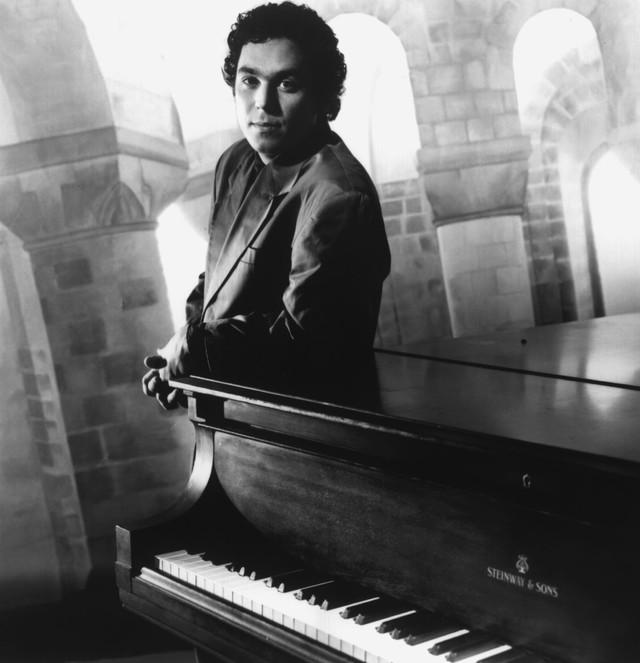
Bill Cunliffe’s Spotify BioA Grammy Award-winning jazz pianist, arranger, and educator, Bill Cunliffe is an adept soloist with a swinging flow and a lyrical improvisational quality. After graduating from Eastman School of Music, he first launched his career as a teacher at Ohio's Central State University, and then as a drummer and arranger with the Buddy Rich Big Band. Later, Cunliffe came to the greater public's attention as the winner of the 1989 Thelonious Monk Institute of Jazz International Piano Competition. Along with his own highly regarded solo albums, including 1993's Rare Connection, 2003's How My Heart Sings, and 2017's Bachanalia, he was a longtime member of the Clayton-Hamilton Jazz Orchestra, and has worked with a bevy of name performers including Joe Henderson, Frank Sinatra, Freddie Hubbard, Benny Golson, and Michael Bublé. In 2010, he won a Grammy Award for his arrangement of "West Side Story Medley" off The Resonance Big Band Plays Tribute to Oscar Peterson. Based in Los Angeles, Cunliffe… balances his time between teaching at California State University, Fullerton, leading his own post-bop jazz groups, and working with his Latin band Imaginación and his classical-jazz ensemble Trimotif. In 2018, he joined harmonica player Hendrik Meurkens for Cabin in the Sky.
Born William Henry Cunliffe, Jr. in 1956 in Andover, Massachusetts, he was introduced to music at young age by his mother, a talented pianist. Growing up, Cunliffe took private lessons while attending Phillips Academy, and listened to a varied mix of classical, jazz, pop, and rock artists. Later, he attended Wesleyan University, and played in a local rock band. During this period, a friend introduced him to the music of pianist Oscar Peterson, a discovery that ignited his enduring love of jazz. Although Cunliffe had flirted with notions of studying medicine and psychology, by his senior year he was dedicated to music. He transferred to Duke University, where he studied with pianist Mary Lou Williams, and later earned his master's degree from Eastman School of Music.
Upon graduating, he accepted a position teaching at Central State University in Wilberforce, Ohio, and left after two years to join the Buddy Rich Big Band as drummer and arranger. Following his time with Rich, Cunliffe returned to Southern Ohio, where he played for a time as the house pianist at the Greenwich Tavern in Cincinnati, working with a regular flow of touring musicians like Freddie Hubbard, Joe Henderson, Woody Shaw, James Moody, and others. Relocating to Los Angeles in 1989, he entered and won the prestigious Thelonious Monk Institute of Jazz International Piano Competition. That same year, he paired with drummer Bernie Dresel for Porcupine, the self-titled debut of their crossover jazz ensemble. From there, he began his long association with the Clayton Brothers and the Clayton-Hamilton Jazz Orchestra, touring and recording with them for several years.
As a leader, Cunliffe debuted with 1993's A Rare Connection, a swinging, straight-ahead session featuring reedman Bob Sheppard, trumpeter Clay Jenkins, trombonist Bruce Paulson, bassist Dave Carpenter, drummer Peter Erskine, and percussionist Kurt Rasmussen. He followed up a year later with A Paul Simon Songbook, which found him investigating the songs of one of his favorite pop writers alongside saxophonist Gerald Albright, guitarist Thom Rotella, and others. More well-received albums followed, including the bossa nova-tinged Bill in Brazil, 1998's Bud Powell-themed Bill Plays Bud, and the 1990 solo piano session Satisfaction. He also returned to his work with Porcupine, continued his work the Clayton Brothers, and made session dates with flutist Holly Hofmann, the Jazz at the Movies Band, Bob Curnow, and more. Also in the '90s, Cunliffe garnered two Emmy Award nominations for Best Original Song for his work on the daytime soap operas Another World and Guiding Light.
Over the next decade, Cunliffe continued to expand his output, releasing several live albums, and debuting his Latin jazz ensemble with 2005's Imaginación. He also earned first of several Grammy Award nominations for his arrangement of "Angel Eyes," off trombonist Alan Kaplan's 2002 album Lonely Town. There were records with saxophonist Gary Foster, drummer Joe La Barbera, Eden Atwood, and Phil Kelly, among others. In 2010, Cunliffe took home his first Grammy Award win for his arrangement of "West Side Story Medley" off The Resonance Big Band Plays Tribute to Oscar Peterson. More Grammy nominations followed, including for his arrangements of Terell Stafford and the Temple University Orchestra's 2012 album Overture, Waltz and Rondo for Jazz Piano, Trumpet and Orchestra. He also paired with clarinetist Mort Weiss for an album, collaborated with clarinetist Gary Gray on Rhapsody in Blue Plus More Gershwin, and played on Michael Bublé's Nobody But Me.
In 2017, Cunliffe delivered Bachanalia, which featured big-band versions of compositions by J.S. and C.P.E. Bach, Falla, Prokofiev, and more. He then collaborated with harmonica player Hendrik Meurkens on 2018's Cabin in the Sky. The holiday-themed Christmas in the Dog House arrived the following year. ~ Matt Collar, Rovi
Viberate is a music analytics platform built for A&Rs, artist managers, labels, booking agents, marketers, and artists.
It helps music professionals track artist growth, analyze audience data, monitor playlist activity, compare artists, follow song performance, and identify opportunities across the music market.
Public artist pages provide a free preview of selected artist data. Paid plans provide access to deeper analytics, historical data, charts, comparisons, playlist tools, exports, alerts, reports, and additional professional features.
Yes. Public Viberate artist pages provide selected artist analytics and music data for free.
Viberate also offers a 7-day free trial of the full platform. A credit card is required to start the trial. The trial includes access to the complete product so users can test deeper artist analytics, historical views, playlist insights, comparisons, charts, exports, alerts, and reporting features before choosing a paid plan.
Viberate provides artist analytics across streaming, playlists, social media, video, radio airplay, songs, and audience markets.
Users can analyze Spotify performance, Spotify and Apple Music playlists, YouTube activity, TikTok and Instagram growth, radio spins, song performance, audience locations, demographics, rankings, and overall artist momentum.
Artist profiles also connect to music charts, similar artists, and comparison tools, helping users benchmark performance and evaluate artists in context.
Viberate updates key artist and track data daily.
For followed artists and tracks, selected data is refreshed multiple times per day. This helps teams monitor playlist changes, streaming movement, audience growth, releases, and campaign performance with more current data.
Update frequency can vary depending on the metric and data source.
Yes. Viberate lets users compare up to five artists side by side across streaming, social media, audience, and engagement metrics.
Users can compare fanbase growth, audience demographics, locations, Spotify performance, social metrics, and other artist data over selected time periods.
Artist comparison can be used for A&R scouting, benchmarking, booking decisions, campaign planning, and evaluating artists with similar audiences or market positions.