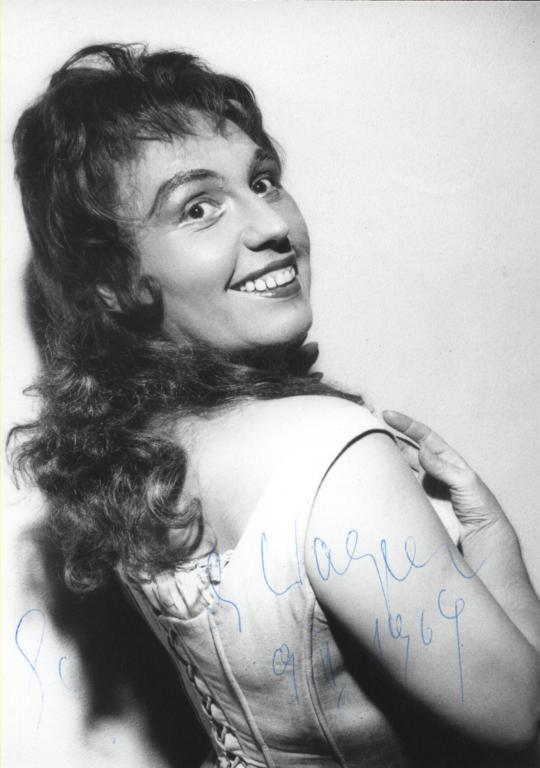
Bernd Weikl

Classical
Opera
Classical Crossover
 Viberate Rank: 447390
 Viberate Rank: 447390
 Monthly ListenersFollowers
 Subscribers
 Followers
 Followers
 FansTop Spotify Songs
| Track | 7-Day Streams | |
|---|---|---|
1 | 599 | |
2 | 598 | |
3 | 571 | |
4 | 521 | |
5 | 450 |
Top YouTube VideosMonthly ListenersFeatured in Playlists| Playlist | Followers | |
|---|---|---|
1 |  This Is Wagner Spotify | 113.02K |
2 | Reddit's Hype Playlist kfbest | 27.36K |
3 |  Motzart Frank Karall | 8.21K |
4 |  Alex Ross's The Rest is Noise aidanosu | 2.70K |
5 |  Norton Anthology of Western Music (NAWM), 7th ed. Hayley Abramowitz | 2.23K |
Audience| City | Monthly Listeners | |
|---|---|---|
1 |  | 235 |
2 |  | 224 |
3 | | 193 |
4 |  | 142 |
5 | | 124 |
See full performance history, audience data, playlist activity, rankings, comparisons, and more in Viberate music analytics. Start with a free trial, then continue with a paid plan.
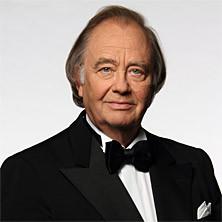
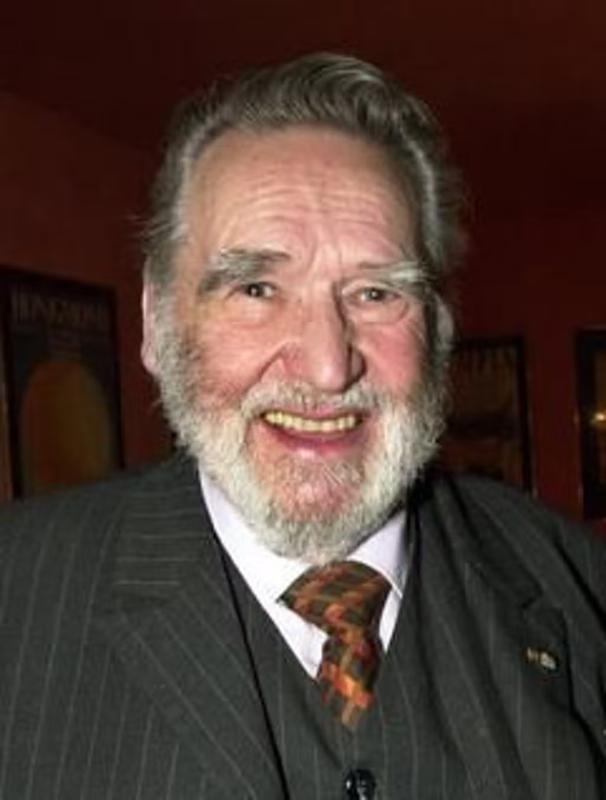
Bernd Weikl’s Spotify BioThis Austrian singer, whose career trajectory has taken him from lyric to dramatic baritone, has established himself as a strong and reliable artist. At his first appearance in Bayreuth as Wolfram, Weikl revealed a linear, compact instrument with a quick vibrato. While by no means a bass baritone, his lower voice has gained in amplitude over the years, allowing him to fill out the deeper reaches of such roles as Wagner's Dutchman and Hans Sachs, and Strauss' Barak and Mandryka. Indeed, his handsome, burly appearance is now matched by the sound and texture of his expanded voice. By no means a penetrating actor, Weikl still brings earnest intent and solid craft to his stage performances. In addition to the heavier German repertory, Weikl has shown consistent interest in Italian roles, at one point recording an accomplished Rigoletto.
Following studies at Mainz and Hanover, Weikl made his stage debut at the latter city in 1968, singing Ottokar in Weber's Der Freischütz. He joined the… company at Düsseldorf in 1970, remaining with that theater for three years. During that period, he was engaged by Karajan for Melot at the 1971 Salzburg Festival and, the year after, made his debut at the Bayreuth Festival as Wolfram. His first-season success led to further engagements as the Herald, Amfortas, and later, Hans Sachs.
For his London debut, Rossini's Figaro was the role -- an interpretation noted as boisterous, but somewhat Germanic. Weikl's Metropolitan Opera debut on December 2, 1977, found him singing Wolfram once more, enjoying another success with the part. Subsequently, he has returned to the Metropolitan as Orest, Jochanaan, Amfortas, Mandryka, and Hans Sachs.
Other theaters throughout Europe were likewise as quick to engage Weikl; he became a celebrated singer in his native Vienna as well as in Munich, Berlin, and Hamburg. Industrious in adding new parts, the singer can now boast more than 100 characters in his inventory. Beyond the Continent, he is best-known for his Wagner and Strauss roles, but in Austria and Germany he has just as often sung the Italian, Russian, and French repertories; these include such figures as Verdi's Posa, Count di Luna, Ford and Simon Boccanegra, Mozart's Don Giovanni (recorded with Solti), Count Almaviva, Guglielmo, Tchaikovsky's Yevgeny Onegin (also recorded with Solti), Tomsky, Morone in Pfitzner's Palestrina, and Goloud. Although his primary focus has remained on opera, Weikl is also a positive presence on the concert stage, both as a soloist in choral works and as a recitalist. These activities have largely been centered in Europe.
Of Weikl's many recordings, several deserve special attention. His Hans Sachs, recorded with Cheryl Studer, Ben Heppner, and Kurt Moll under the mature and understanding direction of Wolfgang Sawallisch is worth searching out. His Dutchman with Sinopoli has much of the requisite torment and is firmly sung. His Eugene Onegin, recorded with a good cast and lovingly led by Solti is worth pursuing, as is his Cardinal Morone in Kubelik's recording of Palestrina, captured in excellent sound.
Viberate is a music analytics platform built for A&Rs, artist managers, labels, booking agents, marketers, and artists.
It helps music professionals track artist growth, analyze audience data, monitor playlist activity, compare artists, follow song performance, and identify opportunities across the music market.
Public artist pages provide a free preview of selected artist data. Paid plans provide access to deeper analytics, historical data, charts, comparisons, playlist tools, exports, alerts, reports, and additional professional features.
Yes. Public Viberate artist pages provide selected artist analytics and music data for free.
Viberate also offers a 7-day free trial of the full platform. A credit card is required to start the trial. The trial includes access to the complete product so users can test deeper artist analytics, historical views, playlist insights, comparisons, charts, exports, alerts, and reporting features before choosing a paid plan.
Viberate provides artist analytics across streaming, playlists, social media, video, radio airplay, songs, and audience markets.
Users can analyze Spotify performance, Spotify and Apple Music playlists, YouTube activity, TikTok and Instagram growth, radio spins, song performance, audience locations, demographics, rankings, and overall artist momentum.
Artist profiles also connect to music charts, similar artists, and comparison tools, helping users benchmark performance and evaluate artists in context.
Viberate updates key artist and track data daily.
For followed artists and tracks, selected data is refreshed multiple times per day. This helps teams monitor playlist changes, streaming movement, audience growth, releases, and campaign performance with more current data.
Update frequency can vary depending on the metric and data source.
Yes. Viberate lets users compare up to five artists side by side across streaming, social media, audience, and engagement metrics.
Users can compare fanbase growth, audience demographics, locations, Spotify performance, social metrics, and other artist data over selected time periods.
Artist comparison can be used for A&R scouting, benchmarking, booking decisions, campaign planning, and evaluating artists with similar audiences or market positions.