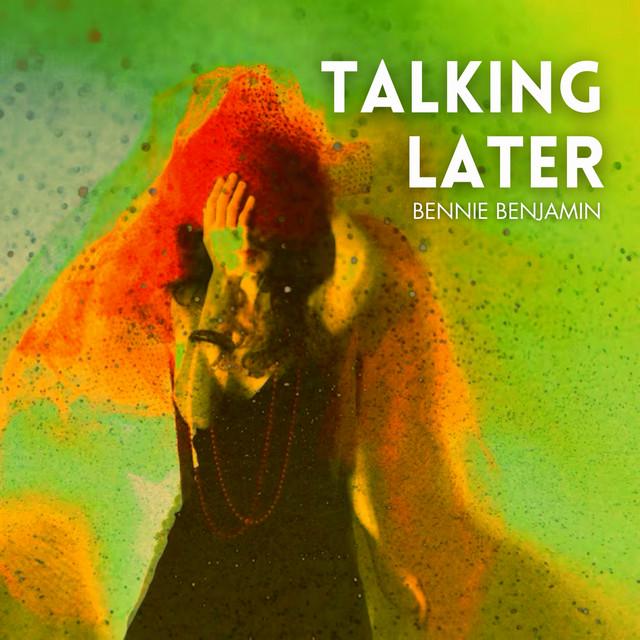
Bennie Benjamin

Latin
Bossa Nova
 Viberate Rank: 501894
 Viberate Rank: 501894
 Monthly ListenersFollowers
 Subscribers
 Followers
 Followers
 FansTop Spotify Songs
| Track | 7-Day Streams | |
|---|---|---|
1 | 7.12K |
Top YouTube VideosMonthly ListenersFeatured in Playlists| Playlist | Followers | |
|---|---|---|
1 |  Pop Goes Classical Spotify | 1.03M |
2 |  Classical in the Background Spotify | 177.88K |
3 |  Music For Reading Zymphonica | 5.70K |
4 |  Dark Strings Zymphonica | 1.95K |
Audience| City | Monthly Listeners | |
|---|---|---|
1 |  | 340 |
2 | | 223 |
3 |  | 220 |
4 | | 210 |
5 | | 181 |
See full performance history, audience data, playlist activity, rankings, comparisons, and more in Viberate music analytics. Start with a free trial, then continue with a paid plan.
Bennie Benjamin’s Spotify BioNot to be confused with Motown drummer William "Benny" Benjamin, prolific songwriter Bennie Benjamin found tremendous success during the '40s and '50s, chiefly as a lyricist. The first Virgin Islands native to find success in the American music industry, he was born Claude A. Benjamin in Christiansted, St. Croix, on November 4, 1907. He was forced to abandon early aspirations of becoming a minister when his parents were unable to afford seminary tuition, and moved to New York in 1927 to try his hand at music. He studied guitar and banjo at Hy Smith's School of Music, and landed professional jobs with several lower-level orchestras and vaudeville groups. He also worked on his songwriting, and later went on to study at the prestigious Juilliard School of Music. Eventually, he took a position as a staff songwriter at a music publishing firm, and scored a smash right out of the box with 1941's "I Don't Want to Set the World on Fire"; co-written with Sol Marcus, Eddie Seiler, and Eddie… Durham, it was a major hit for the Ink Spots. Working mostly in a trio with Marcus and Seiler over the next five years, Benjamin penned popular tunes like "Strictly Instrumental" (Harry James), "When the Lights Go On Again (All Over the World)" (Vera Lynn, Vaughn Monroe), and "Cancel the Flowers" (Tony Martin).
In 1946, Benjamin struck up a highly fertile partnership with the legendary composer George David Weiss, which resulted in a quick succession of hits over the next two years -- "Oh! What It Seemed to Be" (Frank Sinatra), "Rumors Are Flying" (the Andrews Sisters), and "Confess" (a duet between Doris Day and Buddy Clark) among them. They also wrote music for the Disney cartoons Fun and Fancy Free and Melody Time over 1947-1948. Perry Como took a liking to their material and recorded quite a few of their songs during the late '40s, notably "I Want to Thank Your Folks" (1946), the chart-topping "Surrender" (1946), "Pianissimo" (1947), and "I Don't See Me in Your Eyes Anymore" (1949); additionally, he and Benjamin co-founded a music publishing company in 1950. One of Benjamin and Weiss' biggest hits, "I'll Never Be Free," arrived in 1950, in successful versions by duet partners Tennessee Ernie Ford and Kay Starr, as well as Dinah Washington. That year also brought "Can Anyone Explain (No, No, No!)," which was recorded by the Ames Brothers and as a duet between Ella Fitzgerald and Louis Armstrong. Perhaps their best-known song was 1952's "Wheel of Fortune," a huge hit for Kay Starr that was also recorded by Dinah Washington, among many others. Further hits followed in "Cross Over the Bridge" (Patti Page, 1954) and "How Important Can It Be?" (Joni James, 1955) before Benjamin and Weiss eventually went their separate ways.
Benjamin reunited with Sol Marcus in the early '60s, and wrote a couple of songs for Elvis Presley in 1960 -- "I Will Be Home Again" and "Lonely Man," the latter from the film Wild in the Country. In 1964, jazz singer Nina Simone recorded six Benjamin compositions -- most in tandem with Marcus -- for her album Broadway-Blues-Ballads. One of those songs, "Don't Let Me Be Misunderstood," was covered by British rockers the Animals for a significant hit the following year; in 1977, the song enjoyed new life as a disco hit for Santa Esmeralda. Benjamin started his own publishing company in 1968, and was inducted into the Songwriters Hall of Fame in 1984. Through the charitable foundation he established with his wife, he was a major benefactor of medicine in his native Virgin Islands, helping to supply both facilities and education. He passed away in Manhattan on May 2, 1989. ~ Steve Huey, Rovi
Viberate is a music analytics platform built for A&Rs, artist managers, labels, booking agents, marketers, and artists.
It helps music professionals track artist growth, analyze audience data, monitor playlist activity, compare artists, follow song performance, and identify opportunities across the music market.
Public artist pages provide a free preview of selected artist data. Paid plans provide access to deeper analytics, historical data, charts, comparisons, playlist tools, exports, alerts, reports, and additional professional features.
Yes. Public Viberate artist pages provide selected artist analytics and music data for free.
Viberate also offers a 7-day free trial of the full platform. A credit card is required to start the trial. The trial includes access to the complete product so users can test deeper artist analytics, historical views, playlist insights, comparisons, charts, exports, alerts, and reporting features before choosing a paid plan.
Viberate provides artist analytics across streaming, playlists, social media, video, radio airplay, songs, and audience markets.
Users can analyze Spotify performance, Spotify and Apple Music playlists, YouTube activity, TikTok and Instagram growth, radio spins, song performance, audience locations, demographics, rankings, and overall artist momentum.
Artist profiles also connect to music charts, similar artists, and comparison tools, helping users benchmark performance and evaluate artists in context.
Viberate updates key artist and track data daily.
For followed artists and tracks, selected data is refreshed multiple times per day. This helps teams monitor playlist changes, streaming movement, audience growth, releases, and campaign performance with more current data.
Update frequency can vary depending on the metric and data source.
Yes. Viberate lets users compare up to five artists side by side across streaming, social media, audience, and engagement metrics.
Users can compare fanbase growth, audience demographics, locations, Spotify performance, social metrics, and other artist data over selected time periods.
Artist comparison can be used for A&R scouting, benchmarking, booking decisions, campaign planning, and evaluating artists with similar audiences or market positions.