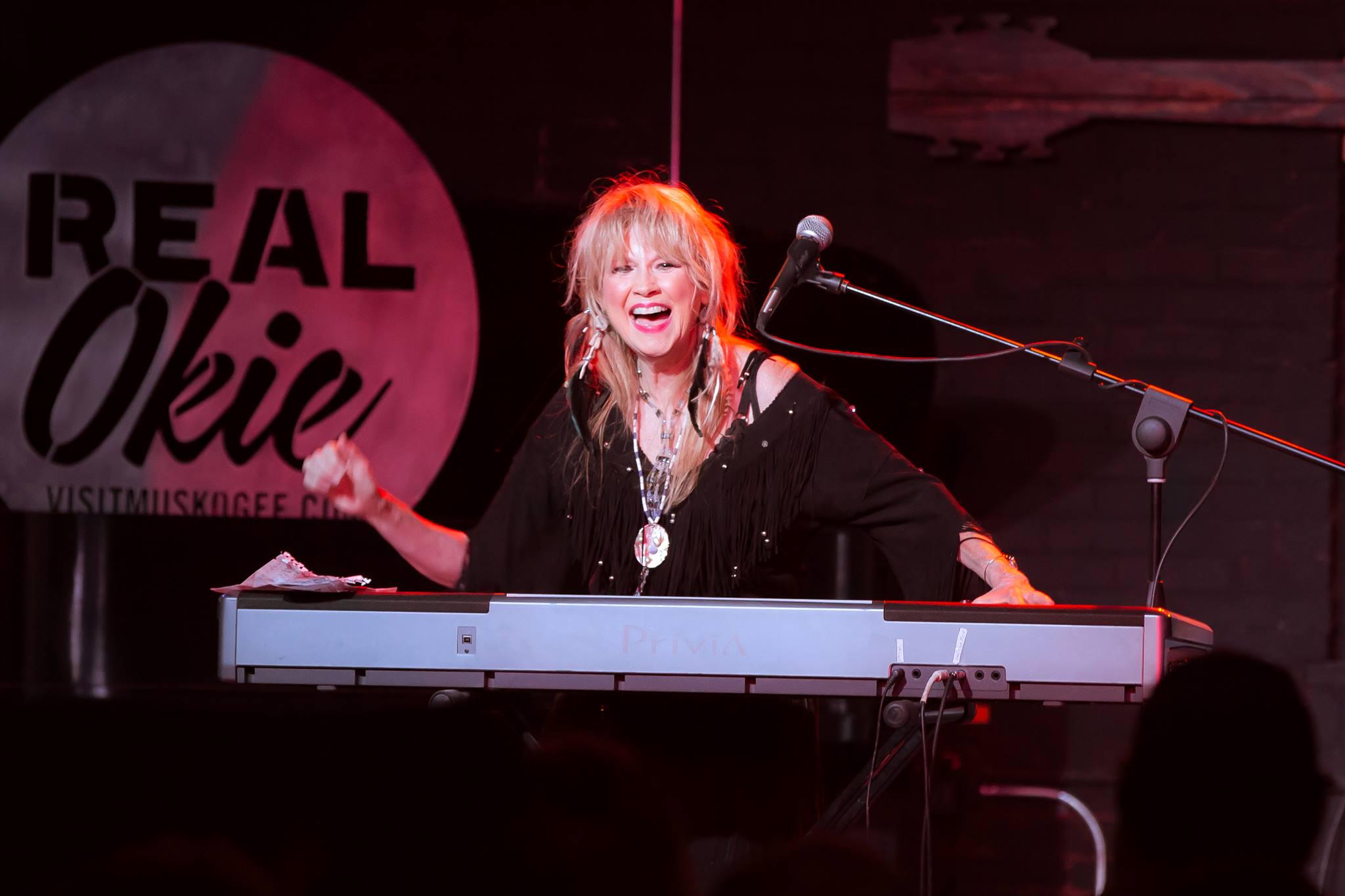
Becky Hobbs

Country
Contemporary Country
Americana/Alt Country
 Viberate Rank: 286242
 Viberate Rank: 286242
 Monthly ListenersFollowers
 Subscribers
 Followers
 Followers
 FansTop Spotify Songs
| Track | 7-Day Streams | |
|---|---|---|
1 | 2.42K | |
2 | 1.38K | |
3 | 670 | |
4 | 577 | |
5 | 405 |
Top YouTube VideosMonthly ListenersFeatured in Playlists| Playlist | Followers | |
|---|---|---|
1 | COUNTRY CHRISTMAS Thomas Fornabaio | 8.46K |
2 | 80s & 90s Country (Deep Cuts) shannonmcgarvey | 7.35K |
3 | Oldies country 50's, 60's and 70's streaker_65 | 2.90K |
4 |  P10 Country Tor Håkon Mangrud | 2.62K |
5 | Swing 💃🏼🕺🏼 Alexander Kobberød | 2.08K |
Audience| City | Monthly Listeners | |
|---|---|---|
1 |  | 184 |
2 | | 172 |
3 | | 137 |
4 |  | 106 |
5 | | 100 |
See full performance history, audience data, playlist activity, rankings, comparisons, and more in Viberate music analytics. Start with a free trial, then continue with a paid plan.
Becky Hobbs’ Spotify BioPiano-pounding honky-tonker Becky Hobbs was an Oklahoma native and violinist's daughter who began playing and making up tunes at age nine. When she was 14, Hobbs began writing Bob Dylan-influenced protest songs and singing in a folk duo with her pal Beth Morrison. The following year she started the Four Faces of Eve, an all-girl band. While attending Tulsa University, she played in Sir Prize Package. In 1971 she was performing with Swampfox. Three years later she moved to Los Angeles, where she had some success as a songwriter for Helen Reddy and Jane Olivor before eventually moving to Nashville. In 1974, Hobbs released her self-titled debut album. The following year, she released From the Heartland, followed two years later by Everyday. In 1978, Hobbs recorded "The More I Get the More I Want," her first minor hit. Her next single, "I Can't Say Goodbye to You," made it to the Top 50, and led to three more minor hits. Meanwhile, she continued writing; during the '80s, performers… including Lacy J. Dalton and the Tennessee Valley Boys had success with her songs.
In 1983, Hobbs scored a Top Ten hit for Columbia with "Let's Get Over Them Together," a duet with Moe Bandy. Over the next two years, she had four hits for Liberty/EMI-America, among them "Hottest 'Ex' in Texas," and her songs were recorded by George Jones and Loretta Lynn ("We Sure Made Good Love"), Alabama ("I Want to Know You Before We Make Love," "Christmas Memories"), Moe Bandy and Joe Stampley ("Still on a Roll"), and Shelly West ("I'll Dance the Two Step," "How It All Went Wrong"). Hobbs debuted on the Grand Ole Opry in 1985. Two years later she had hit songs recorded by Conway Twitty, Glen Campbell and Emmylou Harris. In 1988 Hobbs released the album All Keyed Up, which produced three successful singles including "Jones on the Jukebox." In 1992 she and her band the Heartthrobs toured Africa as part of the U.S. Government agency Arts America. From Oklahoma with Love followed in 1998. ~ Sandra Brennan & Michael McCall, Rovi
Viberate is a music analytics platform built for A&Rs, artist managers, labels, booking agents, marketers, and artists.
It helps music professionals track artist growth, analyze audience data, monitor playlist activity, compare artists, follow song performance, and identify opportunities across the music market.
Public artist pages provide a free preview of selected artist data. Paid plans provide access to deeper analytics, historical data, charts, comparisons, playlist tools, exports, alerts, reports, and additional professional features.
Yes. Public Viberate artist pages provide selected artist analytics and music data for free.
Viberate also offers a 7-day free trial of the full platform. A credit card is required to start the trial. The trial includes access to the complete product so users can test deeper artist analytics, historical views, playlist insights, comparisons, charts, exports, alerts, and reporting features before choosing a paid plan.
Viberate provides artist analytics across streaming, playlists, social media, video, radio airplay, songs, and audience markets.
Users can analyze Spotify performance, Spotify and Apple Music playlists, YouTube activity, TikTok and Instagram growth, radio spins, song performance, audience locations, demographics, rankings, and overall artist momentum.
Artist profiles also connect to music charts, similar artists, and comparison tools, helping users benchmark performance and evaluate artists in context.
Viberate updates key artist and track data daily.
For followed artists and tracks, selected data is refreshed multiple times per day. This helps teams monitor playlist changes, streaming movement, audience growth, releases, and campaign performance with more current data.
Update frequency can vary depending on the metric and data source.
Yes. Viberate lets users compare up to five artists side by side across streaming, social media, audience, and engagement metrics.
Users can compare fanbase growth, audience demographics, locations, Spotify performance, social metrics, and other artist data over selected time periods.
Artist comparison can be used for A&R scouting, benchmarking, booking decisions, campaign planning, and evaluating artists with similar audiences or market positions.