Beatriz Ferreyra

Electronic
Downtempo
Other Electronic Music
 Viberate Rank: 378764
 Viberate Rank: 378764
 Monthly ListenersFollowers
 Subscribers
 Followers
 Followers
 FansTop Spotify Songs
| Track | 7-Day Streams | |
|---|---|---|
1 | 62 | |
2 | 36 | |
3 | 36 | |
4 | 32 | |
5 | 19 |
Top YouTube VideosMonthly ListenersFeatured in Playlists| Playlist | Followers | |
|---|---|---|
1 |  The 100 Best Songs of 2020 Pitchfork | 8.33K |
2 |  The 100 Best Songs of the 2020s So Far Pitchfork | 6.78K |
3 |  An Anthology Of Noise And Electronic Music Vols 1-7 mickydazzler | 3.85K |
4 |  🎶 Creadoras de la Historia de la Música (@svmusicology) Sakira Ventura | 3.67K |
5 |  Pitchfork: The 100 Best Songs of 2020 Paige Cameron | 3.30K |
Audience| City | Monthly Listeners | |
|---|---|---|
1 |  | 14 |
2 |  | 10 |
3 |  | 9 |
4 | | 8 |
5 | | 8 |
See full performance history, audience data, playlist activity, rankings, comparisons, and more in Viberate music analytics. Start with a free trial, then continue with a paid plan.
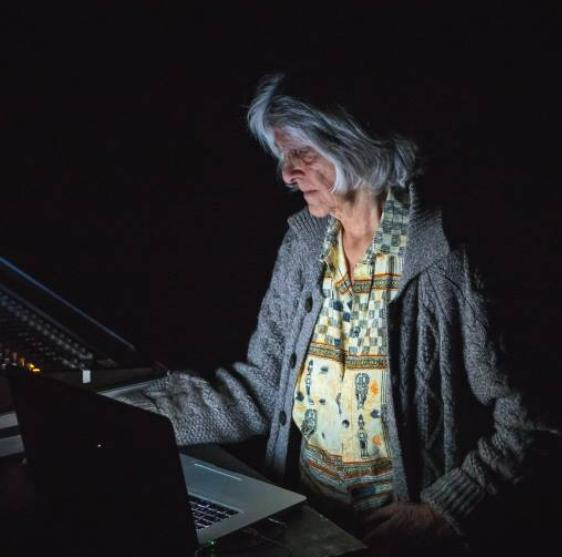
Beatriz Ferreyra’s Spotify BioBeatriz Ferreyra is a pioneering electro-acoustic composer from Argentina. Her complex, imaginative works transform natural and everyday sounds into haunting yet familiar soundscapes. During the 1960s, she worked at the Groupe de Recherches Musicales (GRM) along with founder Pierre Schaeffer, and lectured at the Conservatoire National Supérieur de Musique de Paris. She has since composed music for film, radio, television, and music therapy, and performs commissioned works for concerts and festivals. She largely worked using tape before switching to computer-based compositions during the late '90s. Her music began receiving increased recognition around the time GRM Works, containing pieces dating back to the late '60s, was issued in 2015. Numerous recordings have appeared since, including the 16-channel piece Senderos de luz y sombras (2023) and collections of compositions from throughout her career, including Echos + (2020) and UFO Forest + (2023).
Born in Cordoba, Argentina in 1937,… Beatriz Ferreyra studio piano with Celia Bronstein in Buenos Aires. She was later taught by Nadia Boulanger in Paris, and worked with contemporary composers like Earle Brown and György Ligeti. She joined the research department of the Office de Radiodiffusion Television Francaise in 1963, and was a significant part of the Groupe De Recherches Musicales. Along with Guy Reibel, she participated in the production of Pierre Schaeffer's Solfège De L'Objet Sonore (1967), and additionally worked as an educator during her time at GRM. She left the organization in 1970 and worked with Bernard Baschet on his structures sonores (sound structures). She composed an electro-acoustic score for Fiorella Mariani's 1973 film Homo Sapiens. During the decade, she also composed for music therapy and furthered her work in music education. She served her first residency in electronic music at Dartmouth College in New Hampshire in 1976, and returned in 1988. All the while, she continued composing works for electro-acoustic music competitions and commissioned events. A self-titled CD containing Ferreyra pieces composed between 1972 and 1997 was issued by Mnémosyne Musique Média in 1998. Near the end of the decade, Ferreyra curated a series of musique concrète concerts at Centre d’études et de recherches Pierre Schaeffer in Montbelliard, France. The 2003 release La Rivière Des Oiseaux collected more commissioned works, and a 2012 CD issued by INA-GRM contained more recent works for the organization as well as IMEB (Institut international de musique électroacoustique de Bourges).
In 2014, Ferreyra was named an honorary member of CIME/IMC UNESCO. Four of her pieces, two from the '60s and two from the 21st century, were issued on vinyl by Recollection GRM/Editions Mego as GRM Works in 2015. Nahash, commissioned by former INA-GRM artistic director Christian Zanési and created with Christine Groult, was issued by trAce Label. Ferreyra remained busy, and frequently gave interviews reflecting on her life as a composer. Two well-received recordings, Huellas Entreveradas (Persistence of Sound) and Echos + (Room40), appeared in 2020. Ferreyra shared a split LP with Natasha Barrett in 2021, and Room40 issued a second collection, Canto+. Senderos de luz y sombras, an ambitious 16-channel piece composed for GRM between 2016 and 2020, was released in 2023. UFO Forest +, containing both tape and computer works, appeared on Room40 later in the year. ~ Paul Simpson, Rovi
Viberate is a music analytics platform built for A&Rs, artist managers, labels, booking agents, marketers, and artists.
It helps music professionals track artist growth, analyze audience data, monitor playlist activity, compare artists, follow song performance, and identify opportunities across the music market.
Public artist pages provide a free preview of selected artist data. Paid plans provide access to deeper analytics, historical data, charts, comparisons, playlist tools, exports, alerts, reports, and additional professional features.
Yes. Public Viberate artist pages provide selected artist analytics and music data for free.
Viberate also offers a 7-day free trial of the full platform. A credit card is required to start the trial. The trial includes access to the complete product so users can test deeper artist analytics, historical views, playlist insights, comparisons, charts, exports, alerts, and reporting features before choosing a paid plan.
Viberate provides artist analytics across streaming, playlists, social media, video, radio airplay, songs, and audience markets.
Users can analyze Spotify performance, Spotify and Apple Music playlists, YouTube activity, TikTok and Instagram growth, radio spins, song performance, audience locations, demographics, rankings, and overall artist momentum.
Artist profiles also connect to music charts, similar artists, and comparison tools, helping users benchmark performance and evaluate artists in context.
Viberate updates key artist and track data daily.
For followed artists and tracks, selected data is refreshed multiple times per day. This helps teams monitor playlist changes, streaming movement, audience growth, releases, and campaign performance with more current data.
Update frequency can vary depending on the metric and data source.
Yes. Viberate lets users compare up to five artists side by side across streaming, social media, audience, and engagement metrics.
Users can compare fanbase growth, audience demographics, locations, Spotify performance, social metrics, and other artist data over selected time periods.
Artist comparison can be used for A&R scouting, benchmarking, booking decisions, campaign planning, and evaluating artists with similar audiences or market positions.