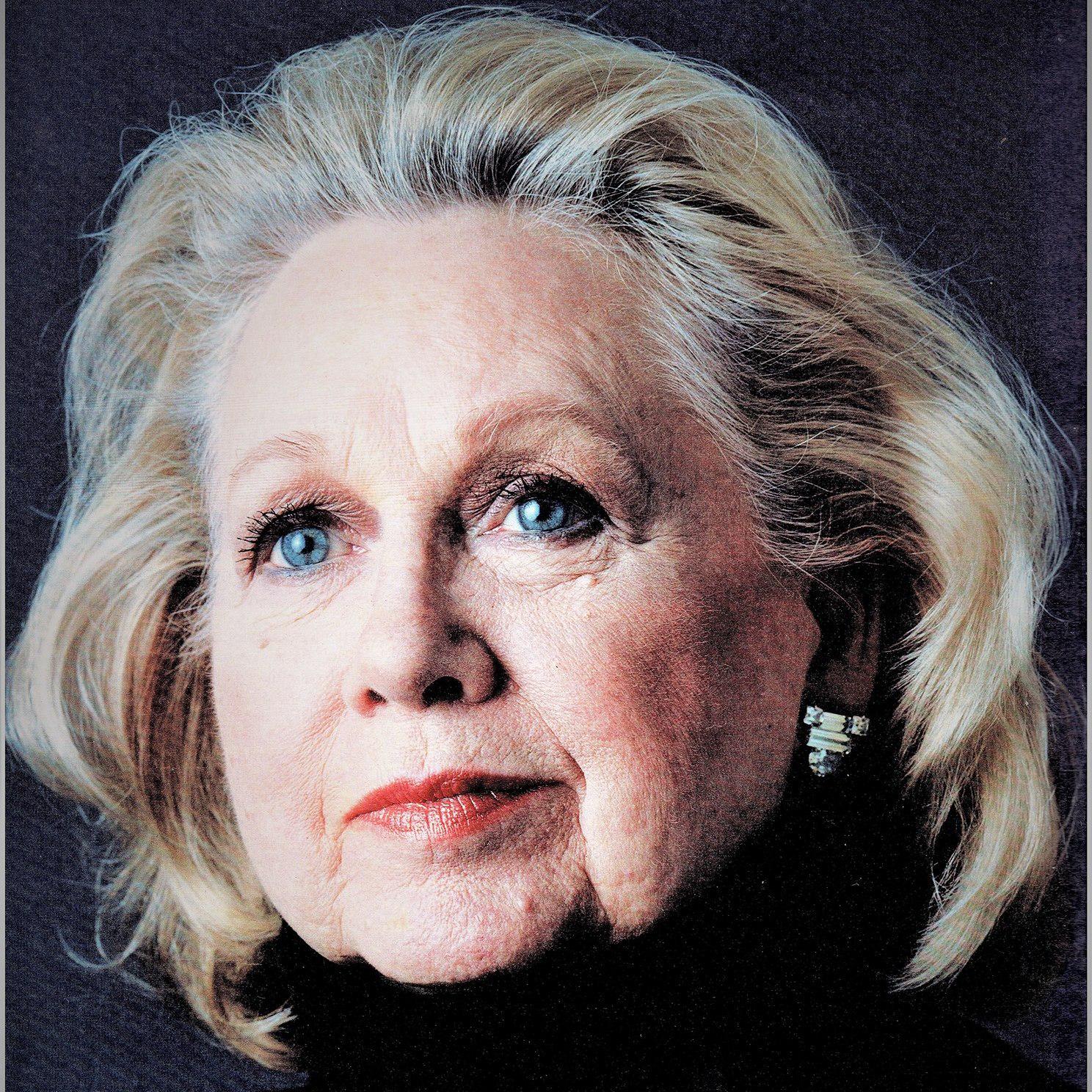
Barbara Cook

Pop
Mainstream Pop
 Viberate Rank: 158139
 Viberate Rank: 158139
 Monthly ListenersFollowers
 Subscribers
 Followers
 Followers
 FansTop Spotify Songs
| Track | 7-Day Streams | |
|---|---|---|
1 | 3.96K | |
2 | 3.73K | |
3 | 3.73K | |
4 | 3.73K | |
5 | 3.73K |
Top YouTube VideosMonthly ListenersFeatured in Playlists| Playlist | Followers | |
|---|---|---|
1 |  Broadway in Love! Spotify | 32.17K |
2 | Musicals/Broadway/Disney Elisabeth B | 30.75K |
3 |  NPR All Songs Considered - The Bob Boilen years (unofficial) Fri Tsch | 30.02K |
4 | Addie | 27.69K |
5 |  NPR Classical NPR Music | 14.43K |
Audience| City | Monthly Listeners | |
|---|---|---|
1 | | 1.18K |
2 | | 958 |
3 | | 644 |
4 | | 531 |
5 |  | 507 |
See full performance history, audience data, playlist activity, rankings, comparisons, and more in Viberate music analytics. Start with a free trial, then continue with a paid plan.
Barbara Cook’s Spotify BioA singer with a warm, light soprano, Barbara Cook became a successful Broadway musical performer in the 1950s and '60s. In the '70s, she moved largely into cabaret singing, at which she was equally successful. Born Barbara Nell in Atlanta, Georgia, on October 25, 1927, she took an early interest in singing and appeared in kiddie shows as a child. At 14, she won the ten-dollar prize at an amateur-night contest at the Roxy Theatre in Atlanta, singing "My Devotion." In February 1948, accompanied by her mother, she moved to New York to pursue a career in musical theater. The composer Vernon Duke, after hearing her sing at an audition, recommended that she perform at Camp Tamiment, a summer resort in the Poconos, and in the summer of 1950 she was seen there by Max Gordon, who with his partner Herbert Jacoby ran the Blue Angel nightclub in New York. She made her professional debut at the Blue Angel shortly thereafter. As a result, in 1951 she was cast in a featured role in Flahooley, a… Broadway musical with songs written by Sammy Fain and E.Y. Harburg . It opened May 14, 1951, and closed after only 40 performances on June 17. But it was recorded for an original Broadway cast album by Capitol Records, Cook's recording debut.
After the closing of Flahooley, Cook took a second booking at the Blue Angel. On March 9, 1952, she married actor David LeGrant. (They divorced in 1965.) She returned to Broadway in a revival of Oklahoma!, a limited engagement at the City Center, playing the featured role of Ado Annie. It opened August 31, 1953, and ran 40 performances until October 3, then went on a national tour. Cook returned to New York for another City Center revival, this one of Carousel, in which she played the featured role of Carrie Pipperidge. It opened June 2, 1954, and ran 79 performances, closing August 8. Simultaneously, Cook was acting in the weekday afternoon television serial Golden Windows on NBC, a show that premiered July 5, 1954, and ran through April 8, 1955. Also in 1954, she appeared in a television production of Babes in Toyland.
All this exposure led to Cook's featured role in her second new Broadway musical, Plain and Fancy. It opened on January 27, 1955, and became a hit, running 461 performances before closing on March 3, 1956. Again, she appeared on the original Broadway cast album released by Capitol Records. Next, she appeared in a television production of the musical Bloomer Girl. Her most prestigious work yet came later in 1956 when she was cast as Cunegonde in Leonard Bernstein's musical adaptation of Voltaire's Candide, which required her to sing the challenging coloratura soprano song "Glitter and Be Gay." The show opened on December 1, 1956, and ran only 73 performances, closing on February 2, 1957. But Columbia Records recorded a cast album that kept the music alive and helped lead to revivals in later years.
Despite its initial failure, Cook's reputation was only increased by her involvement in the show. She was in a television production of Gilbert & Sullivan's Yeoman of the Guard and next appeared on-stage in another City Center revival of Carousel, this time playing the leading role of Julie Jordan. It opened September 11, 1957, and ran 24 performances, closing September 29. Cook quickly moved on to her fourth new Broadway musical and her most successful, cast as Marian the librarian in Meredith Willson's The Music Man. One of the longest-running musicals of its day, the show opened December 19, 1957, and played 1,375 performances, closing April 15, 1961. (Cook appeared in it into the spring of 1959, leaving to give birth to her son, Adam LeGant, who grew up to become a character actor and singer.) She sang "Goodnight, My Someone," "My White Knight," and "Till There Was You" on-stage and on the Capitol Records cast album that topped the charts for 12 weeks and sold a million copies. She also won the Tony Award for featured actress in a musical. (She was, however, passed over for the movie version in favor of the established movie star Shirley Jones, and never developed a movie career.)
The stage stardom Cook achieved with The Music Man led to other opportunities. On April 27, 1958, she appeared in a television musical adaptation of Hansel and Gretel with songs by Alec Wilder on NBC. MGM Records released a soundtrack album. The independent label Urania Records signed her to a contract, and she released two solo albums, Songs of Perfect Propriety (1958), which consisted of poems by Dorothy Parker set to music, and Barbara Cook Sings "From the Heart" (1959), a collection of Rodgers & Hart songs. She returned to the stage in a City Center revival of The King & I, playing the leading role of Anna Leonowens. It ran 15 performances, between May 11 and 29, 1960. Her fifth appearance in a new Broadway musical came with The Gay Life, the songs for which were written by Arthur Schwartz and Howard Dietz. It opened November 18, 1961, and closed after 113 performances on February 24, 1962. Capitol recorded the cast album, which made the Top 100.
In 1962, Cook recorded a studio-cast album of Show Boat on Columbia Records, singing the leading role of Magnolia. She had her sixth appearance in a new musical with She Loves Me; with songs by Jerry Bock and Sheldon Harnick, She Loves Me opened on April 23, 1963, and ran 301 performances, closing January 11, 1964. MGM Records released the double-LP cast recording, which made the Top 20. In 1964, she recorded another studio-cast album for Columbia Records, this time returning to the score of The King & I. Her seventh new Broadway musical, Something More!, which had songs with music by Sammy Fain and lyrics by Marilyn & Alan Bergman, had a run of only 15 performances between November 10 and 21, 1964, and was never recorded. Cook branched out into non-musical stage acting in 1965, replacing Sandy Denny in the straight play Any Wednesday on Broadway. She also released a single called "Any Wednesday" on Summit Records. In the summer of 1966, she starred in a Broadway revival of Show Boat produced by the Music Theater of Lincoln Center. The production had a limited engagement of 64 performances in New York between July 19 and September 10, 1966, then went out on the road; RCA Victor Records recorded a cast album.
Cook returned to Broadway in a straight play, Jules Feiffer's Little Murders, which opened April 25, 1967, and ran only a week (though a subsequent off-Broadway production in which she did not participate was much more successful). She was not back on Broadway for another four years, during which time she appeared in regional revivals of musicals such as Funny Girl. When she did create her eighth role in a new Broadway musical, it was in The Grass Harp, which opened on November 2, 1971, and closed after only seven performances on November 6. (The tiny Painted Smiles label recorded the cast album.) Cook acted in another straight play, Gorky's Enemies, in 1972. In 1973, she toured in a musical revue called The Gershwin Years, consisting entirely of songs written by George Gershwin, that did not require her to play a character other than herself.
In her mid-forties, with offers in Broadway musicals drying up, she reassessed her career and decided to return to nightclub and concert performing. She accepted an offer from the small supper club Brothers and Sisters, located in New York's theater district, in the summer of 1974 and appeared with only pianist Wally Harper as accompaniment. (Harper remained with her for the next 30 years.) The engagement led to an association with concert impresario Herbert H. Breslin and, on January 26, 1975, a concert debut at Carnegie Hall, followed by such equally prestigious bookings as the Hollywood Bowl and the Kennedy Center, as well as major nightclubs around the country. Thus, she embarked upon a whole new, and equally successful, phase of her career.
The Carnegie Hall show was recorded by Columbia Records and released in 1975 as Cook's third solo album (and first in 16 years), Barbara Cook at Carnegie Hall. She followed it in 1977 with a studio LP, As of Today. In 1981, her return to Carnegie Hall was celebrated on the LP It's Better with a Band, released by the Moss Music Group (MMG). On September 6, 1985, she had a featured role in a concert recording of Stephen Sondheim's musical Follies at Avery Fisher Hall in Lincoln Center. The resulting RCA Victor double LP won the 1986 Grammy Award for Best Musical Cast Show Album. In addition to individual concert performances, she sometimes did extended engagements billed as one-woman shows. In September 1986, she appeared in the West End in London in a show titled Wait 'Til You See Her, and on April 15, 1987, she performed the first of 13 shows at the Ambassador Theater on Broadway in Barbara Cook: A Concert for the Theatre. The latter appearance earned her a Drama Desk Award.
Also in 1987, Cook participated in a studio-cast recording of Carousel for MCA Classics, again singing the leading role of Julie Jordan. In 1988, she made another studio-cast recording of a musical version of The Secret Garden, released by Columbia. (This was an entirely different work from the musical of the same name with songs by Lucy Simon and Marsha Norman that reached Broadway in 1991.) Also in 1988, she briefly participated in what was intended to be her return to the Broadway stage for the first time in 17 years when she joined the cast of a musical adaptation of the horror novel and film Carrie mounted by the Royal Shakespeare Company in Great Britain. She withdrew from the production, however. (When it reached Broadway in May, the show closed after five performances.) In December 1988, MCA Classics released her first solo LP in six years, a collection of songs from Walt Disney movies called The Disney Album.
By the early '90s, Cook was performing regularly in classy clubs such as the Cafe Carlyle in the Carlyle Hotel on Manhattan's Upper East Side, where she enjoyed repeat engagements. In 1993, she signed to the theater-oriented independent record label DRG and released her first solo album in five years, Close as Pages in a Book, a tribute to lyricist Dorothy Fields. In 1994, her voice was heard in the animated movie musical Thumbelina and on its soundtrack album, released by SBK Records, and she had a second DRG solo album, Live from London. Oscar Winners: The Lyrics of Oscar Hammerstein II followed in 1997, and then All I Ask of You in 1999. Another release on DRG later in 1999 chronicled her latest nightclub act, recorded live at the Cafe Carlyle: The Champion Season: A Salute to Gower Champion. In 2000, she was inspired by a list compiled by Stephen Sondheim on the occasion of his 70th birthday of songs he wished he had written, and she assembled a show based on it called Mostly Sondheim, which she performed at Carnegie Hall, where it was recorded for an album released by DRG in 2001. In 2003, DRG also released a Mostly Sondheim video, chronicling the show's run at the Kennedy Center. Also in 2003, DRG released Cook's Christmas album, Count Your Blessings.
On New Year's Eve, 2003, at age 76, she made her debut at the Metropolitan Opera as a special guest in the party scene of the last act of The Merry Widow. Traditionally, the Metropolitan Opera allows such guests to sing their own repertoire at these New Year's Eve shows, and Cook performed a short set consisting of "On a Clear Day You Can See Forever"; "A Wonderful Guy" from South Pacific; a medley of two of her favorites, Rodgers & Hart's "He Was Too Good to Me" and Sondheim's "Losing My Mind"; and, without a microphone, "We'll Be Together Again." She sang "splendidly," according to reviewer Anthony Tommasini of The New York Times, who added, "That her soft voice carried so truly was a testimony to her incomparable vocal technique and clear diction."
Cook's next one-woman show was titled simply Barbara Cook's Broadway! and ran at the Vivian Beaumont Theater in Lincoln Center in the spring of 2004; DRG recorded it for an album released on May 25, 2004. In the retrospective show, she sang songs from The Music Man, Carousel, She Loves Me, and Follies, as well as songs from shows in which she had not appeared. In October 2004, her longtime accompanist, Wally Harper, died. Her next album, recorded in June 2005 and released on September 6, 2005, appropriately was called Tribute and was dedicated to Harper. On January 20, 2006, she returned to the Metropolitan Opera to give a concert, accompanied by guests Audra McDonald and Josh Groban. It was the first time the opera house had ever hosted a non-classical female solo singer in a full-length concert. DRG recorded the show, which was issued as Barbara Cook at the Met with Special Guests on June 6, 2006.
Cook was back at Carnegie Hall for an 85th-birthday concert in 2012, and New York Times reviewer Tommasini was once again present to assess her continued mastery even at her advanced age: "Long ago Ms. Cook figured out what really matters in singing: to put lyrics across as if she were confiding in you, to bend melodic phrases to expressive ends, to inflect her sound with heartache, happiness, sass, bitterness or whatever the moment calls for." In August of 2017, Barbara Cook died at age 89 at her home in Manhattan. ~ William Ruhlmann, Rovi
Viberate is a music analytics platform built for A&Rs, artist managers, labels, booking agents, marketers, and artists.
It helps music professionals track artist growth, analyze audience data, monitor playlist activity, compare artists, follow song performance, and identify opportunities across the music market.
Public artist pages provide a free preview of selected artist data. Paid plans provide access to deeper analytics, historical data, charts, comparisons, playlist tools, exports, alerts, reports, and additional professional features.
Yes. Public Viberate artist pages provide selected artist analytics and music data for free.
Viberate also offers a 7-day free trial of the full platform. A credit card is required to start the trial. The trial includes access to the complete product so users can test deeper artist analytics, historical views, playlist insights, comparisons, charts, exports, alerts, and reporting features before choosing a paid plan.
Viberate provides artist analytics across streaming, playlists, social media, video, radio airplay, songs, and audience markets.
Users can analyze Spotify performance, Spotify and Apple Music playlists, YouTube activity, TikTok and Instagram growth, radio spins, song performance, audience locations, demographics, rankings, and overall artist momentum.
Artist profiles also connect to music charts, similar artists, and comparison tools, helping users benchmark performance and evaluate artists in context.
Viberate updates key artist and track data daily.
For followed artists and tracks, selected data is refreshed multiple times per day. This helps teams monitor playlist changes, streaming movement, audience growth, releases, and campaign performance with more current data.
Update frequency can vary depending on the metric and data source.
Yes. Viberate lets users compare up to five artists side by side across streaming, social media, audience, and engagement metrics.
Users can compare fanbase growth, audience demographics, locations, Spotify performance, social metrics, and other artist data over selected time periods.
Artist comparison can be used for A&R scouting, benchmarking, booking decisions, campaign planning, and evaluating artists with similar audiences or market positions.