Baby Dee

Rock
Folk Rock
Alternative Rock
 Viberate Rank: 340756
 Viberate Rank: 340756
 Monthly ListenersFollowers
 Subscribers
 Followers
 Followers
 FansTop Spotify Songs
| Track | 7-Day Streams | |
|---|---|---|
1 | 57 | |
2 | 55 | |
3 | 26 | |
4 | 25 | |
5 | 21 |
Top YouTube VideosMonthly ListenersFeatured in Playlists| Playlist | Followers | |
|---|---|---|
1 |  Late nights/early mornings Lovisa ✨ | 11.70K |
2 |  Primavera Sound 2016 Barcelona Primavera Sound Festival | 7.11K |
3 |  MGira Social Media Shares Jacob Morris | 6.19K |
4 |  vivi vibrations halo_0039 | 5.22K |
5 |  Jarvis Cocker's Sunday Service Anders Björk | 5.09K |
Audience| City | Monthly Listeners | |
|---|---|---|
1 |  | 20 |
2 |  | 20 |
3 |  | 16 |
4 | | 10 |
5 |  | 9 |
See full performance history, audience data, playlist activity, rankings, comparisons, and more in Viberate music analytics. Start with a free trial, then continue with a paid plan.
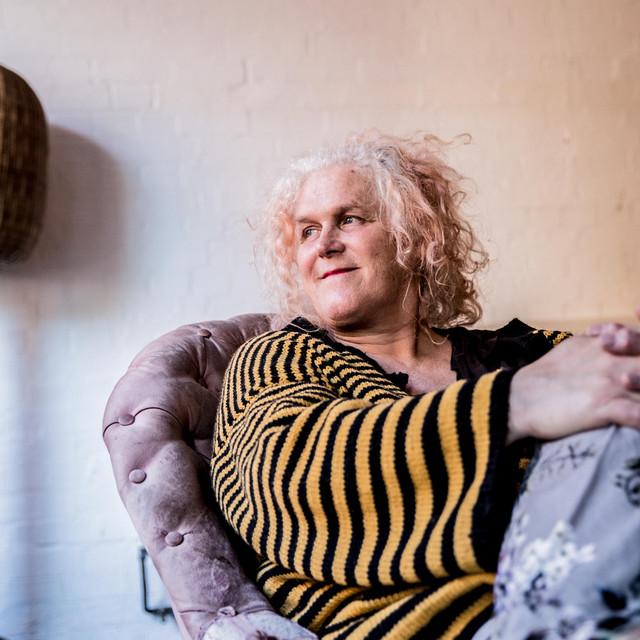
Baby Dee’s Spotify BioPerformance artist, songwriter, classically trained harpist, circus sideshow veteran, and transgender street legend Baby Dee was born in 1953 in Cleveland, OH. She spent ten years as music director and organist for a Catholic church in the Bronx before joining the circus as the bilateral hermaphrodite at Coney Island. This landed her a gig as the bandleader for performance art group the Bindlestiff Family Cirkus and a tour with the Kamikaze Freak Show in Europe. After moving back to New York City, she became a fixture in lower Manhattan with a street act on a high-rise tricycle with a concert harp. She recorded her first record, Little Window, on the Durtro label in 2000, a four-track EP in 2001, and her second full-length, the double-disc Love's Small Song, in 2002. Dee returned to Ohio during the latter record's recording, taking vows as a novitiate of the Little Sisters of Crabby Doom (a Cleveland-based order dedicated to the care of smelly old men), vows that she has since… forsaken. For her third full-length recording, Dee recruited a typically eclectic army of fellow musicians, including Will Oldham, Andrew W.K., Robbie Lee, Max Moston (Antony and the Johnsons), Bill Breeze (Psychic TV), John Contreras (Current 93), James Lo (Chavez), and Lia Kessel. The resulting Safe Inside the Day arrived in January 2008 on Drag City Records. In 2010, Dee released A Book of Songs for Anne Marie, a lovingly detailed and orchestrated collection of harp and piano-based ballads. It was followed in 2011 by the Andrew W.K.-produced Regifted Light, which followed a similar course as its predecessor, though with a greater emphasis on instrumentals. ~ James Christopher Monger, Rovi
Viberate is a music analytics platform built for A&Rs, artist managers, labels, booking agents, marketers, and artists.
It helps music professionals track artist growth, analyze audience data, monitor playlist activity, compare artists, follow song performance, and identify opportunities across the music market.
Public artist pages provide a free preview of selected artist data. Paid plans provide access to deeper analytics, historical data, charts, comparisons, playlist tools, exports, alerts, reports, and additional professional features.
Yes. Public Viberate artist pages provide selected artist analytics and music data for free.
Viberate also offers a 7-day free trial of the full platform. A credit card is required to start the trial. The trial includes access to the complete product so users can test deeper artist analytics, historical views, playlist insights, comparisons, charts, exports, alerts, and reporting features before choosing a paid plan.
Viberate provides artist analytics across streaming, playlists, social media, video, radio airplay, songs, and audience markets.
Users can analyze Spotify performance, Spotify and Apple Music playlists, YouTube activity, TikTok and Instagram growth, radio spins, song performance, audience locations, demographics, rankings, and overall artist momentum.
Artist profiles also connect to music charts, similar artists, and comparison tools, helping users benchmark performance and evaluate artists in context.
Viberate updates key artist and track data daily.
For followed artists and tracks, selected data is refreshed multiple times per day. This helps teams monitor playlist changes, streaming movement, audience growth, releases, and campaign performance with more current data.
Update frequency can vary depending on the metric and data source.
Yes. Viberate lets users compare up to five artists side by side across streaming, social media, audience, and engagement metrics.
Users can compare fanbase growth, audience demographics, locations, Spotify performance, social metrics, and other artist data over selected time periods.
Artist comparison can be used for A&R scouting, benchmarking, booking decisions, campaign planning, and evaluating artists with similar audiences or market positions.