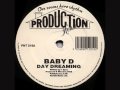
Baby D

Electronic
Dance
Dubstep
 Viberate Rank: 83977
 Viberate Rank: 83977
 Monthly ListenersFollowers
 Subscribers
 Followers
 Followers
 FansTop Spotify SongsTop YouTube VideosMonthly ListenersFeatured in Playlists
| Playlist | Followers | |
|---|---|---|
1 |  90s Club Classic & Old Skool Dance Matt Johnson | 427.35K |
2 |  Rave Classics Spotify | 374.22K |
3 |  90s Rave Classics Tom Bantica | 153.04K |
4 |  Ministry of Sound's 90's Anthems Archduke of York | 112.47K |
5 |  house bangers🕺 ivyamarabelle | 80.16K |
Audience| City | Monthly Listeners | |
|---|---|---|
1 | | 39.56K |
2 | | 21.04K |
3 | | 11.84K |
4 | | 8.00K |
5 |  | 4.87K |
See full performance history, audience data, playlist activity, rankings, comparisons, and more in Viberate music analytics. Start with a free trial, then continue with a paid plan.
Baby D’s Spotify BioAfter playing with a variety of bands and working as session musicians, Baby D was formed in 1990 in north-west London, England. Featuring Baby D (vocals), MC Nino (keyboards/vocals), Claudio Galdez (keyboards/vocals) and Dice (writer/producer), they released their first single, ‘Daydreaming’, in January 1991. Though it failed to reach the national charts, it rose to number 27 in the dance music charts. Their first major success came in December 1993 when ‘Destiny’ reached number 69 in the UK charts. ‘Casanova’, released in July 1994, was a similar minor success, but their fortunes changed substantially with the release of ‘Let Me Be Your Fantasy’ in November 1994. This rose to number 1 in the UK charts, and sold just short of half a million copies. It had originally topped dance charts two years prior to its mainstream breakthrough. The follow-up single was a retitled cover version of the Korgis’ ‘Everybody’s Gotta Learn Sometime’. By this time, original member Dice had left the band,… though he still helped out in a production capacity. Before the release of ‘(Everybody’s Got To Learn Sometime) I Need Your Loving’, it emerged that another band, NRG, intended to record it, leading to a struggle for the publishing rights. Baby D’s version eventually climbed to number 3 in the UK charts in June 1995. ‘So Pure’ reached the same position in January 1996, and was followed by their debut album. (NB: Not to be confused with the US rapper of the same name.)
Viberate is a music analytics platform built for A&Rs, artist managers, labels, booking agents, marketers, and artists.
It helps music professionals track artist growth, analyze audience data, monitor playlist activity, compare artists, follow song performance, and identify opportunities across the music market.
Public artist pages provide a free preview of selected artist data. Paid plans provide access to deeper analytics, historical data, charts, comparisons, playlist tools, exports, alerts, reports, and additional professional features.
Yes. Public Viberate artist pages provide selected artist analytics and music data for free.
Viberate also offers a 7-day free trial of the full platform. A credit card is required to start the trial. The trial includes access to the complete product so users can test deeper artist analytics, historical views, playlist insights, comparisons, charts, exports, alerts, and reporting features before choosing a paid plan.
Viberate provides artist analytics across streaming, playlists, social media, video, radio airplay, songs, and audience markets.
Users can analyze Spotify performance, Spotify and Apple Music playlists, YouTube activity, TikTok and Instagram growth, radio spins, song performance, audience locations, demographics, rankings, and overall artist momentum.
Artist profiles also connect to music charts, similar artists, and comparison tools, helping users benchmark performance and evaluate artists in context.
Viberate updates key artist and track data daily.
For followed artists and tracks, selected data is refreshed multiple times per day. This helps teams monitor playlist changes, streaming movement, audience growth, releases, and campaign performance with more current data.
Update frequency can vary depending on the metric and data source.
Yes. Viberate lets users compare up to five artists side by side across streaming, social media, audience, and engagement metrics.
Users can compare fanbase growth, audience demographics, locations, Spotify performance, social metrics, and other artist data over selected time periods.
Artist comparison can be used for A&R scouting, benchmarking, booking decisions, campaign planning, and evaluating artists with similar audiences or market positions.