Auryn Quartet

Classical
Chamber Music
Classical Crossover
 Viberate Rank: 424950
 Viberate Rank: 424950
 Monthly ListenersFollowers
 Subscribers
 Followers
 Followers
 FansTop Spotify Songs
| Track | 7-Day Streams | |
|---|---|---|
1 | 84 | |
2 | 23 | |
3 | 10 | |
4 | 8 | |
5 | 8 |
Top YouTube VideosMonthly ListenersFeatured in Playlists| Playlist | Followers | |
|---|---|---|
1 |  Chamber Music for Self-Renewal synergy555 | 4.21K |
2 |  Calm/Tranquil Chamber Music synergy555 | 1.50K |
Audience| City | Monthly Listeners | |
|---|---|---|
1 | | 12 |
2 |  | 10 |
3 |  | 8 |
4 |  | 7 |
5 |  | 7 |
See full performance history, audience data, playlist activity, rankings, comparisons, and more in Viberate music analytics. Start with a free trial, then continue with a paid plan.
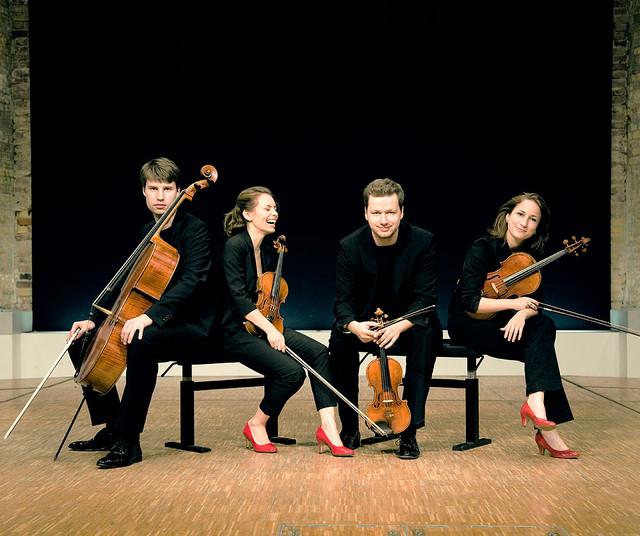
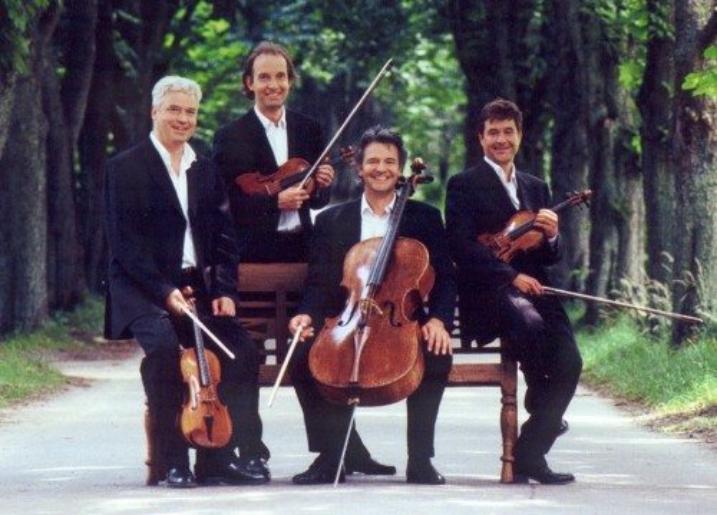
Auryn Quartet’s Spotify BioThe Auryn Quartett was unique among the leading string quartets of its day; for four decades, it maintained the same membership, allowing for detailed and thoroughly unified interpretations of the string quartet repertoire. Perhaps best known for its complete recordings of Haydn's and Beethoven's string quartets, the Auryn was also a regular guest at festivals throughout the world, including managing the Incontri Internazionali in Italy and Musiktage Mondsee in Austria.
The Auryn Quartett was founded in Germany in 1981, borrowing its name from an amulet in the original German language Die unendliche Geschichte ("The Neverending Story") by Michael Ende. For its entire existence, the quartet's members were violinists Matthias Lingenfelder and Jens Opperman, violist Stewart Eaton, and cellist Andreas Arndt. The group members were principals in the European Union Youth Orchestra together, and Claudio Abbado, who led the orchestra at the time, became an important influence. In 1982, the… Auryn began studying with the Amadeus Quartet in Cologne. That year, the Auryn Quartett captured the first prize at the London International Competition and the ARD Munich Competition. Between 1982 and 1987, the Auryn continued its studies with the Amadeus Quartet, and after making its U.S. debut in 1986, with the Guarneri Quartet at the University of Maryland. The Auryn Quartett also made its recording debut on the Erato label in 1986 with a recording of the string quartets of Karl Amadeus Hartman. During this time, the group became the quartet in residence of Georgetown University's annual Schubert, Schubert, and Schubert Festival, returning yearly for over two decades. In 1989, the group won the European Broadcasting Competition in Bratislava.
Invitations to perform came flooding in, and the Auryn Quartett made appearances at major international venues such as Wigmore Hall, Lincoln Center, and the Amsterdam Concertgebouw, as well as festivals, including the Lockenhaus, Edinburgh International, and Salzburger Festspiele, among many others. Meanwhile, the group's recording career was taking off, offering recordings of core repertoire by the likes of Schubert, Britten, Fauré, and Haydn steadily throughout the 1990s and into the 21st century on such labels as CPO, Wergo, and Tacet, among others. From 2000, the group's recordings were exclusively found on the Tacet label. Among the most important and ambitious projects from the Auryn Quartett was the complete recording of all 68 string quartets of Haydn, which were issued in 14 volumes between 2008 and 2011. The group also issued complete surveys of the string quartets by Beethoven (including the Grosse Fuge, Op. 133), Schubert, Brahms, and Mozart (as well as his complete string quintets, with violist Nobuko Imai). One of the group's later projects was a series of 18 concerts in which the group performed all of Haydn's quartets. The Auryn Quartett put on this concert series three times, in the German cities of Detmold and Cologne, and Padova in Italy. In 2019, they announced that with the conclusion of its 2020-2021 season, upon reaching its goal of 40 years performing together, the Auryn Quartett would disband, and it gave its final concert at the Musiktage Mondsee Festival in August. ~ Keith Finke, Rovi
Viberate is a music analytics platform built for A&Rs, artist managers, labels, booking agents, marketers, and artists.
It helps music professionals track artist growth, analyze audience data, monitor playlist activity, compare artists, follow song performance, and identify opportunities across the music market.
Public artist pages provide a free preview of selected artist data. Paid plans provide access to deeper analytics, historical data, charts, comparisons, playlist tools, exports, alerts, reports, and additional professional features.
Yes. Public Viberate artist pages provide selected artist analytics and music data for free.
Viberate also offers a 7-day free trial of the full platform. A credit card is required to start the trial. The trial includes access to the complete product so users can test deeper artist analytics, historical views, playlist insights, comparisons, charts, exports, alerts, and reporting features before choosing a paid plan.
Viberate provides artist analytics across streaming, playlists, social media, video, radio airplay, songs, and audience markets.
Users can analyze Spotify performance, Spotify and Apple Music playlists, YouTube activity, TikTok and Instagram growth, radio spins, song performance, audience locations, demographics, rankings, and overall artist momentum.
Artist profiles also connect to music charts, similar artists, and comparison tools, helping users benchmark performance and evaluate artists in context.
Viberate updates key artist and track data daily.
For followed artists and tracks, selected data is refreshed multiple times per day. This helps teams monitor playlist changes, streaming movement, audience growth, releases, and campaign performance with more current data.
Update frequency can vary depending on the metric and data source.
Yes. Viberate lets users compare up to five artists side by side across streaming, social media, audience, and engagement metrics.
Users can compare fanbase growth, audience demographics, locations, Spotify performance, social metrics, and other artist data over selected time periods.
Artist comparison can be used for A&R scouting, benchmarking, booking decisions, campaign planning, and evaluating artists with similar audiences or market positions.