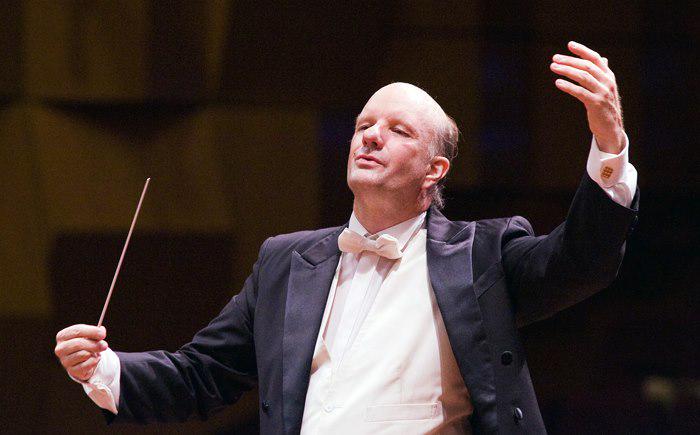
Anthony Marwood

Classical
Chamber Music
Orchestral
 Viberate Rank: 300276
 Viberate Rank: 300276
 Monthly ListenersFollowers
 Subscribers
 Followers
 Followers
 FansTop Spotify Songs
| Track | 7-Day Streams | |
|---|---|---|
1 | 20.19K | |
2 | 1.76K | |
3 | 1.29K | |
4 | 1.07K | |
5 | 843 |
Top YouTube VideosMonthly ListenersFeatured in Playlists| Playlist | Followers | |
|---|---|---|
1 |  Música Clásica Que Sí Es Clásica José Gonzales | 339.76K |
2 |  Baroque Classics Sony Classical & Jazz Sweden | 131.10K |
3 |  Most Famous Classical Pieces Ever TenlomNalo | 70.89K |
4 | Classical & Symphony Orchestra Adriansyah Wijaya | 47.77K |
5 |  Violin Clásico Marcelo | 37.77K |
Audience| City | Monthly Listeners | |
|---|---|---|
1 |  | 2.02K |
2 |  | 1.13K |
3 |  | 1.03K |
4 | | 989 |
5 |  | 597 |
See full performance history, audience data, playlist activity, rankings, comparisons, and more in Viberate music analytics. Start with a free trial, then continue with a paid plan.
Anthony Marwood’s Spotify BioViolinist Anthony Marwood emerged as a solo star in the 2000s and 2010s after a long period of balanced preparation. He has played chamber music, championed contemporary music as a soloist, performed in a noted early music ensemble, and participated in experimental genre-crossing collaborations.
Marwood's date and place of birth have been erroneously reported as 1979 in Helsinki, Finland, a date that would have made him just 16 when he joined the prestigious Florestan Trio in 1995; his actual birthdate was July 6, 1965. A native of London, he attended the King Edward VI Grammar School in Chelmsford, England. He took up the violin at seven after his three older siblings all began playing instruments. Marwood went on to the Royal Academy of Music, where a key teacher was Emanuel Hurwitz: after proudly playing Paganini's La Campanella for the teacher, Marwood heard him reply, "Did you know it was half speed?" Marwood went on to the Guildhall School of Music and Drama, and he later took… lessons from Sandor Végh.
After joining the Florestan Trio as violinist, Marwood remained with the group for 16 years. This group played mainstream chamber repertory, but Marwood also cultivated his abilities in different kinds of performances. He toured and recorded with his brother and two sisters as the Marwood Ensemble, a chamber group performing more unusual repertory for strings and winds. He also performed for some years with Britain's Raphael Ensemble (a sextet), making his recording debut with that group in 1990 on an album of sextets by Schoenberg and Erich Wolfgang Korngold; he made several more albums with that group in the 1990s. Later, he joined the historical performance group, Les Violons du Roy, becoming its Principal Artistic Partner. Marwood has also joined projects that have extended far beyond classical music's usual spheres. He has collaborated with Indian dancer Mayuri Boonham and, perhaps most unusually, devised a touring production of Stravinsky's L'histoire du soldat in which he spoke, performed as a mime, and appeared in various costumes: military uniform, business suit, and no clothing at all. In 1998, Marwood made his first solo recording for Hyperion, a recital of violin-and-piano music by Dvořák, and he has since become a fixture of that label's roster, often recording music of the 20th and 21st centuries. In 2002, he recorded Vivaldi's The Four Seasons for the Classic FM label, which misspelled his name on the album cover.
Amidst all these enterprises, Marwood made highly regarded solo appearances. He played the Prokofiev Violin Concerto No. 2 in G minor, Op. 63, at a Proms concert, and recorded a new Thomas Adès concerto for EMI with the Chamber Orchestra of Europe in 2007. Two of his Wigmore Hall performances with pianist Aleksandar Madzar -- of Brahms and Schumann violin sonatas -- were released by the hall's Wigmore Hall Live label in 2012 and 2013, respectively. Marwood recorded the violin concertos of Britten (in 2012) and Walton (in 2017), both with the BBC Scottish Symphony Orchestra. In 2022, he moved to Canary Classics for the album, Beautiful Passing, featuring music for violin and orchestra by composer Steven Mackey, with the Sydney Symphony Orchestra. By that time, his discography comprised some 40 albums. ~ James Manheim, Rovi
Viberate is a music analytics platform built for A&Rs, artist managers, labels, booking agents, marketers, and artists.
It helps music professionals track artist growth, analyze audience data, monitor playlist activity, compare artists, follow song performance, and identify opportunities across the music market.
Public artist pages provide a free preview of selected artist data. Paid plans provide access to deeper analytics, historical data, charts, comparisons, playlist tools, exports, alerts, reports, and additional professional features.
Yes. Public Viberate artist pages provide selected artist analytics and music data for free.
Viberate also offers a 7-day free trial of the full platform. A credit card is required to start the trial. The trial includes access to the complete product so users can test deeper artist analytics, historical views, playlist insights, comparisons, charts, exports, alerts, and reporting features before choosing a paid plan.
Viberate provides artist analytics across streaming, playlists, social media, video, radio airplay, songs, and audience markets.
Users can analyze Spotify performance, Spotify and Apple Music playlists, YouTube activity, TikTok and Instagram growth, radio spins, song performance, audience locations, demographics, rankings, and overall artist momentum.
Artist profiles also connect to music charts, similar artists, and comparison tools, helping users benchmark performance and evaluate artists in context.
Viberate updates key artist and track data daily.
For followed artists and tracks, selected data is refreshed multiple times per day. This helps teams monitor playlist changes, streaming movement, audience growth, releases, and campaign performance with more current data.
Update frequency can vary depending on the metric and data source.
Yes. Viberate lets users compare up to five artists side by side across streaming, social media, audience, and engagement metrics.
Users can compare fanbase growth, audience demographics, locations, Spotify performance, social metrics, and other artist data over selected time periods.
Artist comparison can be used for A&R scouting, benchmarking, booking decisions, campaign planning, and evaluating artists with similar audiences or market positions.