Anna Calvi

Rock
Indie Rock
Indie Pop
 Viberate Rank: 49307
 Viberate Rank: 49307
 Monthly ListenersFollowers
 Subscribers
 Followers
 Followers
 FansTop Spotify Songs
| Track | 7-Day Streams | |
|---|---|---|
1 | 21.21K | |
2 | 11.13K | |
3 | 9.10K | |
4 | 6.28K | |
5 | 5.09K |
Top YouTube Videos| Video | 7-Day Views | |
|---|---|---|
1 | 1.70K | |
2 | 1.46K | |
3 | 1.03K | |
4 | 1.01K | |
5 | 854 |
Monthly ListenersFeatured in Playlists| Playlist | Followers | |
|---|---|---|
1 |  Dark & Gothic Spotify | 976.09K |
2 |  Spooky Spotify | 463.48K |
3 |  PEAKY BLINDERS Soundtracked.us | 402.69K |
4 |  Élite - The Soundtrack Spotify | 318.59K |
5 |  Peaky Blinders Soundtrack - All Songs Jasons 24/7 Supermarket | 308.03K |
Audience| City | Monthly Listeners | |
|---|---|---|
1 | | 4.20K |
2 |  | 2.25K |
3 |  | 2.25K |
4 |  | 2.19K |
5 |  | 1.90K |
See full performance history, audience data, playlist activity, rankings, comparisons, and more in Viberate music analytics. Start with a free trial, then continue with a paid plan.
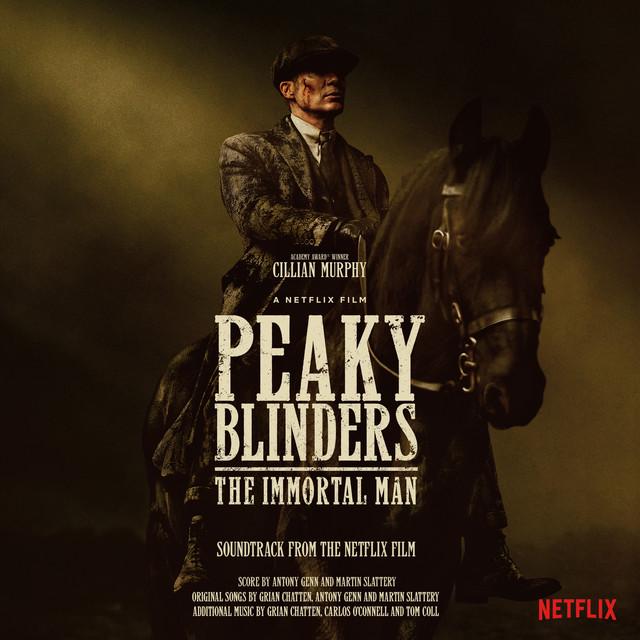
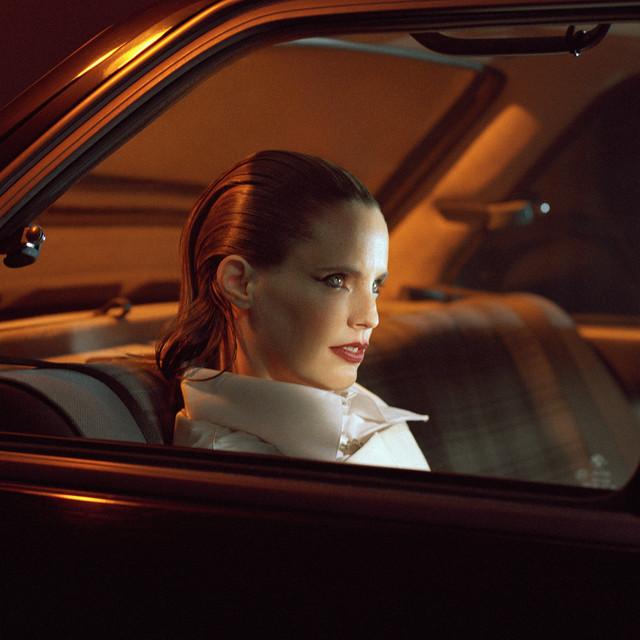
Anna Calvi’s Spotify BioA singer/songwriter with an operatic voice and virtuosic guitar skills, Anna Calvi makes powerful, passionate music influenced by flamenco, goth rock, and classical composers such as Ravel and Debussy. On early albums like 2011's Anna Calvi and 2013's One Breath, she used the formidable strength of her voice and guitar to express archetypal lust and heartache. Later, on 2018's Hunter, she adopted a looser, more vulnerable style as she challenged conventional notions of sexuality and gender identity. As Calvi's music evolved and expanded to include projects such as scoring the TV series Peaky Blinders -- which was collected on 2024's Peaky Blinders: Seasons 5 & 6 [Original Score] -- the intensity of her work never wavered. Neither did her critical acclaim, which included multiple Mercury Prize nominations.
Born in London to an English mother and an Italian father, Calvi grew up in a music-loving family and listened to classical music and opera, as well as pop and rock, from an early… age. She started violin lessons at age six; by age eight, she was playing guitar and began recording herself a few years later. Calvi came out to her family at age 18, around the time she began studying violin and guitar at the University of Southampton. Through her studies and on her own, she developed a distinctive guitar-playing technique inspired by the impressionistic style of composers such as Ravel and Debussy as well as her early idol, Jimi Hendrix.
After graduating from Southampton with a Bachelor of Fine Arts in 2003, Calvi worked in London as a guitar teacher, played in several bands, and recorded her own songs on an eight-track recorded in the attic of her parents' home. In 2006, she connected with multi-instrumentalist Mally Harpaz and later recruited drummer Daniel Maiden-Wood to perform her songs live. Former Coral guitarist Bill Ryder-Jones witnessed one of Calvi's gigs in Manchester and recommended her to Domino Records boss Lawrence Bell, who signed her to the label in December 2009. Her first release for Coral was October 2010's single "Jezebel," a bold reworking of the Frankie Laine and Edith Piaf standard.
To make her debut album, Calvi worked with co-producer Rob Ellis (known for his work with PJ Harvey, whose intense style was akin to Calvi's) at France's Black Box studio. Using vintage analog equipment, she created a lush yet formidable sound on Anna Calvi, which was released in the U.K. and Europe in January 2011 and in the U.S., Australia, and Japan that March. Featuring contributions from the Invisibl's Dave Okumu and Brian Eno (a fan of Calvi's since hearing her first demos), the album cracked the Top 40 in the U.K. and entered the Top 20 in France. Following its release, Anna Calvi was nominated for the Mercury Prize, while Calvi won the 2012 European Border Breakers Award and was nominated for Best British Breakthrough Act at that year's Brit Awards.
Along with being a Mercury Prize judge and collaborating with Noah and the Whale on the title track to their album Heart of Nowhere, in 2012 Calvi began work on her second album. Recording once again at Black Box as well as Texas' Elmwood Recording Studios, this time she shared production duties with John Congleton. Completed in six weeks, One Breath appeared in October 2013 and drew inspiration from the work of Steve Reich and John Adams, as well as the loss of someone close to Calvi. The album reached 32 on the U.K. Albums chart and earned Calvi her second Mercury Prize nomination. It also marked Calvi's U.S. chart debut, peaking at 30 on the Heatseekers Albums chart. After touring in support of One Breath, she followed with July 2014's Strange Weather EP, a set of covers that included songs by David Bowie and FKA Twigs and featured a duet with David Byrne. That year, Calvi also appeared on the title track of Marianne Faithfull's album Falling Back and closed out 2014 with an ambitious concert with the Heritage Orchestra at London's St. John's Church.
The following years saw Calvi embark on various projects. In 2015, she recorded "The Heart of You" for the science fiction film The Divergent Series: Insurgent with Portishead's Adrian Utley and once again joined the Mercury Prize judging panel. Following David Bowie's death, Calvi joined John Cameron Mitchell and Neil Gaiman on the tribute EP Strung Out in Heaven in February 2016, contributing her vocals and guitar to a version of "Blackstar." That March, she performed "Me and the Devil" at Pieces of a Man: The Gil Scott-Heron Project, a part of that year's Convergence Festival in London. In May 2017, Calvi's rock opera The Sandman -- which was based on German author E.T.A. Hoffmann's short story of the same name -- premiered at the Ruhrfestspiele Festival in Recklinghausen, Germany before moving to Düsseldorf for further shows.
Calvi returned with her third album, Hunter, in August 2018, which she recorded at London's Konk studio. Produced by Nick Launay and featuring Utley and the Bad Seeds' Martyn Casey along with Harpaz and drummer Alex Thomas, the album's defiance of gender norms found Calvi at her most uninhibited. Hunter charted throughout Europe and reached number 22 on the U.K. Albums Chart, earning Calvi her third Mercury Prize nomination, making her the first solo artist to accomplish this feat. The following year, along with contributing the song "Julie" to Joanna Hogg's semi-autobiographical film The Souvenir and performing on Jeff Goldblum's album I Shouldn't Be Telling You This, Calvi wrote and performed the score to the fifth season of the acclaimed BBC One show Peaky Blinders. The show's official soundtrack also included her original song "You're Not God" and her cover of FKA Twigs' "Papi Pacify." In 2020, Calvi revisited Hunter with Hunted, a set of more intimate versions of that album's songs that included contributions from Charlotte Gainsbourg, Julia Holter, Courtney Barnett and Idles' Joe Talbot.
Calvi worked with Hogg again on 2021's The Souvenir Part II, this time making a cameo in the film and writing and performing the song "Drive." She composed the music for 2022's sixth and final season of Peaky Blinders while pregnant with her first child, bringing on Launay as a collaborator. Her dedication to the world of Peaky Blinders also spawned that year's Tommy, an EP of songs inspired by the show's protagonist Tommy Shelby featuring her version of Nick Cave's "Red Right Hand." In January 2024, Domino released Peaky Blinders: Seasons 5 & 6 [Original Score]. ~ Heather Phares & Aneet Nijjar, Rovi
Viberate is a music analytics platform built for A&Rs, artist managers, labels, booking agents, marketers, and artists.
It helps music professionals track artist growth, analyze audience data, monitor playlist activity, compare artists, follow song performance, and identify opportunities across the music market.
Public artist pages provide a free preview of selected artist data. Paid plans provide access to deeper analytics, historical data, charts, comparisons, playlist tools, exports, alerts, reports, and additional professional features.
Yes. Public Viberate artist pages provide selected artist analytics and music data for free.
Viberate also offers a 7-day free trial of the full platform. A credit card is required to start the trial. The trial includes access to the complete product so users can test deeper artist analytics, historical views, playlist insights, comparisons, charts, exports, alerts, and reporting features before choosing a paid plan.
Viberate provides artist analytics across streaming, playlists, social media, video, radio airplay, songs, and audience markets.
Users can analyze Spotify performance, Spotify and Apple Music playlists, YouTube activity, TikTok and Instagram growth, radio spins, song performance, audience locations, demographics, rankings, and overall artist momentum.
Artist profiles also connect to music charts, similar artists, and comparison tools, helping users benchmark performance and evaluate artists in context.
Viberate updates key artist and track data daily.
For followed artists and tracks, selected data is refreshed multiple times per day. This helps teams monitor playlist changes, streaming movement, audience growth, releases, and campaign performance with more current data.
Update frequency can vary depending on the metric and data source.
Yes. Viberate lets users compare up to five artists side by side across streaming, social media, audience, and engagement metrics.
Users can compare fanbase growth, audience demographics, locations, Spotify performance, social metrics, and other artist data over selected time periods.
Artist comparison can be used for A&R scouting, benchmarking, booking decisions, campaign planning, and evaluating artists with similar audiences or market positions.