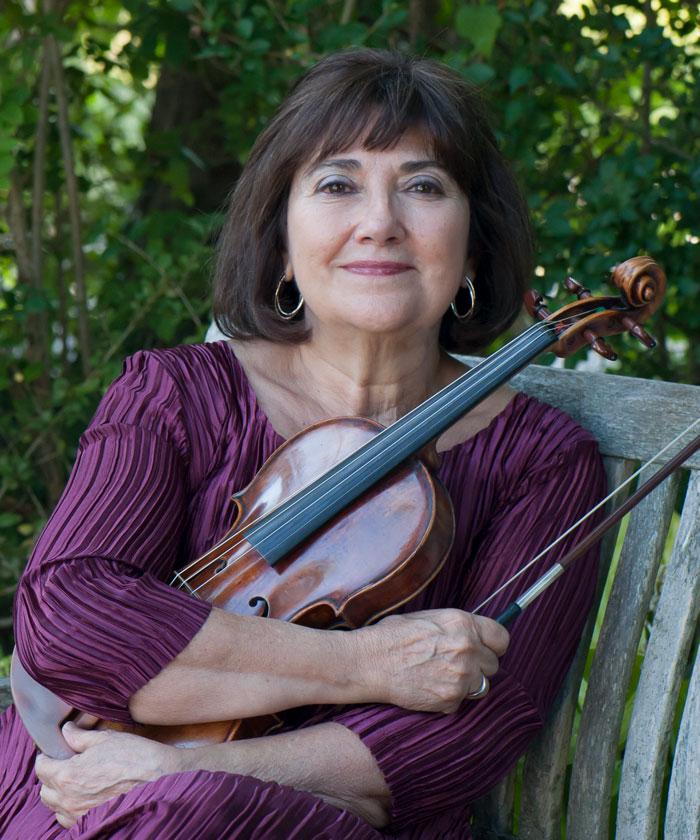
Ani Kavafian

Classical
Chamber Music
 Viberate Rank: 599500
 Viberate Rank: 599500
 Monthly ListenersFollowers
 Subscribers
 Followers
 Followers
 FansTop Spotify SongsTop YouTube VideosMonthly ListenersFeatured in Playlists
| Playlist | Followers | |
|---|---|---|
1 |  Mozart - Complete Chronological Catalogue based on Köchel catalogue K6 Ulysses' Classical | 9.54K |
2 |  Chamber Music for Self-Renewal synergy555 | 4.21K |
3 |  RADIOHEAD LIKED THIS aby | 2.54K |
4 |  Napoleonic Wars Music Jack Hudson | 1.94K |
5 |  Calm/Tranquil Chamber Music synergy555 | 1.50K |
Audience| City | Monthly Listeners | |
|---|---|---|
1 |  | 9 |
2 |  | 7 |
3 |  | 7 |
4 | | 5 |
5 |  | 5 |
See full performance history, audience data, playlist activity, rankings, comparisons, and more in Viberate music analytics. Start with a free trial, then continue with a paid plan.
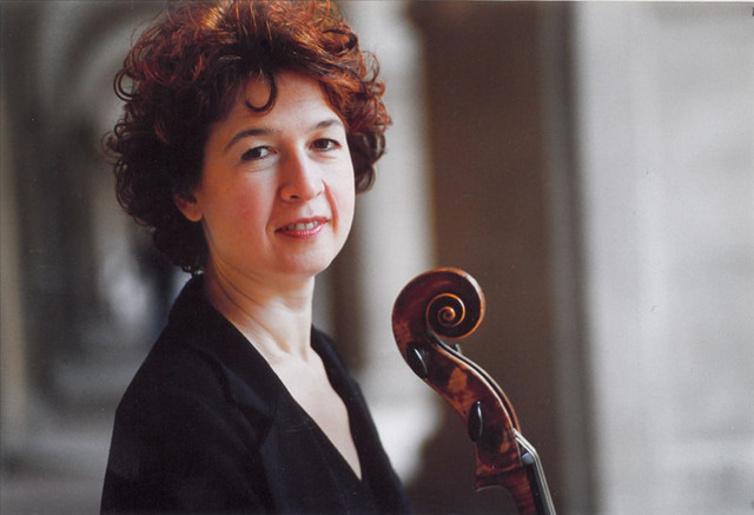
Ani Kavafian’s Spotify BioAni Kavafian is one of the most respected of American violinists, particularly in the field of chamber music and in the more modern repertory. Her father was born in Bulgaria to the family of an Armenian refugee from the notorious suppression of the Armenians by the Ottoman Empire in 1914 and 1915. Her father, in turn, left Bulgaria, fleeing the Communist government there and settling in Turkey. Her father was the principal violist of the Istanbul State Symphony Orchestra, where he met Ani's mother, a member of the first violin section.
Ani recalls that there was no particular anti-Armenian sentiment in Istanbul when she was a young girl, but that it reappeared during anti-Greek riots that broke out in 1956 over the issue of independence of Cyprus. The Kavafian family left Turkey and settled in suburban Detroit.
By then, Ani's younger sister Ida had been born (October 29, 1952). Ani had a strong interest in learning piano and studied that instrument, but recalled that she used to always… put her ear against the door to her mother's practice room just so she could hear the violin. Beginning in 1957, the two girls began taking violin lessons from Ara Zerounian and later from Mischa Mischakoff. Ani recalls Mischakoff as a tough teacher who particularly stressed accuracy of intonation. Once, she says, he took her violin, untuned the strings, played her music perfectly in tune, then handed it to her and demanded she do the same: "No excuses! No matter what your open strings are doing you should be able to adjust."
In 1966, she went to New York to enter the Juilliard School, where she studied with Ivan Galamian. It is to this teacher that she attributed the development of her sound which, she says, was "pretty but very small" when she first came to him, and credits Sally Thomas as establishing a solid technical foundation through frequent drills.
Sister Ida followed the same career path, arriving at Juilliard in 1969, and the two have frequently performed together in various forms of chamber music. Ani made her debut that year at Carnegie Recital Hall. Her European debut was in Paris in 1973.
She and Ida have both established leading violin careers. Ani toured widely in the 1970s, appearing with the world's leading orchestras. She has appeared at the White House three times and on television frequently. She joined the faculties of the Manhattan School of Music and Mannes College of Music in the 1980s.
In 1979, she joined the Chamber Music Society of Lincoln Center. She became the senior member of that organization (which later also included Ida). Although she loves the standard repertory (particularly the Mozart, Brahms, and Mendelssohn concertos), Ani is best known for twentieth century music. She also is especially fond of the Bartók second and Shostakovich first concertos, the concerto of Samuel Barber, and that of Korngold. She often plays the Khachaturian concerto, but one gets the impression that this is because of the Armenian connection to that work. She has premiered Henri Lazarof's Concerto for violin and string orchestra and Tod Machover's Concerto for hyper violin and orchestra (using a violin as input to a computer to produce extended sounds).
She is married to Bernard Mindich, an artist. Their son, Matthew, is a promising cello student. Ani Kavafian owns the 1736 instrument known as the Muir-Mackenzie Stradivarius.
Viberate is a music analytics platform built for A&Rs, artist managers, labels, booking agents, marketers, and artists.
It helps music professionals track artist growth, analyze audience data, monitor playlist activity, compare artists, follow song performance, and identify opportunities across the music market.
Public artist pages provide a free preview of selected artist data. Paid plans provide access to deeper analytics, historical data, charts, comparisons, playlist tools, exports, alerts, reports, and additional professional features.
Yes. Public Viberate artist pages provide selected artist analytics and music data for free.
Viberate also offers a 7-day free trial of the full platform. A credit card is required to start the trial. The trial includes access to the complete product so users can test deeper artist analytics, historical views, playlist insights, comparisons, charts, exports, alerts, and reporting features before choosing a paid plan.
Viberate provides artist analytics across streaming, playlists, social media, video, radio airplay, songs, and audience markets.
Users can analyze Spotify performance, Spotify and Apple Music playlists, YouTube activity, TikTok and Instagram growth, radio spins, song performance, audience locations, demographics, rankings, and overall artist momentum.
Artist profiles also connect to music charts, similar artists, and comparison tools, helping users benchmark performance and evaluate artists in context.
Viberate updates key artist and track data daily.
For followed artists and tracks, selected data is refreshed multiple times per day. This helps teams monitor playlist changes, streaming movement, audience growth, releases, and campaign performance with more current data.
Update frequency can vary depending on the metric and data source.
Yes. Viberate lets users compare up to five artists side by side across streaming, social media, audience, and engagement metrics.
Users can compare fanbase growth, audience demographics, locations, Spotify performance, social metrics, and other artist data over selected time periods.
Artist comparison can be used for A&R scouting, benchmarking, booking decisions, campaign planning, and evaluating artists with similar audiences or market positions.