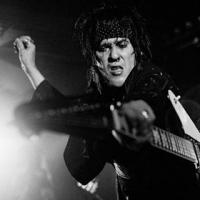
Andy McCoy

Rock
Hard Rock
Alternative Rock
 Viberate Rank: 209594
 Viberate Rank: 209594
 Monthly ListenersFollowers
 Subscribers
 Followers
 Followers
 FansTop Spotify Songs
| Track | 7-Day Streams | |
|---|---|---|
1 | 2.00K | |
2 | 1.18K | |
3 | 537 | |
4 | 346 | |
5 | 271 |
Top YouTube Videos| Video | 7-Day Views | |
|---|---|---|
1 | 477 | |
2 | 86 |
Monthly ListenersFeatured in Playlists| Playlist | Followers | |
|---|---|---|
1 |  FENRIZ METAL Gylve | 32.35K |
2 |  Kultabassokerho Suomirap Kultabassokerho | 8.51K |
3 |  SUOMIRÄPPIÄ📼 jerekin01 | 3.15K |
4 |  Parasta ennen [päivitys tauonnut, muistot säilyvät] toywiz | 2.52K |
5 |  Political and Protest Songs Dylan Parsons | 2.22K |
Audience| City | Monthly Listeners | |
|---|---|---|
1 | | 1.08K |
2 | | 177 |
3 | | 116 |
4 |  | 82 |
5 | | 69 |
See full performance history, audience data, playlist activity, rankings, comparisons, and more in Viberate music analytics. Start with a free trial, then continue with a paid plan.
Andy McCoy’s Spotify BioA versatile Finnish musician, songwriter, and visual artist best known as the lead guitarist for influential glam metallers Hanoi Rocks, Andy McCoy has been a working musician since the late 1970s. Although frontman Michael Monroe was the focal point of the group's live shows, McCoy was their musical heart and soul, as he penned or co-penned just about every original song that appeared on a Hanoi Rocks album from 1981 to 1984 (their "classic" period). After the band ceased operations in 1985, McCoy kept busy with projects like Suicide Twins, Cherry Bombz, Shooting Gallery, and Grease Helmet. His solo releases include Too Much Ain't Enough (1988), Building on Tradition (1995), and Jukebox Junkie (2022).
Born Antti Hulkko on October 11, 1962, in Pelkosenniemi, Finland, both McCoy's guitar playing and fashion style can be linked to two specific all-time rock & roll greats, Keith Richards and Johnny Thunders. Beginning in the late '70s, McCoy appeared on several singles by the group Briard,… before signing on with the Finnish band Pelle Miljoona Oy. Around this time, he hooked up with Monroe, and shortly thereafter, Hanoi Rocks was born. An influential yet oft-overlooked band, the party-hearty Hanoi Rocks adopted the New York Dolls' make-up and hairspray look and played anthemic three-chord rock (influenced by punk). This approach would later be adopted by such groups as Mötley Crüe on their first few albums, and then streamlined and copied by hordes of subsequent hair metal bands throughout the '80s. During their early-'80s peak, McCoy and Hanoi Rocks released a total of four studio albums, including 1981's Bangkok Shocks, Saigon Shakes, Hanoi Rocks, 1982's Oriental Beat, 1983's Back to the Mystery City, and 1984's Two Steps from the Move (the latter produced by Bob Ezrin). However, what appeared to be a bright future for the band was abruptly extinguished when Hanoi Rocks drummer Razzle was killed in an auto accident on December 8, 1984, when he was a passenger in a car driven by Mötley Crüe singer Vince Neil, who was driving while under the influence. McCoy and Monroe would attempt to continue Hanoi Rocks, but eventually split up the band in 1985. Afterwards, McCoy would go from project to project, including reuniting with Hanoi Rocks bandmate Nasty Suicide in the Suicide Twins, forming the heavy metal group Shooting Gallery, releasing solo albums, and even briefly serving as a touring guitarist for Iggy Pop. By 2001, McCoy and Monroe had reconnected and decided to launch a new version of Hanoi Rocks, which resulted in several more albums before they broke up in 2009. That same year saw McCoy pen an autobiography, Sheriff McCoy: Outlaw Legend of Hanoi Rocks.
He remained busy throughout the 2010s, touring and recording with Grease Helmet, Pelle Miljoona, and Bam Margera, and issuing the solo albums Soul Satisfaction (2018) and 21st Century Rocks (2019). In 2022, he released Jukebox Junkie, a set of eclectic covers of songs by the likes of Toots & The Maytals, David Bowie, Squeeze, and Wanda Jackson. ~ Greg Prato & James Christopher Monger, Rovi
Viberate is a music analytics platform built for A&Rs, artist managers, labels, booking agents, marketers, and artists.
It helps music professionals track artist growth, analyze audience data, monitor playlist activity, compare artists, follow song performance, and identify opportunities across the music market.
Public artist pages provide a free preview of selected artist data. Paid plans provide access to deeper analytics, historical data, charts, comparisons, playlist tools, exports, alerts, reports, and additional professional features.
Yes. Public Viberate artist pages provide selected artist analytics and music data for free.
Viberate also offers a 7-day free trial of the full platform. A credit card is required to start the trial. The trial includes access to the complete product so users can test deeper artist analytics, historical views, playlist insights, comparisons, charts, exports, alerts, and reporting features before choosing a paid plan.
Viberate provides artist analytics across streaming, playlists, social media, video, radio airplay, songs, and audience markets.
Users can analyze Spotify performance, Spotify and Apple Music playlists, YouTube activity, TikTok and Instagram growth, radio spins, song performance, audience locations, demographics, rankings, and overall artist momentum.
Artist profiles also connect to music charts, similar artists, and comparison tools, helping users benchmark performance and evaluate artists in context.
Viberate updates key artist and track data daily.
For followed artists and tracks, selected data is refreshed multiple times per day. This helps teams monitor playlist changes, streaming movement, audience growth, releases, and campaign performance with more current data.
Update frequency can vary depending on the metric and data source.
Yes. Viberate lets users compare up to five artists side by side across streaming, social media, audience, and engagement metrics.
Users can compare fanbase growth, audience demographics, locations, Spotify performance, social metrics, and other artist data over selected time periods.
Artist comparison can be used for A&R scouting, benchmarking, booking decisions, campaign planning, and evaluating artists with similar audiences or market positions.