Andreas Staier

Classical
Chamber Music
 Viberate Rank: 132974
 Viberate Rank: 132974
 Monthly ListenersFollowers
 Subscribers
 Followers
 Followers
 FansTop Spotify Songs
| Track | 7-Day Streams | |
|---|---|---|
1 | 10.63K | |
2 | 5.54K | |
3 | 1.59K | |
4 | 471 | |
5 | 471 |
Top YouTube VideosMonthly ListenersFeatured in Playlists| Playlist | Followers | |
|---|---|---|
1 |  Classical Focus Spotify | 620.97K |
2 |  Música Clásica Que Sí Es Clásica José Gonzales | 339.49K |
3 |  Classical Study Music for Focus 🎻🎶 Prime Feelings | 191.75K |
4 |  Focus Music - Work | Studying | Concentration Kroschi | 112.12K |
5 |  The Sound of Everything The Sounds of Spotify | 53.81K |
Audience| City | Monthly Listeners | |
|---|---|---|
1 |  | 1.25K |
2 |  | 1.05K |
3 |  | 857 |
4 |  | 838 |
5 |  | 794 |
See full performance history, audience data, playlist activity, rankings, comparisons, and more in Viberate music analytics. Start with a free trial, then continue with a paid plan.
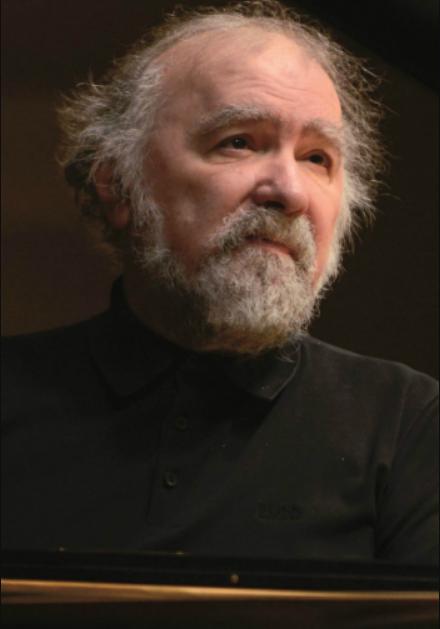
Andreas Staier’s Spotify BioAndreas Staier is one of the foremost authentic-instrument keyboard players in the classical music world. He has performed with many of the world's top historical instrument ensembles and performers and has toured and recorded extensively.
Staier was born on September 13, 1955, in Göttingen, then in West Germany. His early training was on the modern piano. Courses in realizing continuo parts in Baroque music at the Hannover Conservatory led him to study harpsichord. He continued his studies in Amsterdam, where his primary teachers in harpsichord and early music were Gustav Leonhardt, Nikolaus Harnoncourt, and Ton Koopman. His interest in the fortepiano began when he discovered the difference in sound and interpretation that results when that instrument is used for playing composers contemporary with it, especially Mozart and Beethoven.
In 1983, Staier joined Musica Antiqua Köln as its harpsichord player, then resigned from the ensemble in 1986 to embark on his solo career on both… harpsichord and fortepiano (and, on occasion, clavichord). He also began teaching at the Schola Cantorum Basiliensis in Basel, Switzerland, where he was on the faculty from 1987 to 1996. Staier's recording debut came in 1989 on the Deutsche Harmonia Mundi label with the album Bach: Clavierfantasien.
His recital programs and recordings include the standard Baroque composers, but also earlier music and Spanish keyboard works. He looks for important links among compositions of various eras. He waited nearly a quarter of a century to play the Goldberg in public; his long-awaited first performance of it was in Montréal at the end of April 2000. Staier has performed in major festivals and most of the major concert halls of the world and has toured throughout Europe, North America, Asia, and South America.
Staier frequently works with other renowned artists, including Anner Bylsma, Tatiana Grindenko, René Jacobs, and various important early music ensembles. One of his closest partnerships is with tenor Christoph Prégardien, who sings with him in the early Romantic repertory. Their recording of Schubert's Winterreise on Teldec won six major international recording prizes. In 2007, Staier won the prestigious Diapason d'Or award for his album Mozart am Stein vis-à-vis, played not on a harpsichord nor a fortepiano but on an instrument called a vis-à-vis that is a hybrid of the two. Recording for Harmonia Mundi, Staier maintained a vigorous schedule in the 2010s and into the 2020s. In 2015, he released a group of Brahms clarinet sonatas with Lorenzo Coppola, bringing his historical practice into the late 19th century: he used an 1875 Steinway piano that Brahms was known to have liked. He also continued to make acclaimed harpsichord recordings, including a 2015 set of Bach harpsichord concertos in which he was teamed with the Freiburg Baroque Orchestra. Staier remained active during the COVID-19 pandemic, releasing Bach's complete Well-Tempered Clavier and, on the Alpha label, the Baroque recital Méditation in 2024. By that time, his recording catalog comprised some 80 items. ~ Joseph Stevenson & James Manheim, Rovi
Viberate is a music analytics platform built for A&Rs, artist managers, labels, booking agents, marketers, and artists.
It helps music professionals track artist growth, analyze audience data, monitor playlist activity, compare artists, follow song performance, and identify opportunities across the music market.
Public artist pages provide a free preview of selected artist data. Paid plans provide access to deeper analytics, historical data, charts, comparisons, playlist tools, exports, alerts, reports, and additional professional features.
Yes. Public Viberate artist pages provide selected artist analytics and music data for free.
Viberate also offers a 7-day free trial of the full platform. A credit card is required to start the trial. The trial includes access to the complete product so users can test deeper artist analytics, historical views, playlist insights, comparisons, charts, exports, alerts, and reporting features before choosing a paid plan.
Viberate provides artist analytics across streaming, playlists, social media, video, radio airplay, songs, and audience markets.
Users can analyze Spotify performance, Spotify and Apple Music playlists, YouTube activity, TikTok and Instagram growth, radio spins, song performance, audience locations, demographics, rankings, and overall artist momentum.
Artist profiles also connect to music charts, similar artists, and comparison tools, helping users benchmark performance and evaluate artists in context.
Viberate updates key artist and track data daily.
For followed artists and tracks, selected data is refreshed multiple times per day. This helps teams monitor playlist changes, streaming movement, audience growth, releases, and campaign performance with more current data.
Update frequency can vary depending on the metric and data source.
Yes. Viberate lets users compare up to five artists side by side across streaming, social media, audience, and engagement metrics.
Users can compare fanbase growth, audience demographics, locations, Spotify performance, social metrics, and other artist data over selected time periods.
Artist comparison can be used for A&R scouting, benchmarking, booking decisions, campaign planning, and evaluating artists with similar audiences or market positions.