Amp Fiddler

R&B
Contemporary R&B
Neo Soul
Alternative Hip Hop
 Viberate Rank: 85258
 Viberate Rank: 85258
 Monthly ListenersFollowers
 Subscribers
 Followers
 Followers
 FansTop Spotify Songs
| Track | 7-Day Streams | |
|---|---|---|
1 | 8.01K | |
2 | 6.70K | |
3 | 6.18K | |
4 | 4.28K | |
5 | 3.75K |
Top YouTube VideosMonthly ListenersFeatured in Playlists| Playlist | Followers | |
|---|---|---|
1 |  I Love My Neo-Soul Spotify | 614.71K |
2 |  Instrumental Funk Spotify | 394.13K |
3 |  Defected 2026 Defected Records | 249.22K |
4 |  real good shit Tom Misch | 165.62K |
5 |  Soulful House Spotify | 133.62K |
Audience| City | Monthly Listeners | |
|---|---|---|
1 |  | 2.67K |
2 |  | 1.17K |
3 |  | 1.16K |
4 | | 972 |
5 |  | 776 |
See full performance history, audience data, playlist activity, rankings, comparisons, and more in Viberate music analytics. Start with a free trial, then continue with a paid plan.
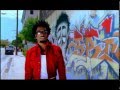
Amp Fiddler’s Spotify BioKnown foremost as an exemplary collaborator across genres and generations, Amp Fiddler was above all an R&B musician, a keyboardist who put funk into everything with understated elegance and minimal flash, and a singer who could soothe and galvanize in the same verse. A vital Detroit player and connector for over 40 years, Fiddler came up in the '80s as a touring keyboardist with Enchantment, R.J.'s Latest Arrival, and Was (Not Was) before he entered the Parliament-Funkadelic galaxy. A P-Funk associate for well over a decade, he concurrently stretched out as a versatile session hand, enhancing recordings by the likes of Warren Zevon, Seal, and Maxwell, and he closely mentored and championed Jay Dee (aka J Dilla) before the hip-hop producer launched an unparalleled career. Beside brother Bubz, Fiddler temporarily stepped out of the background as one-half of the duo Mr. Fiddler, releasing the uniquely stylish and out-of-step With Respect in 1991. Not until the following decade would… Fiddler finally slide into the spotlight as a solo artist. His 2003 full-length debut Waltz of a Ghetto Fly, a hybrid of soul, funk, and house fueled in part by an alliance with Moodymann, was warmly received with two singles landing on the U.K. pop chart. After the follow-up Afro Strut in 2006, side work again took precedence for Fiddler until he put together the party-oriented Motor City Booty in 2016. Live and studio projects with Will Sessions followed soon thereafter, as did Amp Dog Knights, his last solo album, released in 2017. Fiddler's boundless collaborative work continued into the next decade, until his death from cancer in 2023.
A Detroiter from his birth, Joseph Anthony "Amp" Fiddler started taking piano lessons in his teens. After graduating from Osborn High School, he continued his musical studies locally at Wayne County Community College, Oakland Community College, and Oakland University, where he was mentored by composer, pianist, and Tribe co-founder Harold McKinney. Around this time, at the dawn of the '80s, Fiddler was behind "Spaced Outta Place," a full-bodied dancefloor funk workout originally released under the name Space Cadets, and then Sundown on a subsequent pressing. (The song was given new life on Kon & Amir's 2007 DJ mix Off Track, Vol. 1, and in 2022 was reissued by Theo Parrish's Sound Signature label.) Fiddler put academics behind him upon joining Enchantment as the group's touring keyboardist in 1982. This led to stints with R.J.'s Latest Arrival and Was (Not Was), followed by a decade-plus adventure with George Clinton's Parliament-Funkadelic. Fiddler's affiliation with Clinton began in 1984 and quickly extended to the studio, peaking commercially with "Do Fries Go with That Shake?," a 1986 Top 20 R&B hit for Clinton.
During breaks from his P-Funk duties, Fiddler diversified with assorted session work for the likes of Cheryl Lynn and Warren Zevon. He also played on What Up, Dog?, the 1988 commercial breakthrough of Was (Not Was), and in 1990 contributed to Prince's Graffiti Bridge soundtrack, heard on "We Can Funk," featuring Clinton. Meanwhile, Fiddler and his bassist brother Bubz were plotting their Mr. Fiddler project, a synthesis of new jack swing and vintage inspirations that enabled Amp to indulge in his longtime obsession with '40s jazz. Created with numerous P-Funk associates and then-unknown collaborators ranging from Brian McKnight to Danny Saber, With Respect, the lone Mr. Fiddler album, was released on Elektra in February 1991. A combination of label politics and unadventurous radio programmers prevented its singles from receiving much attention. The LP languished as a consequence.
Fiddler had used his advance check from Elektra to invest in gear that enabled him to turn his Detroit basement into a recording studio. The music heard from outside his house prompted a member of a young hip-hop collective, Ghost Town, to approach him for help. Fiddler obliged, and among a resulting influx of visitors to "Camp Amp" was a teenaged James Yancey, aka Jon Doe (later known as Jay Dee and J Dilla), then of Ssenepod, an embryonic version of Slum Village. Fiddler taught Yancey how to use his MPC and also allowed the aspiring producer to woodshed on the premises. He also became a crucial connector, introducing Yancey to Q-Tip of A Tribe Called Quest -- Lollapalooza 1994 tour mates of George Clinton & the P-Funk All-Stars -- beginning a groundswell of high-profile admiration for Slum Village's early recordings, leading to ATCQ onboarding Yancey as a production partner. Meanwhile, Fiddler was completing some of his most significant session work. In 1994 alone, he was on hit recordings by three major U.K. acts: Primal Scream's Give Out But Don't Give Up, Brand New Heavies' "Dream On Dreamer," and Seal's "Kiss from a Rose," the last of which also topped the pop chart in the U.S. Before the end of the '90s, Fiddler had also contributed to Maxwell's Urban Hang Suite and additional efforts by the likes of Clinton, Too $hort, and the Dramatics' L.J. Reynolds. Mr. Fiddler briefly resurfaced in 1998 with the U.K.-only single "Waltz of a Ghetto Fly."
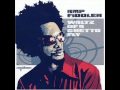
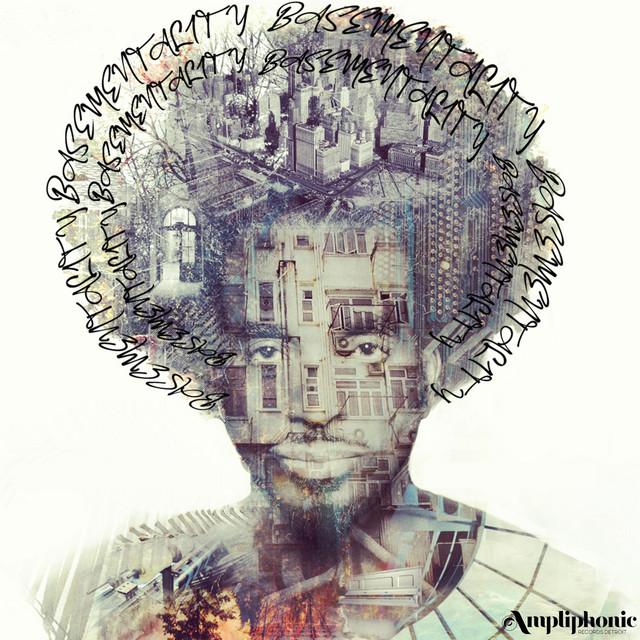
Coming off tours playing with George Clinton and the supergroup Lucy Pearl, Fiddler in the 2000s spent more time developing his own material while establishing links with a younger generation of Detroit-based dance music producers. He appeared on tracks produced by Moodymann -- such as "I'm Doing Fine," credited to the alias Amp Dog Knight -- and factored heavily in the self-titled album by Carl Craig's Detroit Experiment, playing Fender Rhodes, synthesizer, and organ on numerous tracks, and also fronting an update of Stevie Wonder's "Too High." In 2002, just before the release of The Detroit Experiment, Fiddler launched his solo career on the U.K.-based Genuine label with Basementality, an EP mixing soul, funk, and house. That and the following 2003 EP Love and War became the foundation of the full-length Waltz of a Ghetto Fly, issued in January 2004 with brother Bubz and son Dorian, as well as Clinton, J Dilla, Moodymann, and Raphael Saadiq, all in support. Combined with a featured appearance on Only Child's "U Bring Me Vibes," a club hit he co-wrote and fronted, Fiddler was brought to the attention of a younger audience, a portion of which figured he was a newcomer instead of a funk veteran in his mid-40s. This was particularly true in the U.K., where Waltz of a Ghetto Fly's midtempo funk singles "I Believe in You" and "Dreamin'" hit the pop chart, peaking respectively at number 72 and number 71, sending the parent release to the 82nd position on the album chart.
Interest in Fiddler as a solo artist and collaborator increased. He followed up in 2006 with the lively and more organic Afro Strut. Even more freely collaborative than the debut, Afro Strut featured contributions from the likes of Tony Allen, Jean-Paul "Bluey" Maunick, and Stephanie McKay, as well as longtime associates like Garry Shider and Chris Bruce, plus Tribe reedist Wendell Harrison and guitarist Rob Bacon, two largely unheralded musicians representing multiple generations of the Detroit music scene. The album was reworked for U.S. release in 2007, adding Corinne Bailey Rae as a duet partner to "If I Don't," a playful early-jazz throwback. Fiddler a year later teamed with Sly & Robbie to set off Strut Records' Inspiration Information series, recording the LP of the same title on the reggae rhythm-section legends' home turf in Kingston. Fiddler remained similarly inclusive when it came to lending his time to other artists' projects, appearing on late-2000s albums from Tribe, Leon Ware, and Ta'Raach, and tightening his U.K. link on the Basement Jaxx album Scars. Additionally in 2009, he took part in the orchestral Dilla tribute concert Timeless: Suite for Ma Dukes, released the next year.
In the 2010s and 2020s, Fiddler was a little more active as a live musician and studio collaborator than as a solo artist. He self-released the digital Basementality 2 and Basementality 3 EPs in 2014 and 2015, and in 2016, he issued the party record Motor City Booty, co-produced and released by Yam Who?, with Detroit vocal group Dames Brown showcased throughout. He teamed with Will Sessions for 2017's Kindred Live, an in-concert companion to the Detroit band's studio fusion tribute (with versions of classics such as Miles Davis' "Bitches Brew" and Weather Report's "River People"), and 2018's The One, the funk-forward majority of which he co-wrote. Between those two collaborations, Fiddler unloaded the likewise funky Amp Dog Knights through Moodymann's Mahogani Music. Pitching in were Detroiters such as Waajeed and Andrés, and "Return of the Ghetto Fly" and "Through Your Soul" utilized long-dormant Dilla beats from a zip disk Fiddler rescued after it had been stolen. (Dilla granted the beats to Fiddler as thanks for his early support.) All the while, Fiddler quietly racked up side credits and featured appearances. He recorded with José James (No Beginning No End), Lakecia Benjamin (Retox), Raphael Saadiq (Stone Rollin'), and Meshell Ndegeocello (including Comet, Come to Me), among many other long-term associates and contemporaries spanning several genres. He died on December 18, 2023 after a multiyear battle with cancer. ~ Andy Kellman, Rovi
Viberate is a music analytics platform built for A&Rs, artist managers, labels, booking agents, marketers, and artists.
It helps music professionals track artist growth, analyze audience data, monitor playlist activity, compare artists, follow song performance, and identify opportunities across the music market.
Public artist pages provide a free preview of selected artist data. Paid plans provide access to deeper analytics, historical data, charts, comparisons, playlist tools, exports, alerts, reports, and additional professional features.
Yes. Public Viberate artist pages provide selected artist analytics and music data for free.
Viberate also offers a 7-day free trial of the full platform. A credit card is required to start the trial. The trial includes access to the complete product so users can test deeper artist analytics, historical views, playlist insights, comparisons, charts, exports, alerts, and reporting features before choosing a paid plan.
Viberate provides artist analytics across streaming, playlists, social media, video, radio airplay, songs, and audience markets.
Users can analyze Spotify performance, Spotify and Apple Music playlists, YouTube activity, TikTok and Instagram growth, radio spins, song performance, audience locations, demographics, rankings, and overall artist momentum.
Artist profiles also connect to music charts, similar artists, and comparison tools, helping users benchmark performance and evaluate artists in context.
Viberate updates key artist and track data daily.
For followed artists and tracks, selected data is refreshed multiple times per day. This helps teams monitor playlist changes, streaming movement, audience growth, releases, and campaign performance with more current data.
Update frequency can vary depending on the metric and data source.
Yes. Viberate lets users compare up to five artists side by side across streaming, social media, audience, and engagement metrics.
Users can compare fanbase growth, audience demographics, locations, Spotify performance, social metrics, and other artist data over selected time periods.
Artist comparison can be used for A&R scouting, benchmarking, booking decisions, campaign planning, and evaluating artists with similar audiences or market positions.