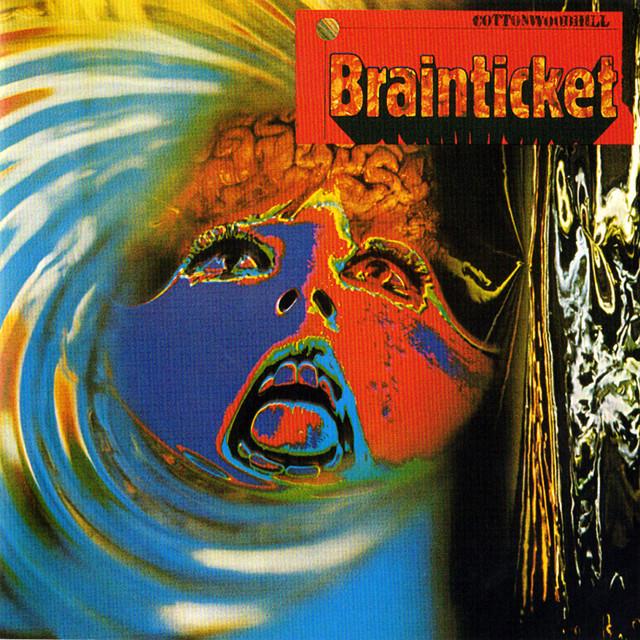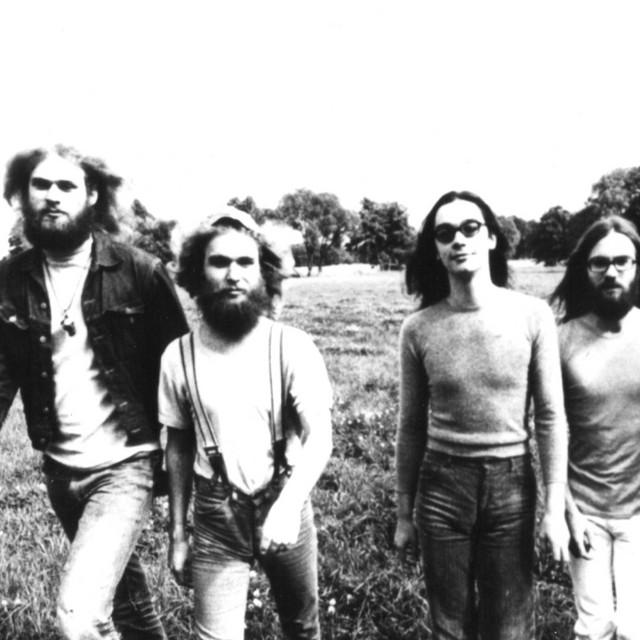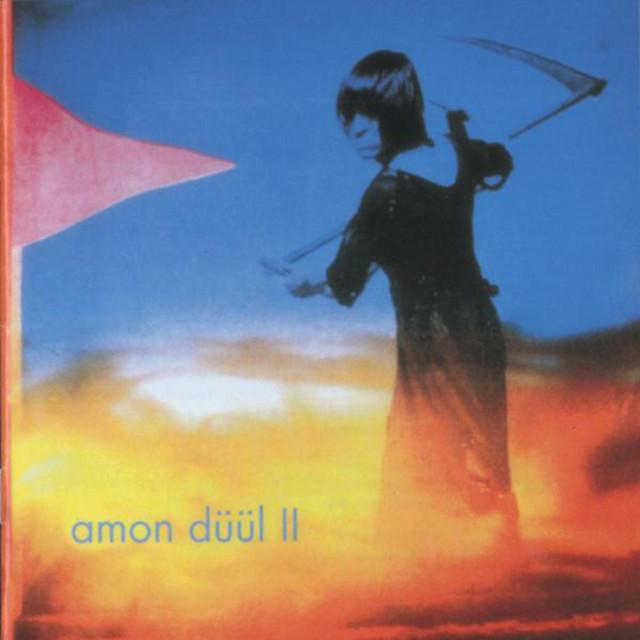
Amon Düül II

Rock
Progressive Rock
Psychedelic Rock
 Viberate Rank: 109657
 Viberate Rank: 109657
 Monthly ListenersFollowers
 Subscribers
 Followers
 Followers
 FansTop Spotify Songs
| Track | 7-Day Streams | |
|---|---|---|
1 | 3.60K | |
2 | 1.61K | |
3 | 1.32K | |
4 | 1.15K | |
5 | 873 |
Top YouTube VideosMonthly ListenersFeatured in Playlists| Playlist | Followers | |
|---|---|---|
1 |  FENRIZ METAL Gylve | 32.35K |
2 |  That 70s Show Björn Lindhe | 24.49K |
3 | Unofficial Reverb Radio Jeff Ferruzzo | 21.82K |
4 |  KRAUTROCK alison | 21.75K |
5 |  SOUL CYCLE 2026 - Cycling Music 2026 WORKOUT MOTIVATION! | 21.05K |
Audience| City | Monthly Listeners | |
|---|---|---|
1 |  | 476 |
2 |  | 313 |
3 | | 300 |
4 | | 265 |
5 |  | 231 |
See full performance history, audience data, playlist activity, rankings, comparisons, and more in Viberate music analytics. Start with a free trial, then continue with a paid plan.
Amon Düül II’s Spotify BioAmon Düül was a German art commune whose members began producing improvisational psychedelic rock music during the late '60s. The group's members released several albums, mostly recorded during a single extended jam session, beginning with 1969's Psychedelic Underground. Concurrently, some of the commune's more musically inclined members formed the longer-lasting Amon Düül II. Both acts proved to be a major influence on generations of experimental rock musicians to come, and are regarded as pioneers of the Krautrock genre.
Forming in Munich in 1967, the collective included bassist Ulrich Leopold, his brother Peter Leopold on drums, and guitarist Rainer Bauer. While the basic lineup recorded a session that year, an expanded lineup of Amon Düül recorded a marathon improvisation in 1968 or 1969, which subsequently formed the majority of the group's discography. Psychedelic Underground and Collapsing: Singvögel Rückwärts & Co. were both released in 1969, and later reissued under several… different titles. A 1970 recording session produced a more focused, folk-influenced full-length titled Paradieswärts Düül, which appeared the following year. Two additional recordings taken from the group's original session, 1972's Disaster (Lüüd Noma) and 1984's Experimente, were also released.
While membership within the commune and the band Amon Düül was fluid, several commune members with greater musical ambitions decided to start a separate rock group, and formed Amon Düül II -- they saw no reason to struggle for a new name, or argue over the original. The new group was helmed by John Weinzierl, Chris Karrer, and Renate Knaup-Kroetenschwanz, and set to work to produce an impressive debut with Phallus Dei (1969). This was followed quickly by the 1970 double album Yeti, the cover of which features one of the band's roadies.
1971 brought the release of another two-LP set -- Tanz der Lemminge ("Dance of the Lemmings"), a recording widely considered to be the keystone of the Amon Düül II catalog. With stylistic abandon, the album mixed together everything from straight-ahead rock to experimental noodling, all built around a series of science-fiction themes. The band performed with a joyfulness that belied the real seriousness of the experimental work involved.
They continued on this path for several years, continuing to release highly regarded albums that achieved only moderate sales, at best. 1975's Made in Germany (released in two-LP and single-LP versions) found the band making an attempt to present a more commercially appealing side, with little effect on the market. Continuing failure to crack the mainstream eventually brought the band back to its more experimental roots, though not before causing the core unit to fall moribund for a while.
A further spin-off, formed by John Weinzierl under the original name (and also known as Amon Düül UK and, rarely, as Amon Düül III) recorded sporadically in the 1970s and '80s. Weinzierl worked with former Hawkwind member Dave Anderson on a total of five albums (one of which, Airs on a Shoestring, was a compilation drawn from the first two, with additional material salted in), with additional bandmembers coming from all walks of the British progressive/psychedelic scene. For Lösung, Weinzierl and Anderson collaborated with the late Robert Calvert, as well as drummer Guy Evans.
Amon Düül II reappeared during the '90s, producing a series of remixes and original material, as well as Live in Tokyo and the intriguing benefit album Kobe (Reconstruction), which focused on material from 1969 and 1971. Members continued to be active with both solo and band projects. EastWest Records Germany released a four-CD retrospective box set in 1997. The '90s renewed interest in Krautrock culminated with the re-release of three of the group's albums -- Wolf City, Yeti, and Viva la Trance -- in 1999. A 2010 reunion effort was digitally self-released under the name Bee as Such, and was eventually given a full release by Purple Pyramid under the name Düülirium in 2014. ~ Steven McDonald, Rovi
Viberate is a music analytics platform built for A&Rs, artist managers, labels, booking agents, marketers, and artists.
It helps music professionals track artist growth, analyze audience data, monitor playlist activity, compare artists, follow song performance, and identify opportunities across the music market.
Public artist pages provide a free preview of selected artist data. Paid plans provide access to deeper analytics, historical data, charts, comparisons, playlist tools, exports, alerts, reports, and additional professional features.
Yes. Public Viberate artist pages provide selected artist analytics and music data for free.
Viberate also offers a 7-day free trial of the full platform. A credit card is required to start the trial. The trial includes access to the complete product so users can test deeper artist analytics, historical views, playlist insights, comparisons, charts, exports, alerts, and reporting features before choosing a paid plan.
Viberate provides artist analytics across streaming, playlists, social media, video, radio airplay, songs, and audience markets.
Users can analyze Spotify performance, Spotify and Apple Music playlists, YouTube activity, TikTok and Instagram growth, radio spins, song performance, audience locations, demographics, rankings, and overall artist momentum.
Artist profiles also connect to music charts, similar artists, and comparison tools, helping users benchmark performance and evaluate artists in context.
Viberate updates key artist and track data daily.
For followed artists and tracks, selected data is refreshed multiple times per day. This helps teams monitor playlist changes, streaming movement, audience growth, releases, and campaign performance with more current data.
Update frequency can vary depending on the metric and data source.
Yes. Viberate lets users compare up to five artists side by side across streaming, social media, audience, and engagement metrics.
Users can compare fanbase growth, audience demographics, locations, Spotify performance, social metrics, and other artist data over selected time periods.
Artist comparison can be used for A&R scouting, benchmarking, booking decisions, campaign planning, and evaluating artists with similar audiences or market positions.