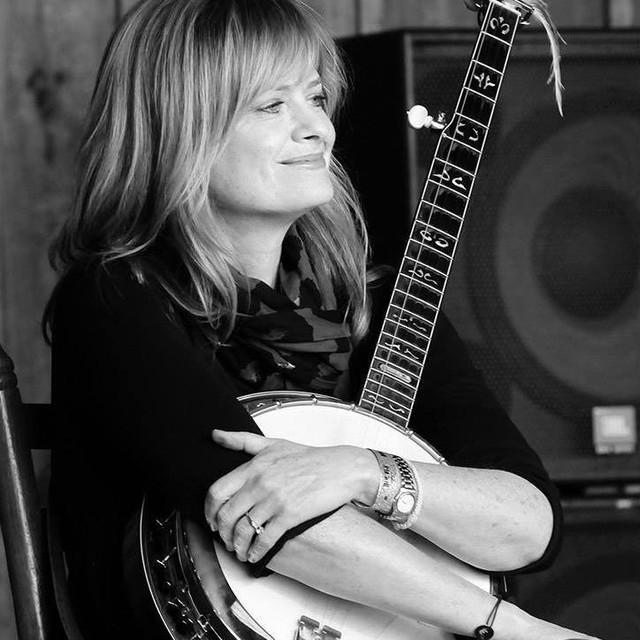
Alison Brown

Country
Bluegrass
Americana/Alt Country
Smooth Jazz
 Viberate Rank: 50775
 Viberate Rank: 50775
 Monthly ListenersFollowers
 Subscribers
 Followers
 Followers
 FansTop Spotify Songs
| Track | 7-Day Streams | |
|---|---|---|
1 | 6.56K | |
2 | 4.35K | |
3 | 3.27K | |
4 | 2.97K | |
5 | 2.88K |
Top YouTube VideosMonthly ListenersFeatured in Playlists| Playlist | Followers | |
|---|---|---|
1 |  Women of Folk Spotify | 336.54K |
2 |  Bluegrass Covers Spotify | 287.90K |
3 |  Grass Roots Spotify | 168.81K |
4 |  Instrumental Bluegrass Spotify | 64.54K |
5 |  New Grass Spotify | 34.07K |
Audience| City | Monthly Listeners | |
|---|---|---|
1 | | 701 |
2 | | 690 |
3 | | 669 |
4 | | 581 |
5 | | 548 |
See full performance history, audience data, playlist activity, rankings, comparisons, and more in Viberate music analytics. Start with a free trial, then continue with a paid plan.
Alison Brown’s Spotify BioProgressive banjoist Alison Brown is a virtuosic instrumentalist, accomplished bandleader, and composer. Her wholly individual style relies as much on jazz, blues, and global traditions as bluegrass and country music. After three years with Allison Krauss & Union Station, she released the Grammy-nominated solo album Simple Pleasures in 1990, the first of four acclaimed studio efforts on Vanguard -- others included Twilight Motel (1992) and Quartet (1996). She co-founded Compass with producer/husband Garry West for 1998's Out of the Blue and continues to run it in the 21st century. 2005's Stolen Moments offered covers and originals, and 2009's The Company You Keep was her most jazz-centric set to date. 2015's Song of the Banjo deliberately moved the instrument in new directions, offering classic covers of old and new pop standards with guest appearances by several vocalists. In 2023, Brown returned with On Banjo, a genre-blurring collection that included collabs with Kronos Quartet, Ana…t Cohen, and others.
Brown was born and raised in Hartford, Connecticut. She learned to play guitar at eight and began studying the banjo at ten. At 12 she met fiddler (and future guest star) Stuart Duncan. In the summer of 1978, Brown traveled across the country with Duncan and his father, playing at festivals and contests. She won first place at the Canadian National Banjo Championship; it assisted her immeasurably in landing a one-night stand at Nashville's Grand Ole Opry.
She temporarily left music to attend Harvard University, studying history and literature. While there, she was instrumental in reuniting the Northern Lights after a five-year hiatus. She joined the re-formed band, leaving in 1984 to attend UCLA where she earned an MBA. She spent two years working for Smith Barney in San Francisco as an investment banker before resuming her musical ambitions.
Brown gained her first wide exposure as a member of Alison Krauss' Union Station, covering the banjo slot from Krauss' 1987 debut album through 1990. That year, she departed to record her own debut, the entirely instrumental Simple Pleasures, for Vanguard, and also spent some time as the musical director for folkie Michelle Shocked. Brown's 1992 follow-up, Twilight Motel, was jazzier and more eclectic, and 1994's Look Left displayed her increasing interest in world and ethnic music. Released in 1996, The Alison Brown Quartet refocused on her jazz sensibilities and found her switching to guitar on a few tracks; it was also her last album before founding the Compass imprint with her husband Garry West.
The label is an anomaly among independents. Despite the consolidations and liquidations of the music business, Compass continues to release influential recordings from a plethora of Americana and folk artists, ranging from Robbie Fulks and Kate Taylor to Molly Tuttle and Jeb Loy Nichols and dozens more. She released her label debut, Out of the Blue in 1998. Issued in 2000, Fair Weather featured a duet with Béla Fleck (the banjo innovator she is most often compared with) on "Leaving Cottondale," which won the Grammy for Best Country Instrumental. Her follow-up album, Replay, was another of her jazzier outings. Brown sang about parenthood and musicianship on Stolen Moments, which arrived in spring 2005. The set offered eight originals and a handful of covers composed by Paul Simon, Boo Hewerdine, and Jimi Hendrix.
She released Evergreen, a collection of holiday music with Joe Craven, in 2007, followed by Company You Keep in 2009. In 2010, she produced Legacy by Peter Rowan and the Nashville Bluegrass Band. Between 2012 and the onset of the pandemic in 2020, she produced five albums by the Special Consensus and Bobby Osborne's Original in 2017.
After a six-year gap between her own recordings, Brown returned with The Song of the Banjo in 2015, a versatile collection that included a slew of guests including the Indigo Girls, Keb' Mo', and her Compass Records labelmate Colin Hay. She was also presented 2015's Distinguished Achievement Award from the International Bluegrass Music Association for the furtherance of bluegrass music.
After the pandemic, the Alison Brown Quartet returned to the road, playing internationally; she composed while traveling. In May 2023, she issued On Banjo, a diverse collection of original compositions and collaborations. The Brazilian-flavored "Choro 'Nuff" featured jazz clarinetist Anat Cohen and "Foggy Morning Breakdown" was co-written and recorded with Steve Martin. (Brown co-chairs, the annual Steve Martin Banjo Prize with him.) "Sweet Sixteenths" is a banjo duet with Sierra Hull, "Tall Hog" features Duncan in an homage to their West Coast fiddle mentors Byron Berline and John Hickman. The set also included two classically tinged pieces, "Regalito" with classical guitarist Sharon Isbin and "Porches" with Konos Quartet. ~ Steve Huey, Rovi
Viberate is a music analytics platform built for A&Rs, artist managers, labels, booking agents, marketers, and artists.
It helps music professionals track artist growth, analyze audience data, monitor playlist activity, compare artists, follow song performance, and identify opportunities across the music market.
Public artist pages provide a free preview of selected artist data. Paid plans provide access to deeper analytics, historical data, charts, comparisons, playlist tools, exports, alerts, reports, and additional professional features.
Yes. Public Viberate artist pages provide selected artist analytics and music data for free.
Viberate also offers a 7-day free trial of the full platform. A credit card is required to start the trial. The trial includes access to the complete product so users can test deeper artist analytics, historical views, playlist insights, comparisons, charts, exports, alerts, and reporting features before choosing a paid plan.
Viberate provides artist analytics across streaming, playlists, social media, video, radio airplay, songs, and audience markets.
Users can analyze Spotify performance, Spotify and Apple Music playlists, YouTube activity, TikTok and Instagram growth, radio spins, song performance, audience locations, demographics, rankings, and overall artist momentum.
Artist profiles also connect to music charts, similar artists, and comparison tools, helping users benchmark performance and evaluate artists in context.
Viberate updates key artist and track data daily.
For followed artists and tracks, selected data is refreshed multiple times per day. This helps teams monitor playlist changes, streaming movement, audience growth, releases, and campaign performance with more current data.
Update frequency can vary depending on the metric and data source.
Yes. Viberate lets users compare up to five artists side by side across streaming, social media, audience, and engagement metrics.
Users can compare fanbase growth, audience demographics, locations, Spotify performance, social metrics, and other artist data over selected time periods.
Artist comparison can be used for A&R scouting, benchmarking, booking decisions, campaign planning, and evaluating artists with similar audiences or market positions.