Alexis Weissenberg

Classical
Orchestral
Chamber Music
 Viberate Rank: 58324
 Viberate Rank: 58324
 Monthly ListenersFollowers
 Subscribers
 Followers
 Followers
 FansTop Spotify Songs
| Track | 7-Day Streams | |
|---|---|---|
1 | 241.25K | |
2 | 2.07K | |
3 | 2.00K | |
4 | 1.75K | |
5 | 850 |
Top YouTube Videos| Video | 7-Day Views | |
|---|---|---|
1 | 3.90K | |
2 | 170 | |
3 | 157 | |
4 | 124 | |
5 | 54 |
Monthly ListenersFeatured in Playlists| Playlist | Followers | |
|---|---|---|
1 |  Reading at night (no vocals) ☕️📜🕯️ C✩°。 ⋆⸜ 🎧✮ | 456.52K |
2 |  Instrumental Studying 🎻🕊️🎧📑🍵 (soft/no lyrics) mixstarrs | 435.16K |
3 |  book reading playlist Berggrensterner | 393.56K |
4 |  Piano Classics 🎹 relaxing piano music Sony Classical & Jazz Sweden | 331.92K |
5 |  Crepúsculo - músicas da saga Mariana Henrique | 115.22K |
Audience| City | Monthly Listeners | |
|---|---|---|
1 |  | 7.99K |
2 |  | 5.91K |
3 | | 5.86K |
4 |  | 5.50K |
5 | | 5.13K |
See full performance history, audience data, playlist activity, rankings, comparisons, and more in Viberate music analytics. Start with a free trial, then continue with a paid plan.
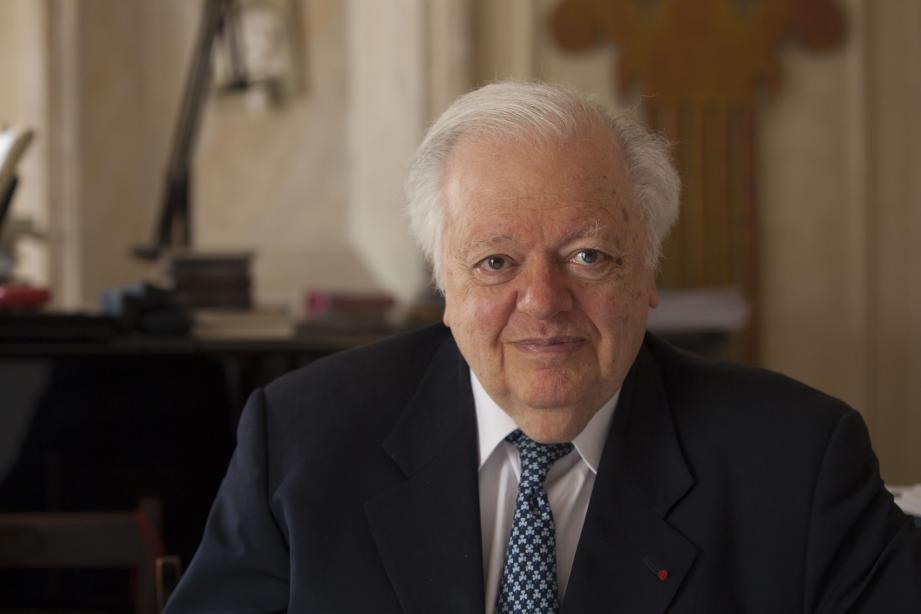
Alexis Weissenberg’s Spotify BioIf one wanted to make a biographical feature film about a classical musician, the life of the Bulgarian-American-French pianist Alexis Weissenberg would furnish ideal subject material. Born in Sofia in 1929, Weissenberg was taught to play the piano by his mother. Several members of her family were Vienna Conservatory-trained musicians, and Weissenberg grew up in an environment where the sight-reading of chamber music was as common as watching television is for most children today. His second piano teacher was a disciplinarian dentist, his third Bulgaria's top composer and pedagogue, Pancho Vladigerov, at whose house Weissenberg heard Dinu Lipatti perform.
At age 10, Weissenberg gave his first recital, performing, among other works, an etude of his own composition. Shortly thereafter, Weissenberg and his mother attempted to flee Bulgaria for Turkey as fascist terror deepened. They were caught and thrown in a concentration camp. "Only three elements remained constant," Weissenberg… recalled. "Silence, singing, and crying." What saved the pair was an accordion Weissenberg had been given as a gift by an aunt. A German guard who liked music let Weissenberg play and after three months put the Weissenbergs on a train to Istanbul, throwing the accordion into their compartment through an open window as they left.
They made their way to Turkey and then to Israel, where Weissenberg studied at the Jerusalem Academy of Music and performed with the Israel Philharmonic under the baton of Leonard Bernstein. He left his accordion with a group of children after playing an outdoor concert and departed for the U.S. in 1946. Weissenberg enrolled at the Juilliard School of Music, studying with Olga Samaroff and at times with Artur Schnabel, and making contact with Vladimir Horowitz, who urged Weissenberg to enter the Leventritt Award competition. Weissenberg won the award in 1947, and his career was launched. His U.S. debut came with the New York Philharmonic, conducted by George Szell, and for the next ten years he toured the U.S. and Europe.
In 1956 Weissenberg moved to Paris, eventually becoming a French citizen. For a decade beginning around that time, he took a hiatus from performing, subjecting himself to a reconstruction of his keyboard technique. His performances of Chopin, Rachmaninov, and Prokofiev were especially notable, and the Bach Chromatic Fantasy and Fugue was a staple of his recital programming. His recordings of the 1960s and 1970s remained well represented in reissues on the EMI label as of the early 2000s, and he remained active into old age.
Viberate is a music analytics platform built for A&Rs, artist managers, labels, booking agents, marketers, and artists.
It helps music professionals track artist growth, analyze audience data, monitor playlist activity, compare artists, follow song performance, and identify opportunities across the music market.
Public artist pages provide a free preview of selected artist data. Paid plans provide access to deeper analytics, historical data, charts, comparisons, playlist tools, exports, alerts, reports, and additional professional features.
Yes. Public Viberate artist pages provide selected artist analytics and music data for free.
Viberate also offers a 7-day free trial of the full platform. A credit card is required to start the trial. The trial includes access to the complete product so users can test deeper artist analytics, historical views, playlist insights, comparisons, charts, exports, alerts, and reporting features before choosing a paid plan.
Viberate provides artist analytics across streaming, playlists, social media, video, radio airplay, songs, and audience markets.
Users can analyze Spotify performance, Spotify and Apple Music playlists, YouTube activity, TikTok and Instagram growth, radio spins, song performance, audience locations, demographics, rankings, and overall artist momentum.
Artist profiles also connect to music charts, similar artists, and comparison tools, helping users benchmark performance and evaluate artists in context.
Viberate updates key artist and track data daily.
For followed artists and tracks, selected data is refreshed multiple times per day. This helps teams monitor playlist changes, streaming movement, audience growth, releases, and campaign performance with more current data.
Update frequency can vary depending on the metric and data source.
Yes. Viberate lets users compare up to five artists side by side across streaming, social media, audience, and engagement metrics.
Users can compare fanbase growth, audience demographics, locations, Spotify performance, social metrics, and other artist data over selected time periods.
Artist comparison can be used for A&R scouting, benchmarking, booking decisions, campaign planning, and evaluating artists with similar audiences or market positions.