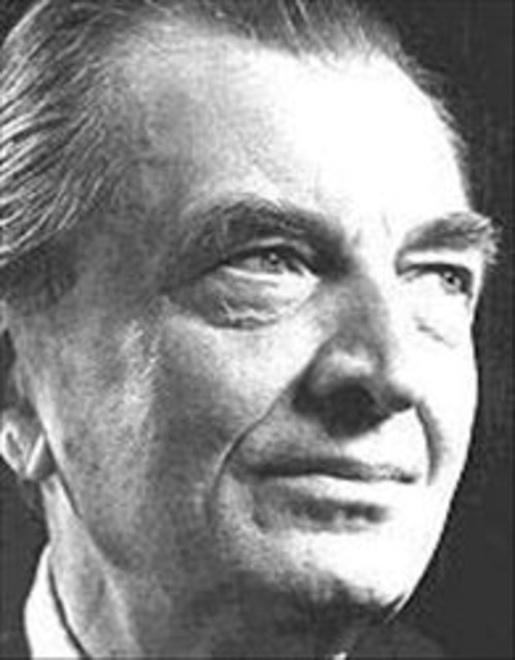
Alexander Tcherepnin

Classical
Classical Crossover
 Viberate Rank: 395928
 Viberate Rank: 395928
 Monthly ListenersFollowers
 Subscribers
 Followers
 Followers
 FansTop Spotify SongsTop YouTube VideosMonthly ListenersFeatured in Playlists
| Playlist | Followers | |
|---|---|---|
1 |  Classical Bangers 🎹🎻 Classical Bangers | 1.25M |
2 |  100 of the most famous classical music pieces 🎻 🎹 🎺 ILKER SATUR | 320.61K |
3 |  Classical Music bangers 🔥🔥 Carlijn | 241.23K |
4 |  study music that is actually motivating Study Mode Classics | 241.45K |
5 |  Best Orchestral Classics 🎻🎺🔥 Classical Vibes | 128.93K |
Audience| City | Monthly Listeners | |
|---|---|---|
1 |  | 531 |
2 |  | 429 |
3 |  | 368 |
4 |  | 367 |
5 | | 353 |
See full performance history, audience data, playlist activity, rankings, comparisons, and more in Viberate music analytics. Start with a free trial, then continue with a paid plan.
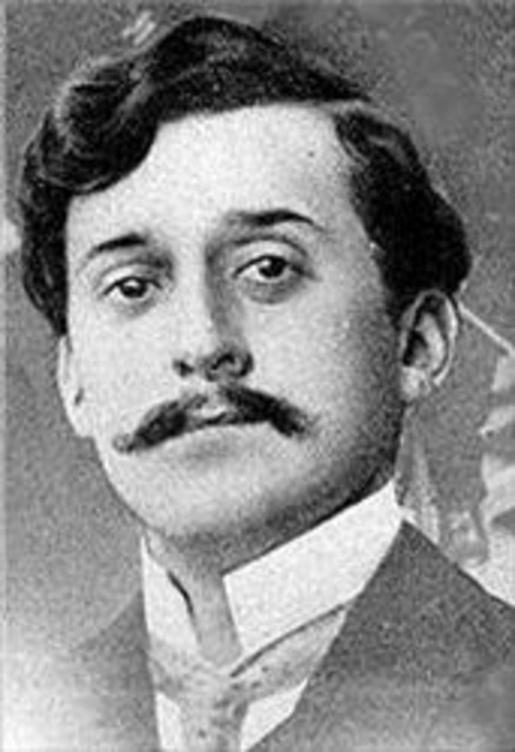
Alexander Tcherepnin’s Spotify BioAlexander Tcherepnin was a Russian-born composer, pianist and conductor known for his cosmopolitan style that included influences from France and the Far East. Tcherepnin's father, Nikolay Tcherepnin, was an important composer and conductor, and it was his influence and teaching that formed Alexander's early training. In 1921 Tcherepnin's family fled the aftermath of the Bolshevik revolution, and the young composer began his career in their adopted home of Paris. From the beginning he favored new and experimental techniques, and during the 1920s he fomulated his own 9-tone scale (now called the Tcherepnin scale), consisting of three overlapping major and minor tetrachords; this allowed for the simultaneous sounding of major and minor sonorities, which the composer found particularly satisfying. He also developed a new form of counterpoint -- called "interpoint" -- which allows for the combination of several self-contained contrapuntal structures. These musical devices were not so much… abstract concepts as attempts on the part of the emerging composer to codify his very instinctive and individual approaches to sound and rhythm. These tendencies had already been expressed in early works, such as the bitonal Pièces sans titres, Op. 7, from 1913.
From 1934 through 1937, he toured the Far East, using Tokyo, Shanghai, and Peking alternately as bases of operation; he would have considerable influence as a teacher of both Japanese and Chinese composers of the period. He also met his wife, the pianist Lee Hsien Ming while in China. The newly married couple returned to Paris in 1938, but the turmoil of WWII put a stop to musical activities. Immediately following the war, however, he resumed his creative output, eventually relocating to Chicago in 1950, and finally settling in New York in 1964.
Although Tcherepnin's style was Russian at heart, it lacked much of the Romantic melancholy and overt nationalism seen in other Russian-born composers. Instead, his earlier works are characterized by a French leanness and clarity and an emphasis on the clean articulation of form. Some, such as in the Second Piano Concerto (1923), bear a similarity to the works of Prokofiev in their motoric rhythms. Tcherepnin himself considered his style to be "Eurasian." Notable works include the Piano Concerto 4 (1947), the Cinq études de concert and his opera The Farmer and the Nymph (1952) -- all of which have a distinctly oriental sound -- and the Fifth Piano Concerto (1963) and Serenade for Strings (1964), both of which suggest aggressive exploration of new concepts at the end of his life. Tcherepnin produced a wide variety of works in every genre, eventually even incorporating electronic elements in his radio score The Story of Ivan the Fool.
Viberate is a music analytics platform built for A&Rs, artist managers, labels, booking agents, marketers, and artists.
It helps music professionals track artist growth, analyze audience data, monitor playlist activity, compare artists, follow song performance, and identify opportunities across the music market.
Public artist pages provide a free preview of selected artist data. Paid plans provide access to deeper analytics, historical data, charts, comparisons, playlist tools, exports, alerts, reports, and additional professional features.
Yes. Public Viberate artist pages provide selected artist analytics and music data for free.
Viberate also offers a 7-day free trial of the full platform. A credit card is required to start the trial. The trial includes access to the complete product so users can test deeper artist analytics, historical views, playlist insights, comparisons, charts, exports, alerts, and reporting features before choosing a paid plan.
Viberate provides artist analytics across streaming, playlists, social media, video, radio airplay, songs, and audience markets.
Users can analyze Spotify performance, Spotify and Apple Music playlists, YouTube activity, TikTok and Instagram growth, radio spins, song performance, audience locations, demographics, rankings, and overall artist momentum.
Artist profiles also connect to music charts, similar artists, and comparison tools, helping users benchmark performance and evaluate artists in context.
Viberate updates key artist and track data daily.
For followed artists and tracks, selected data is refreshed multiple times per day. This helps teams monitor playlist changes, streaming movement, audience growth, releases, and campaign performance with more current data.
Update frequency can vary depending on the metric and data source.
Yes. Viberate lets users compare up to five artists side by side across streaming, social media, audience, and engagement metrics.
Users can compare fanbase growth, audience demographics, locations, Spotify performance, social metrics, and other artist data over selected time periods.
Artist comparison can be used for A&R scouting, benchmarking, booking decisions, campaign planning, and evaluating artists with similar audiences or market positions.