Albert Dietrich

Classical
Orchestral
Classical Crossover
 Viberate Rank: 750594
 Viberate Rank: 750594
 Monthly ListenersFollowers
 Subscribers
 Followers
 Followers
 FansTop Spotify Songs
| Track | 7-Day Streams | |
|---|---|---|
1 | 28 | |
2 | 23 | |
3 | 19 | |
4 | 17 | |
5 | 11 |
Top YouTube VideosMonthly ListenersFeatured in Playlists| Playlist | Followers | |
|---|---|---|
1 |  my stick - Kornél Kovács Kornél Kovács | 10.28K |
2 |  Chamber Music for Self-Renewal synergy555 | 4.21K |
3 | Essay Writing: Classical Music panders | 1.68K |
Audience| City | Monthly Listeners | |
|---|---|---|
1 | | 8 |
2 |  | 7 |
3 |  | 6 |
4 |  | 5 |
5 | | 5 |
See full performance history, audience data, playlist activity, rankings, comparisons, and more in Viberate music analytics. Start with a free trial, then continue with a paid plan.
Albert Dietrich’s Spotify BioAlbert Dietrich was a German composer of the Romantic era known for his association with Brahms, Clara and Robert Schumann, and Joseph Joachim. His contributions as a composer include instrument concertos, a symphony, theatrical works, and the first movement of the F-A-E Violin Sonata for Joachim.
Dietrich was born in 1829 near Meissen, Germany, and in 1842 enrolled at the Kreuzschule in Dresden, where he studied composition and piano under Ernst Julius Otto. He continued his education in 1847 as a philosophy student, and he also received private instruction from Ignaz Moscheles, Julius Rietz, and Moritz Hauptmann at the Leipzig Conservatory. After his graduation in 1851, he moved to Düsseldorf, where he began studying with Robert Schumann, and they became close friends. Dietrich also befriended Brahms in 1853, and with Schumann, the three composers collaborated on the F-A-E Violin Sonata for their friend Joseph Joachim. Their playful intentions were for Joachim to play the sonata and… then guess who wrote each movement.
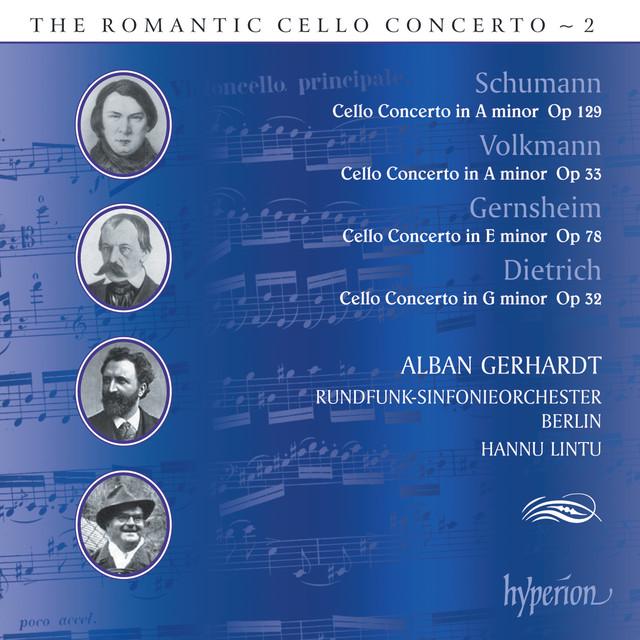
Dietrich traveled to Leipzig in 1854 to conduct the premiere of his Symphony, and he became the music director for the city of Bonn in 1855. An influential leader in the community, he conducted and organized the subscription concert series, and he also taught music lessons to students such as Ernst Eduard Taubert. Dietrich left this position in 1861 for an appointment as kapellmeister for the court of Oldenburg. He was responsible for the music education of the grand duchess, and it was also around this time that he composed some of his best large-scale works, like the Violin Concerto, Op. 30, Cello Concerto, Op 32, and the opera Robin Hood, Op. 34.
After his retirement in 1890, Dietrich moved to Berlin, where he was a member of the Akademie der Künste. He published his collection of correspondences and memoirs of Brahms in 1898, and he was honored with the title of royal professor in 1899. Dietrich's music continued to be performed during his lifetime, but his worklist was practically forgotten after his death in 1908. In modern times, the famous F-A-E Sonata has appeared on numerous recordings, and his style as an orchestral composer can be heard on the 2024 release Dietrich: Symphony in D minor; Violin Concerto; Overture in C major with Klaidi Sahatci, Christoph König, and the Solistes Européens, Luxembourg. ~ RJ Lambert, Rovi
Viberate is a music analytics platform built for A&Rs, artist managers, labels, booking agents, marketers, and artists.
It helps music professionals track artist growth, analyze audience data, monitor playlist activity, compare artists, follow song performance, and identify opportunities across the music market.
Public artist pages provide a free preview of selected artist data. Paid plans provide access to deeper analytics, historical data, charts, comparisons, playlist tools, exports, alerts, reports, and additional professional features.
Yes. Public Viberate artist pages provide selected artist analytics and music data for free.
Viberate also offers a 7-day free trial of the full platform. A credit card is required to start the trial. The trial includes access to the complete product so users can test deeper artist analytics, historical views, playlist insights, comparisons, charts, exports, alerts, and reporting features before choosing a paid plan.
Viberate provides artist analytics across streaming, playlists, social media, video, radio airplay, songs, and audience markets.
Users can analyze Spotify performance, Spotify and Apple Music playlists, YouTube activity, TikTok and Instagram growth, radio spins, song performance, audience locations, demographics, rankings, and overall artist momentum.
Artist profiles also connect to music charts, similar artists, and comparison tools, helping users benchmark performance and evaluate artists in context.
Viberate updates key artist and track data daily.
For followed artists and tracks, selected data is refreshed multiple times per day. This helps teams monitor playlist changes, streaming movement, audience growth, releases, and campaign performance with more current data.
Update frequency can vary depending on the metric and data source.
Yes. Viberate lets users compare up to five artists side by side across streaming, social media, audience, and engagement metrics.
Users can compare fanbase growth, audience demographics, locations, Spotify performance, social metrics, and other artist data over selected time periods.
Artist comparison can be used for A&R scouting, benchmarking, booking decisions, campaign planning, and evaluating artists with similar audiences or market positions.