Alan Stivell

European
Celtic
 Viberate Rank: 86364
 Viberate Rank: 86364
 Monthly ListenersFollowers
 Subscribers
 Followers
 Followers
 FansTop Spotify Songs
| Track | 7-Day Streams | |
|---|---|---|
1 | 8.36K | |
2 | 6.14K | |
3 | 4.01K | |
4 | 3.30K | |
5 | 2.32K |
Top YouTube VideosMonthly ListenersFeatured in Playlists| Playlist | Followers | |
|---|---|---|
1 |  The Way of the Pagan markmcencroe | 12.06K |
2 |  This Is Laurent Voulzy Spotify | 11.51K |
3 |  🏁 Best of Breizh - Le meilleure de la musique bretonne Clément Dejean | 10.17K |
4 | CANÇONS QUE ANIMEN elmon | 5.40K |
5 |  The Celtic Circle sewron | 5.15K |
Audience| City | Monthly Listeners | |
|---|---|---|
1 | | 2.28K |
2 | | 683 |
3 | | 655 |
4 |  | 485 |
5 | | 452 |
See full performance history, audience data, playlist activity, rankings, comparisons, and more in Viberate music analytics. Start with a free trial, then continue with a paid plan.
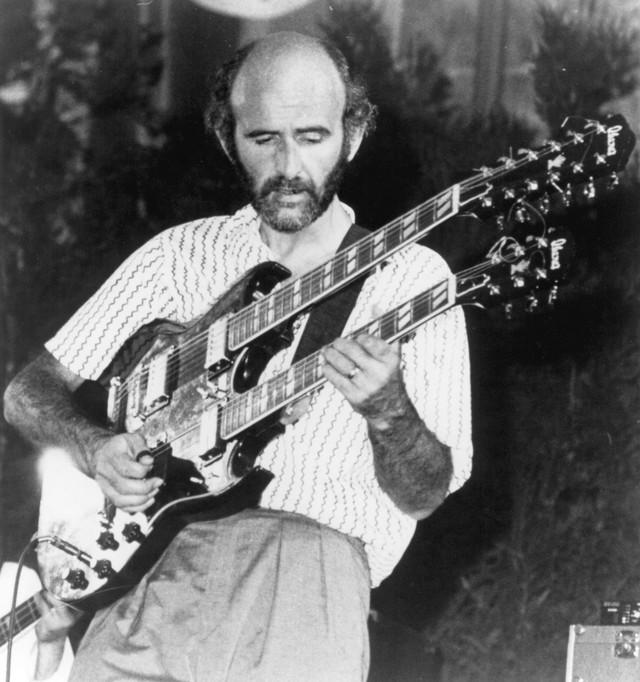
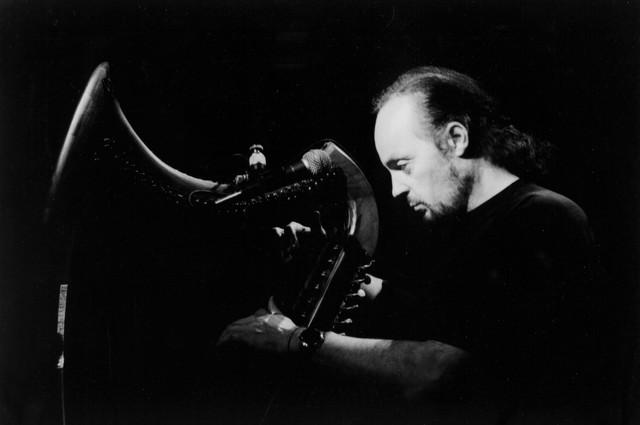
Alan Stivell’s Spotify BioIf there is a single savior of Celtic music, Alan Stivell is probably it. Since the end of the 1960s, he has done more to revive interest in the Celtic (specifically Breton) harp than anyone in the world and, in the process, almost singlehandedly made the world aware of native Breton Celtic music. Since 1971, he has been recording albums of extraordinary beauty and diversity, ranging from ancient Breton and Irish material to modern folk-rock, new age, and progressive rock.
He was born Alan Cochevelou, the son of a harp-maker. His father had rediscovered the Breton harp, but young Alan started his musical life on a somewhat more conventional instrument, taking up the piano at age five. He was given a harp by his father at age nine, and studied for the next several years under the direction of his father and D. Megevand, a concert harpist, freely mixing classical repertoire and arrangements of Breton, English, Irish, Scottish, and Welsh folk material.
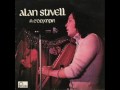
Stivell was playing concerts at age… 11, and took up the more general study of traditional popular Celtic music, including the Scottish bagpipes, drum, Irish flute, and tin whistle while in his teens. He ultimately became well-versed in all of these and won honors in national piping competitions in Scotland. He chose the professional name of Stivell, the Breton word meaning fountain, spring, or source. By the age of 21, while studying for his degree in English, he became an established folk musician, recording songs accompanying himself on harp. While his singing is less effective than his harp or bagpipe playing, his voice is expressive, and most of his albums feature a mix of vocal and instrumental music. In 1967, he formed a group consisting of himself on harp, bagpipes, and Irish flute and Dan Ar Bras on electric guitar, backed by bass and drums. He released several albums during this period, including Reflections (1971), A l'Olympia (1972), Chemins de Terre (1972), Celtic Rock (1972), and E. Lagonned (1976). He left the group in the mid-'70s to concentrate exclusively on a solo career -- by this time, he had become a major influence on a multitude of folk-rock musicians with his interweaving of electric and traditional instruments.
During the early '70s, he acquired a popular following in France and England. By the mid-'70s, Americans were discovering Stivell in growing numbers, prompting labels such as Rounder to begin releasing his work (until then available only as expensive imports) in the U.S. Stivell's first major solo album, Renaissance of the Celtic Harp (1972), remains a favorite among fans of the stringed instrument, while his later albums also display his abilities with bagpipes and as a singer. For a time during the mid-'70s, his success placed traditional Breton and Celtic music on the English charts on a regular basis.
Stivell's biggest accomplishment, however, involved the rebirth and rediscovery of an instrument and an entire cultural history. His career brought to fruition the revival of the Breton harp that his father had begun in the 1930s and '40s. The harp had a long and honored place in the history of Celtic music, first embraced (and possibly invented) by the Irish, who carried it to Scotland and Wales, and later to Brittany and the rest of the European mainland. Although preserved as an image in numerous works of art, the Breton harp had receded from memory and use well before the 20th century. Stivell played his father's first modern Breton harp for the first time in 1953, and within 20 years, there were over 100 players where there had been none. Stivell has also used harps from Ireland, Scotland, and Wales in his recordings and performances.
Stivell moved in two different directions simultaneously: into the realm of folk-rock with a band of Breton musicians, and into serious music with Celtic Symphony, a work for a mixed ensemble of orchestra, Breton and Irish instruments, and voices. A somewhat enigmatic figure, given his focus on Breton culture, Stivell is a most compelling of folk musicians, and has achieved stature outside the folk music world, enough so that musicians like Kate Bush have appeared on his albums.
Stivell's music has found an audience among people who have never been anywhere near Brittany, Ireland, Scotland, or Wales. The Celts were among the westernmost settlers of Europe, and occupied some of the bleakest yet most starkly beautiful land in Europe -- the Romans, in particular, couldn't understand why any sane race would want to live in there -- yet their music is still played, and their culture exerts a pull on people the world over. Celtic music has always had an element of loneliness, of the single harpist, piper, or drummer looking out across the vastness to the west (all that lay west was, of course, the Atlantic Ocean, and Stivell, more than any other single musician, captures the inherent joy, wistfulness, and loneliness in this music.
Additionally, the development in the music and in audiences has expanded even further. His harp recordings, with their enveloping lyricism and tightly interwoven patterns of variations, can appeal to more serious listeners of new age music. Stivell's main audience, however, comprises fans of Celtic music and culture, and English folk. Embracing ancient and modern elements, but (apart from his folk-rock work) making no compromises to modern melodic sensibilities, his music captures the mystery and strangeness of Breton, Irish, Welsh, and Scottish landscapes that are both ageless and timeless. It is haunting, mysterious, and beautiful, with no equivalent in modern popular music and few peers in the realm of commercial folk music. In the fall of 2018, Stivell celebrated his 50th anniversary as a recording artist with the album Human/Kelt on World Village. Revisiting and radically rearranging songs from his vast catalog, he enlisted a wide variety of musicians encountered during a half-century of travel across the globe, including Andrea Corr, Francis Cabrel, Fatoumata Diawara, Murray Head, Bob Geldof, Yann Tiersen, to bring it to fruition. Stivell regarded the effort as a 21st-century update to his 1994 album Again, where he employed a similar strategy to different material. In an interview, Stivell equated the motivation behind Human/Kelt to earlier albums, but also noted that musically, he considered this work every bit as "radical" as his landmark 1979 Celtic Symphony. ~ Bruce Eder, Rovi
Viberate is a music analytics platform built for A&Rs, artist managers, labels, booking agents, marketers, and artists.
It helps music professionals track artist growth, analyze audience data, monitor playlist activity, compare artists, follow song performance, and identify opportunities across the music market.
Public artist pages provide a free preview of selected artist data. Paid plans provide access to deeper analytics, historical data, charts, comparisons, playlist tools, exports, alerts, reports, and additional professional features.
Yes. Public Viberate artist pages provide selected artist analytics and music data for free.
Viberate also offers a 7-day free trial of the full platform. A credit card is required to start the trial. The trial includes access to the complete product so users can test deeper artist analytics, historical views, playlist insights, comparisons, charts, exports, alerts, and reporting features before choosing a paid plan.
Viberate provides artist analytics across streaming, playlists, social media, video, radio airplay, songs, and audience markets.
Users can analyze Spotify performance, Spotify and Apple Music playlists, YouTube activity, TikTok and Instagram growth, radio spins, song performance, audience locations, demographics, rankings, and overall artist momentum.
Artist profiles also connect to music charts, similar artists, and comparison tools, helping users benchmark performance and evaluate artists in context.
Viberate updates key artist and track data daily.
For followed artists and tracks, selected data is refreshed multiple times per day. This helps teams monitor playlist changes, streaming movement, audience growth, releases, and campaign performance with more current data.
Update frequency can vary depending on the metric and data source.
Yes. Viberate lets users compare up to five artists side by side across streaming, social media, audience, and engagement metrics.
Users can compare fanbase growth, audience demographics, locations, Spotify performance, social metrics, and other artist data over selected time periods.
Artist comparison can be used for A&R scouting, benchmarking, booking decisions, campaign planning, and evaluating artists with similar audiences or market positions.