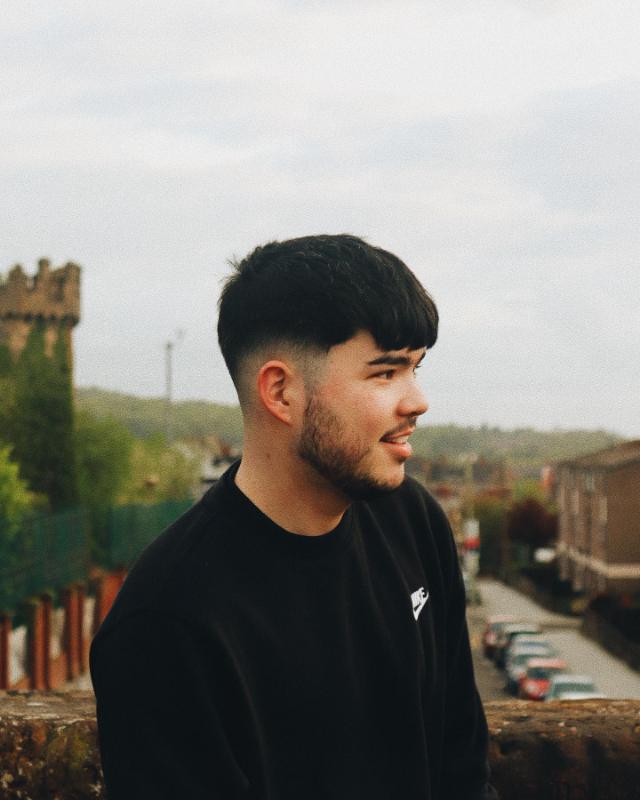
A.D.O.R.

Hip Hop
Contemporary Hip Hop
Garage Rock
 Viberate Rank: 112364
 Viberate Rank: 112364
 Monthly ListenersFollowers
 Subscribers
 Followers
 Followers
 FansTop Spotify Songs
| Track | 7-Day Streams | |
|---|---|---|
1 | 91.49K | |
2 | 20.56K | |
3 | 14.29K | |
4 | 3.75K | |
5 | 3.54K |
Top YouTube VideosMonthly ListenersFeatured in Playlists| Playlist | Followers | |
|---|---|---|
1 |  Tech House 2026 Future House Music | 566.72K |
2 |  Ibiza 2026 House Party Simon Field | 559.42K |
3 |  HOUSE MUSIC aryo | 366.60K |
4 |  DISCOLAND Spotify | 348.44K |
5 |  Warehouse Party Spotify | 329.01K |
Audience| City | Monthly Listeners | |
|---|---|---|
1 |  | 5.79K |
2 |  | 5.01K |
3 |  | 4.77K |
4 | | 4.74K |
5 | | 3.44K |
See full performance history, audience data, playlist activity, rankings, comparisons, and more in Viberate music analytics. Start with a free trial, then continue with a paid plan.
A.D.O.R.’s Spotify BioA.D.O.R. (born Eddie Castellanos) burst on the rap scene seemingly out of nowhere when he dropped, in the summer of 1992, the infectious Pete Rock-produced single "Let It All Hang Out," an unexpected Top Ten Billboard hit and instant classic. In fact, the rapper did not emerge out of an artistic vacuum, nor was the Pete Rock connection a fortuitous one. Castellanos was born in the Washington Heights section of Manhattan to a professional musician father who would often take his young son along with him during late or all-night jam and recording sessions around New York City. When he was six, his family moved to Mt. Vernon, NY -- later known to hip-hop aficionados as "money-earnin' Mt. Vernon" -- where Castellanos grew up alongside some of rap and R&B's most gifted burgeoning talents. In high school, he rubbed shoulders with, among others, classmates Sean "Puffy" Combs, Heavy D, Al B. Sure, and, of course, Pete Rock, and began to earn a reputation around the neighborhood as an MC. Demo… recordings of the newly christened A.D.O.R. (short for, variously, "Another Dimension of Rhythm" or "A Declaration of Revolution") eventually made their way to Uptown Records, and Combs became one of Castellanos' early supporters, personally shopping his music around the industry. Soon thereafter, DJ Eddie F of Heavy D & the Boyz signed him to a production and management deal with Untouchables Entertainment, and he found himself in the studio recording "Let It All Hang Out" for Atlantic Records.
A well-received live performance on Fox's popular sketch-comedy show In Living Color and a second single, the underground hit "One for the Trouble" (produced by Marley Marl and Kevin "K-Def" Hanson, and later the vocal hook for Fatboy Slim's "Old Skool Mix" of Wildchild's 1995 club anthem "Renegade Master"), soon followed, as did live performances supporting Tupac and the Notorious B.I.G. A.D.O.R. was supposed to back up those successes with the completed full-length The Concrete; unfortunately, adversity soon struck. His production and management deals collapsed, and Atlantic decided to shelve the record. Castellanos rebounded by forming Tru Reign Records and inaugurated his new label with another Rock-produced single, "Enter the Center," in 1996. It sold remarkably well for an indie record and earned strong radio support, leading to the release of his official debut album, Shock Frequency, in 1998. The next year, Tru Reign signed a national deal with Nile Rodgers' Sumthing Distribution, which put out the second A.D.O.R. album, Animal 2000. In 2003, a pair of additional albums arrived, the compilation of hits and exclusive tracks, Classic Bangerz, Vol. 1, and an all-new studio album, Signature of the Ill. ~ Stanton Swihart, Rovi
Viberate is a music analytics platform built for A&Rs, artist managers, labels, booking agents, marketers, and artists.
It helps music professionals track artist growth, analyze audience data, monitor playlist activity, compare artists, follow song performance, and identify opportunities across the music market.
Public artist pages provide a free preview of selected artist data. Paid plans provide access to deeper analytics, historical data, charts, comparisons, playlist tools, exports, alerts, reports, and additional professional features.
Yes. Public Viberate artist pages provide selected artist analytics and music data for free.
Viberate also offers a 7-day free trial of the full platform. A credit card is required to start the trial. The trial includes access to the complete product so users can test deeper artist analytics, historical views, playlist insights, comparisons, charts, exports, alerts, and reporting features before choosing a paid plan.
Viberate provides artist analytics across streaming, playlists, social media, video, radio airplay, songs, and audience markets.
Users can analyze Spotify performance, Spotify and Apple Music playlists, YouTube activity, TikTok and Instagram growth, radio spins, song performance, audience locations, demographics, rankings, and overall artist momentum.
Artist profiles also connect to music charts, similar artists, and comparison tools, helping users benchmark performance and evaluate artists in context.
Viberate updates key artist and track data daily.
For followed artists and tracks, selected data is refreshed multiple times per day. This helps teams monitor playlist changes, streaming movement, audience growth, releases, and campaign performance with more current data.
Update frequency can vary depending on the metric and data source.
Yes. Viberate lets users compare up to five artists side by side across streaming, social media, audience, and engagement metrics.
Users can compare fanbase growth, audience demographics, locations, Spotify performance, social metrics, and other artist data over selected time periods.
Artist comparison can be used for A&R scouting, benchmarking, booking decisions, campaign planning, and evaluating artists with similar audiences or market positions.