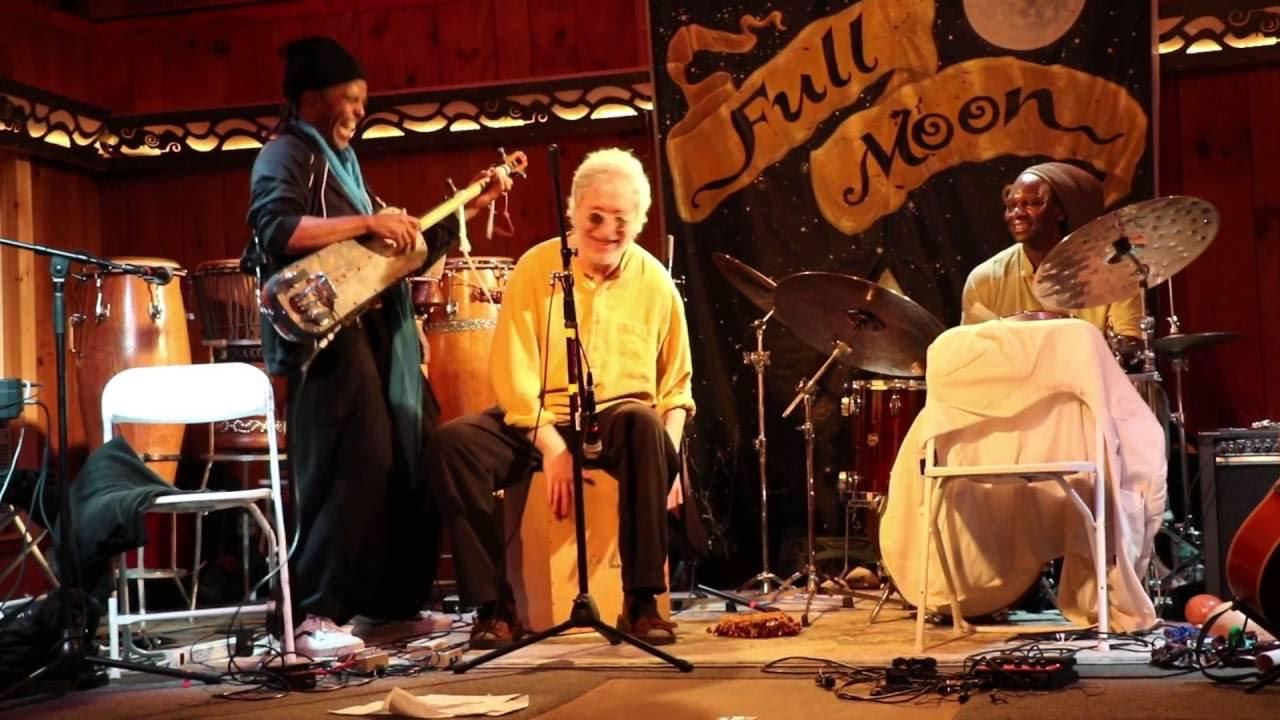
Adam Rudolph

Jazz
Jazz Fusion
Other Middle Eastern Music
 Viberate Rank: 386117
 Viberate Rank: 386117
 Monthly ListenersFollowers
 Subscribers
 Followers
 Followers
 FansTop Spotify Songs
| Track | 7-Day Streams | |
|---|---|---|
1 | 266 | |
2 | 86 | |
3 | 84 | |
4 | 57 | |
5 | 46 |
Top YouTube VideosMonthly ListenersFeatured in Playlists| Playlist | Followers | |
|---|---|---|
1 |  Dinner Table Jazz Symphonic | 32.59K |
2 |  El Clon (Soundtrack) Christian O. García Zúñiga | 22.06K |
3 |  Life is a film Hania Raniszewska | 16.93K |
4 |  NPR Classical NPR Music | 14.44K |
5 |  Deep Spiritual Jazz Neil Lampert | 7.31K |
Audience| City | Monthly Listeners | |
|---|---|---|
1 | | 33 |
2 |  | 25 |
3 |  | 24 |
4 |  | 24 |
5 |  | 23 |
See full performance history, audience data, playlist activity, rankings, comparisons, and more in Viberate music analytics. Start with a free trial, then continue with a paid plan.
Adam Rudolph’s Spotify BioAdam Rudolph is a composer, producer, and percussionist known for his adventurous, experimental brand of post-bop jazz and world fusion. Since the 1980s he has issued more than two dozen recordings and performed globally. He leads Adam Rudolph's Moving Pictures, Hu: Vibrational percussion group, and Go: Organic Orchestra, an 18- to 54-piece group for which he has developed an original music notation and conducting system. Along with kora virtuoso Foday Musa Suso, he co-founded the Mandingo Griot Society to pioneer the world fusion genre. In 1987, he appeared on Suso's Jazz Africa. Beginning in the '90s, Rudolph closely collaborated with composer and multi-instrumentalist Yusef Lateef; they issued 15 albums together. After creating the Meta label in 1997, Rudolph, Hamid Drake, and Pharoah Sanders issued Spirits in 2000. Go: Organic Orchestra's debut, Web of Light, appeared in 2002, and between 2002 and 2006, he cut three offerings with Hu Vibrational. Rudolph also recorded a series of… duo and trio collaborations with several artists, including Wadada Leo Smith and Omar Sosa. In 2015, Go: Organic cut Turning Towards the Light for Cuneiform. In 2018, Rudolph, saxophonist David Liebman, and drummer Tatsuya Nakatani issued The Unknowable for RareNoise, following it a year later with Chi, with Drake replacing Nakatani. In 2022, Rudolph again joined Liebman (and percussionist Tyshawn Sorey) for the live trio album New Now. Also that year, he and saxophonist Bennie Maupin collaborated on Symphonic Tone Poem for Brother Yusef, released on Strut.
Rudolph was born in Chicago in 1955, and as a teen was mentored by the likes of Don Cherry, Fred Anderson, and Maulawi Nururdin. After receiving a self-designed undergraduate degree in ethnomusicology from Oberlin College, Rudolph went on to earn his MFA from the California Institute of the Arts. In 1977, he traveled to Ghana and met the famed griot Foday Musa Suso, and a year later, they reunited in Chicago to form the Mandingo Griot Society, pioneering a fusion of traditional African music with jazz and R&B. Rudolph also spent 15 years studying North Indian tabla drums under the renowned Pandit Taranath Rao and collaborating with L. Shankar and Hassan Hakmoun. His extensive research throughout Europe, Asia, and Africa allowed Rudolph to master a vast range of percussion instruments, including the congas, djembe, bendir, dumbek, tabla, talking drum, kalimba, and udu. In addition to appearing on sessions by everyone from Herbie Hancock to Jon Hassell to Shadowfax, he collaborated extensively with Yusef Lateef from 1988 onward.
Rudolph debuted his own group, Moving Pictures, with a self-titled 1992 LP. In 1995, he premiered his first opera, The Dreamer. In 2002, Rudolph's Go: Organic Orchestra released Web of Light, and a few months later, Go: Organic Orchestra: 1 appeared on Meta. The acclaim from jazz, new music, and world music critics and DJs was almost universal. The following year, two of the group's live West Coast performances -- both collaborations with Lateef -- were captured for the double-length In the Garden.
Also during the early 21st century, Rudolph became a member of Build an Ark in Los Angeles, a multi-generational collective of musicians that included Carlos Niño, Dwight Trible, Dexter Story, Phil Ranelin, and a dozen others. They issued two fine albums, 2004's Peace with Every Step and 2007's Dawn. Rudolph also collaborated with Leni Stern on her 2007 effort Africa. Dream Garden followed in 2008. In 2010, Rudolph issued two more recordings on Meta: Yèyí, with reed master and multi-instrumentalist Ralph Jones, and Towards the Unknown, with composer and multi-instrumentalist Lateef (although on the latter disc, Lateef received top billing). Two years later, Merely a Traveler on the Cosmic Path with Jones appeared on Meta, followed by Go: Organic Orchestra's Sonic Mandala and Voice Prints with Lateef, Roscoe Mitchell, and Douglas R. Ewart. It was Lateef's final recording. That year also marked the release of Good Medicine, a collaboration with Defunkt leader and trombonist Joseph Bowie under the name Ig Bo Duet. In 2015, Rudolph delivered Turning Towards the Light for Cuneiform with the Go: Organic Guitar Orchestra, featuring ten guitarists and a bassist. Among them were Rez Abbasi, Nels Cline, Joel Harrison, David Gilmore, Miles Okazaki, and Marvin Sewell. In 2017, a solo set entitled Morphic Resonances appeared on Meta showcasing the percussionist with a string quartet and the chamber group Kammeratorkestret Ensemble as well as in various duos and trios.
A year later, Rudolph worked with saxophonist Dave Liebman and percussionist/electronicist Tatsuya Nakatani for RareNoise on the album The Unknowable, and he cut Karuna (Compassion) with old friends Jones and Drake. The drummer and percussionist worked with Liebman for 2019's Chi. That same year, Rudolph issued the double-length Ragmala, a 54-musician collaboration between Go: Organic Orchestra and the celebrated Indian fusion group Brooklyn Raga Massive, on which he displayed his highly developed system of conducting for improvisers. The following year, the Karuna Trio -- Rudolph, Jones, and Drake -- issued Imaginary Archipelago on Meta.
In 2020, Claremont, California's Angel City Jazz Festival commissioned Rudolph and saxophonist Bennie Maupin to create an original work to commemorate Lateef's 100th birthday. They composed and recorded the five-movement Symphonic Tone Poem for Brother Yusef in response. Issued by Strut in June 2022, the set created a magical, meditative path combining electronics, saxophones, clarinets, and voices with a wide variety of percussion instruments. He again joined Liebman, as well as fellow percussionist Tyshawn Sorey, for the 2022 trio album New Now, recorded live at the Jazz Gallery in New York. ~ Jason Ankeny & Thom Jurek, Rovi
Viberate is a music analytics platform built for A&Rs, artist managers, labels, booking agents, marketers, and artists.
It helps music professionals track artist growth, analyze audience data, monitor playlist activity, compare artists, follow song performance, and identify opportunities across the music market.
Public artist pages provide a free preview of selected artist data. Paid plans provide access to deeper analytics, historical data, charts, comparisons, playlist tools, exports, alerts, reports, and additional professional features.
Yes. Public Viberate artist pages provide selected artist analytics and music data for free.
Viberate also offers a 7-day free trial of the full platform. A credit card is required to start the trial. The trial includes access to the complete product so users can test deeper artist analytics, historical views, playlist insights, comparisons, charts, exports, alerts, and reporting features before choosing a paid plan.
Viberate provides artist analytics across streaming, playlists, social media, video, radio airplay, songs, and audience markets.
Users can analyze Spotify performance, Spotify and Apple Music playlists, YouTube activity, TikTok and Instagram growth, radio spins, song performance, audience locations, demographics, rankings, and overall artist momentum.
Artist profiles also connect to music charts, similar artists, and comparison tools, helping users benchmark performance and evaluate artists in context.
Viberate updates key artist and track data daily.
For followed artists and tracks, selected data is refreshed multiple times per day. This helps teams monitor playlist changes, streaming movement, audience growth, releases, and campaign performance with more current data.
Update frequency can vary depending on the metric and data source.
Yes. Viberate lets users compare up to five artists side by side across streaming, social media, audience, and engagement metrics.
Users can compare fanbase growth, audience demographics, locations, Spotify performance, social metrics, and other artist data over selected time periods.
Artist comparison can be used for A&R scouting, benchmarking, booking decisions, campaign planning, and evaluating artists with similar audiences or market positions.