Accuser

Metal
Groove Metal
Thrash Metal
 Viberate Rank: 266360
 Viberate Rank: 266360
 Monthly ListenersFollowers
 Subscribers
 Followers
 Followers
 FansTop Spotify Songs
| Track | 7-Day Streams | |
|---|---|---|
1 | 48 | |
2 | 37 | |
3 | 31 | |
4 | 26 | |
5 | 23 |
Top YouTube VideosMonthly ListenersFeatured in Playlists| Playlist | Followers | |
|---|---|---|
1 | Thrash Metal Up Your Ass Germonio | 6.86K |
2 | Metal Discovery critical_masses | 5.20K |
3 | UPTEMPO/TERROR Moritz Krüger | 4.92K |
4 | Thrash Daniel Höld | 4.50K |
5 | New Thrash Metal thrashguitars | 2.87K |
Audience| City | Monthly Listeners | |
|---|---|---|
1 | | 22 |
2 | | 17 |
3 | | 12 |
4 | | 11 |
5 | | 10 |
See full performance history, audience data, playlist activity, rankings, comparisons, and more in Viberate music analytics. Start with a free trial, then continue with a paid plan.
Accuser’s Spotify BioGerman metal band Accuser emerged during the 1980s with the country's first wave of long-lived speed/thrash acts -- Kreator, Destruction, and Sodom. The group's lineup has shifted almost constantly since releasing their 1986 demo Speed Metal. Lead vocalist/rhythm guitarist Frank Thoms has been the only constant member, but lead guitarist Rene Schütz has been a close second. Despite their longevity, Accuser didn't secure a major-label recording deal until 2014, making them true metal cult heroes. 1987's debut long-player The Conviction offered a speed and thrash metal sound similar to the genre model espoused by their peers, though arguably heavier. With 1989's Who Dominates Who?, Accuser had evolved into a more technically oriented outfit whose updated sound chagrined early fans yet won over new ones in the process. The band went on hiatus after 1995's Taken by the Throat, but re-formed in 2002. They issued only three demos before 2010's comeback long-player Agitation. Accuser… attempted a return to their root 1980s sound -- combined with current production standards -- for 2011's Dependent Domination and 2013's Diabolic. The critical and commercial success of those efforts secured them a deal with Metal Blade for 2016's acclaimed The Forlorn Divide. The Mastery followed in 2018 to better sales and streaming chart placement. In 2020, the group issued a charting self-titled album, but were prevented from touring due to the global COVID-19 pandemic.
Accuser was formed in the town of Kreuztal and followed in the wake of Germany's first wave of successful speed metal bands (Kreator, Destruction, Sodom, etc.). Quickly progressing from the full-out thrash of their early efforts, including 1987's The Conviction and 1988's Experimental Errors, they developed a more technical style reminiscent of the one made popular by Metallica and Exodus of the U.S. San Francisco Bay Area scene with 1989's Who Dominates Who? and 1991's Double Talk. That development reached its pinnacle on 1992's Repent. Though their recordings sold only marginally, Accuser proved themselves a technically gifted band to critics and punters alike. That acclaim afforded them touring opportunities across the globe.
With 1994's Reflections and the following year's Taken by the Throat, Accuser had evolved toward a modern death metal sound with a more rhythm-based, tribal-riffing approach that nodded its influence in the direction of vintage Sepultura. Thoms and Schütz placed the band on hiatus after touring and formed a new concern called Scartribe. Though they wrote and demoed new songs, whenever they performed, fans demanded Accuser material.
In 2002, Thoms and Schütz, along with their Scartribe rhythm section of bassist Frank Kimpel and drummer Olli Fechner, re-formed Accuser and issued a pair of demos. Schütz left again in 2004 for other projects, but returned to tour with Accuser in 2008 and to record 2010's full-length Agitation, the band's first album of new material in 15 years. After a short tour, Schütz left again. He was replaced by guitarist Uwe Schmidt for 2011's Dependent Domination and 2013's Diabolic.
In 2015, Accuser signed their first major-label deal with Metal Blade. Schmidt departed after the year's tour and German metal guitarist Dennis Rybakowski replaced him during the recording sessions for 2016's widely acclaimed The Forlorn Divide, which was recorded, mixed, and mastered by Martin Buchwalter. With the label's support, Accuser toured the metal festival circuit in Europe, the Americas, and Asia. Their highly developed, unrelenting hybrid of thrash, death, and groove-based metal won them scores of new fans. With Buchwalter once more behind the recording and mixing desk, Accuser returned to the studio in the summer of 2017 while on a tour break. They completed The Mastery that fall; it saw issue from Metal Blade in January 2018. The album registered at European radio and made the global streaming charts.
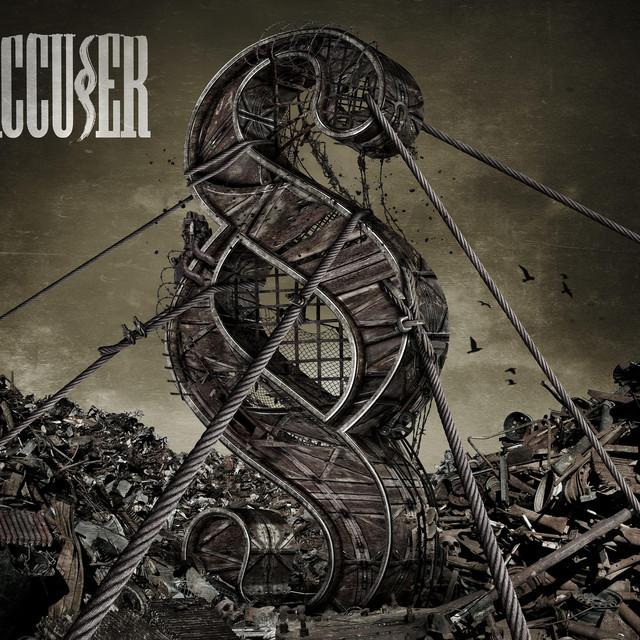
Schütz returned to the fold for the third time in 2019 and replaced Rybakowski. The band entered the studio with Buchwalter producing and Dan Swanö mixing and mastering. They emerged with the 11-song Accuser during the COVID-19 pandemic in 2020. It offered a massive production sound and included ten originals co-written by Thoms and Schütz, as well as a cover of Foreigner's "Urgent" to close the set. ~ Eduardo Rivadavia, Rovi
Viberate is a music analytics platform built for A&Rs, artist managers, labels, booking agents, marketers, and artists.
It helps music professionals track artist growth, analyze audience data, monitor playlist activity, compare artists, follow song performance, and identify opportunities across the music market.
Public artist pages provide a free preview of selected artist data. Paid plans provide access to deeper analytics, historical data, charts, comparisons, playlist tools, exports, alerts, reports, and additional professional features.
Yes. Public Viberate artist pages provide selected artist analytics and music data for free.
Viberate also offers a 7-day free trial of the full platform. A credit card is required to start the trial. The trial includes access to the complete product so users can test deeper artist analytics, historical views, playlist insights, comparisons, charts, exports, alerts, and reporting features before choosing a paid plan.
Viberate provides artist analytics across streaming, playlists, social media, video, radio airplay, songs, and audience markets.
Users can analyze Spotify performance, Spotify and Apple Music playlists, YouTube activity, TikTok and Instagram growth, radio spins, song performance, audience locations, demographics, rankings, and overall artist momentum.
Artist profiles also connect to music charts, similar artists, and comparison tools, helping users benchmark performance and evaluate artists in context.
Viberate updates key artist and track data daily.
For followed artists and tracks, selected data is refreshed multiple times per day. This helps teams monitor playlist changes, streaming movement, audience growth, releases, and campaign performance with more current data.
Update frequency can vary depending on the metric and data source.
Yes. Viberate lets users compare up to five artists side by side across streaming, social media, audience, and engagement metrics.
Users can compare fanbase growth, audience demographics, locations, Spotify performance, social metrics, and other artist data over selected time periods.
Artist comparison can be used for A&R scouting, benchmarking, booking decisions, campaign planning, and evaluating artists with similar audiences or market positions.