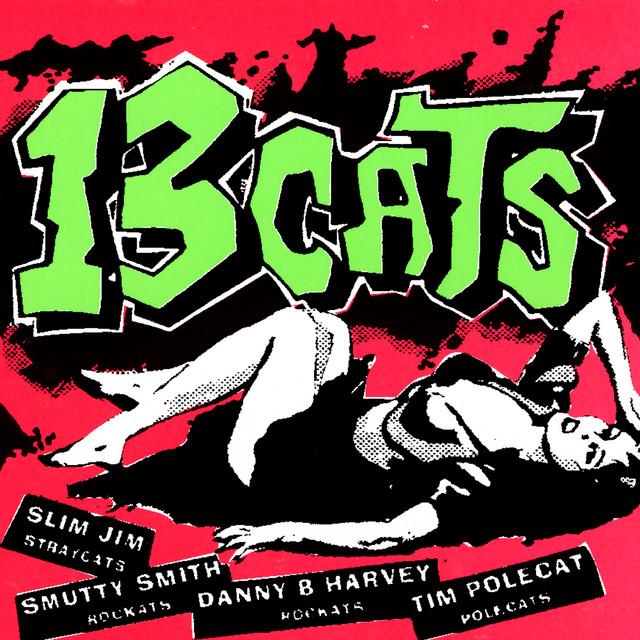
13 Cats

Rock
Rockabilly
Psychobilly
 Viberate Rank: 367543
 Viberate Rank: 367543
 Monthly ListenersFollowers
 Subscribers
 Followers
 Followers
 FansTop Spotify Songs
| Track | 7-Day Streams | |
|---|---|---|
1 | 136 | |
2 | 118 | |
3 | 107 | |
4 | 106 | |
5 | 106 |
Top YouTube VideosMonthly ListenersFeatured in Playlists| Playlist | Followers | |
|---|---|---|
1 | crosscountry-1997 | 14.96K |
2 | Rich Angel Santillan | 9.87K |
3 | Rockabilly, Psychobilly, Neo-Rockabilly, Rock 'n Roll Joni Hietanen | 7.43K |
4 |  gothabilly gothw0rmz | 7.06K |
5 | « Horrorpunk, Psychobilly » Linnea Sundberg | 3.81K |
Audience| City | Monthly Listeners | |
|---|---|---|
1 | | 34 |
2 |  | 29 |
3 | | 15 |
4 |  | 15 |
5 |  | 14 |
See full performance history, audience data, playlist activity, rankings, comparisons, and more in Viberate music analytics. Start with a free trial, then continue with a paid plan.
13 Cats’ Spotify BioRockabilly band 13 Cats draws its membership from several earlier groups, including the Stray Cats. Its lineup features guitarist Danny B. Harvey, who previously spent time in both Levi Dexter's Ripchords and the Rockats, a band that also was affiliated with Dexter; singer Tim Polecat, who previously led the Polecats and also went on to record solo; drummer Slim Jim Phantom, a founding member of the Stray Cats; and stand-up bass player Jonny Bowler, from the Guana Batz. Bowler replaced Smutty Smith, who was one of the Havalinas and, like Harvey, also was part of the Rockats.
The 13 Cats received some exposure from the film The Rage/Carrie2. The movie featured a pair of the band's songs, "13 Cats" and "Teddy Boy Kung Fu Weapon." In addition, guitarist Harvey penned the movie's score. Before the release of In the Beginning, the band's 2002 debut, Dionysus included the group's "Hell Bopp" on the label's Tigermask Trash Au Go-Go compilation. ~ Linda Seida, Rovi
Viberate is a music analytics platform built for A&Rs, artist managers, labels, booking agents, marketers, and artists.
It helps music professionals track artist growth, analyze audience data, monitor playlist activity, compare artists, follow song performance, and identify opportunities across the music market.
Public artist pages provide a free preview of selected artist data. Paid plans provide access to deeper analytics, historical data, charts, comparisons, playlist tools, exports, alerts, reports, and additional professional features.
Yes. Public Viberate artist pages provide selected artist analytics and music data for free.
Viberate also offers a 7-day free trial of the full platform. A credit card is required to start the trial. The trial includes access to the complete product so users can test deeper artist analytics, historical views, playlist insights, comparisons, charts, exports, alerts, and reporting features before choosing a paid plan.
Viberate provides artist analytics across streaming, playlists, social media, video, radio airplay, songs, and audience markets.
Users can analyze Spotify performance, Spotify and Apple Music playlists, YouTube activity, TikTok and Instagram growth, radio spins, song performance, audience locations, demographics, rankings, and overall artist momentum.
Artist profiles also connect to music charts, similar artists, and comparison tools, helping users benchmark performance and evaluate artists in context.
Viberate updates key artist and track data daily.
For followed artists and tracks, selected data is refreshed multiple times per day. This helps teams monitor playlist changes, streaming movement, audience growth, releases, and campaign performance with more current data.
Update frequency can vary depending on the metric and data source.
Yes. Viberate lets users compare up to five artists side by side across streaming, social media, audience, and engagement metrics.
Users can compare fanbase growth, audience demographics, locations, Spotify performance, social metrics, and other artist data over selected time periods.
Artist comparison can be used for A&R scouting, benchmarking, booking decisions, campaign planning, and evaluating artists with similar audiences or market positions.